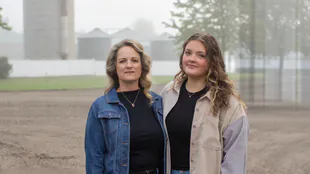
Refugees revive village in 'empty Spain' / Photo: © AFP

 How to Watch the Rugby League World Cup Final on 7plus for Free

 Kayla Harrison Defeats Amanda Nunes via Submission at UFC 334

 GTA 6 Advertising Strategy and Disc Version Controversy
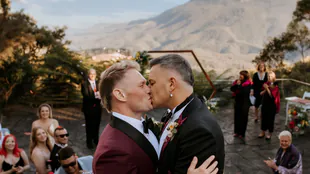 From First Date to Wedding Day: How a TV Quote Sparked a Lifetime Commitment

 Malta Stuns Sweden with Late Penalty Comeback in Rugby Europe Trophy
 BingX: Major Announcement of Far-Reaching Significance

 Élan Opens as Late-Night Wine Bar in Honolulu

The sound of children playing once again fills the streets of Burbaguena since a refugee centre opened in the small village in Spain's sparsely populated northeast, delighting older residents.
"Seeing so many children is wonderful," said 73-year-old pensioner Pilar Rubio, who immigrated to Germany in her youth before moving back to the village located on the banks of a river in the inland province of Teruel.
Without the refugee centre, Burbaguenal "was dying," she added.
Over 1,000 people have passed through the refugee centre since it opened its doors in 2021 while they wait for their refugee claims to be processed, and around 100 have decided to stay in the village permanently once their requests for residency were granted.
That has helped push the population of Burbaguena above 350 from roughly 200 previously. This includes 25 children, up from just a couple.
A school bus service to a nearby town has restarted and the village's pharmacy, bar and bakery are once again open almost daily.
Accem, a Spanish non-profit organisation that helps refugees and migrants, picked Burbaguena for the centre because "cities are becoming less and less hospitable," said the agency's regional manager, Julia Maria Ortega Garcia.
"There is a more hostile environment for new arrivals and we believed that the rural world could offer better situations for integration," she added.
- 'Revolution' -
Nestor Garcia, a 35-year-old from Venezuela who lives at the centre with his wife and daughter, got a job at a local jamon (ham) factory as soon as he received his work permit.
The family plans to stay in Burbaguena.
"The Spain we always see is the Spain of Madrid, Bilbao, Valencia or Barcelona. And we don't know this Spain, this rural Spain, this very beautiful Spain," said Garcia, his voice cracking with emotion.
While at the centre residents learn Spanish, play football and take part in festivities and other events in the village, which features the ruins of a 12th-century castle and an imposing church tower.
Souleymane Ali Dobi, a 25-year-old who fled Niger after his father was murdered, said he liked spending time with the village's elderly because they "remind me of my parents. It's like talking to my parents."
Local baker Jesus Peribanez, who delivers bread to 14 nearby villages and has taught his trade to several of the centre's residents, said the arrival of refugees has been "a revolution".
The 64-year-old is trying to find someone to continue this essential service once he retires.
With a population of less than 10 people per square kilometre, Teruel is a "demographic desert".
The province has just 135,000 people -- less than the roughly 167,000 people who sought asylum in Spain in 2024 according to figures from the UN refugee agency, UNHCR.
- 'Goosebumps' -
Decades of economic migration from the countryside to the city, combined with a low birth rate, have left large swathes of the country's rural interior populated mainly by the elderly -- areas dubbed "empty Spain".
Burbaguena gave the green light for the opening of the refugee centre in an assembly and today its few detractors are silent.
The village's mayor Joaquin Peribanez, whose brother is the local baker, backed the centre's opening.
There is "a parallel" between the experiences of the refugees and those who were forced to move away from Teruel in search of a better life that helps create good ties between locals and the newcomers, the 66-year-old mayor said.
Many of the refugees' stories "give you goosebumps".
The centre is currently home to people from Afghanistan, Burkina Faso, Colombia, Mali, Niger, Peru, Senegal, Ukraine and Venezuela. A quarter are school-age children.
The refugees arrive "with baggage loaded with suffering" as well as "a capacity for generosity, empathy and resilience" that favours connection, said the centre's director, Elena Orus.
G.Schulte--BTB