South Korea's ousted PM says tried to stop martial law decree / Photo: © AFP

 Women's Asian Champions Trophy 2026 in Bhopal Revives Hockey Legacy

 California GOP Faces Near-Extinction After 2026 Midterms; Calls for New Vision
 St Francis School Leads €60,000 EU Project to Transform Early Childhood Education
 South Africa's Universal Health Coverage Depends on Tackling Poverty and Inequality

 Rare Siberian Rubythroat Dies in UK Garden After Cat Attack

 Go Kyung-pyo Drunk Driving Incident Prompts Heavy Editing Across Multiple TV Shows

 KFF Health News Reporters Discuss ACA Enrollment Challenges, Rising Costs, and Measles Risks

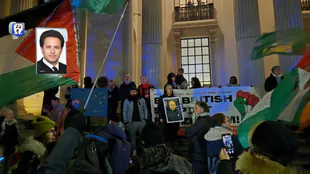
South Korea's ousted premier said Thursday that he had opposed suspended President Yoon Suk Yeol's declaration of martial law, testifying for the first time at his former boss's impeachment trial about the events of a night that threw the country into turmoil.
Han Duck-soo was impeached by parliament as acting President and Prime Minister in December over alleged obstruction of the trial that would formally remove Yoon from office for his marital law decree.
On Thursday he appeared before that trial for the first time, telling Seoul's Constitutional Court he had "expressed my opposition" to Yoon's decision to suspend civilian rule on the night of December 3.
Han said he and most of his fellow cabinet members "believed such a declaration would put South Korea in serious difficulty", and that he recalled them "being concerned and trying to dissuade it."
Thursday's hearing was Yoon's tenth before Seoul's Constitutional Court.
Once the hearings wrap up, the judges will go behind closed doors to deliberate Yoon's fate -- with elections required in 60 days if he is removed.
Yoon walked out of the court just five minutes after procweedings began Thursday, according to a pool report.
His lawyer Yoon Kap-keun told reporters that the ousted president felt it was "inappropriate" for him to sit in the same court room with Han "or for the president to watch the prime minister testify".
"It is not good for the nation's prestige," his lawyer quoted Yoon as saying.
Yoon later returned to hear the testimony of former senior intelligence official Hong Jang-won, seen as a key figure in the decision to declare martial law.
Hong has claimed to be in possession of a memo containing a list of names of individuals Yoon ordered arrested during the night of the martial law declaration, including the leaders of the opposition and Yoon's own ruling party.
"I will do my best to recount everything as I remember it," Hong told reporters before the hearing.
The head of South Korea's National Police Agency, who is also on trial on insurrection charges related to the martial law decree, is another witness.
- Courting controversy -
The impeachment hearing was Yoon's second of the day -- he had appeared in court in the morning to answer charges of insurrection, becoming South Korea's first sitting president to stand trial in a criminal case.
The 64-year-old former prosecutor has been behind bars since he was arrested last month on those charges, for which he could be sentenced to life in prison -- or face the death penalty.
Yoon attended that hearing but did not speak, an AFP journalist in the packed courtroom said.
Prosecutors have accused the suspended president of being the "ringleader of an insurrection".
They argued Thursday against releasing him from detention, saying he could try to "influence or persuade those involved in the case".
Addressing the court, Yoon's lawyer Kim Hong-il in turn condemned the "illegal probe", arguing the "investigating body has no jurisdiction".
"The declaration of martial law was not intended to paralyse the state," Kim said.
Instead, he said, it was meant to "alert the public to the national crisis caused by the legislative dictatorship of the dominant opposition party, which had crippled the administration".
Much of Yoon's impeachment trial has centred on the question of whether he violated the constitution by declaring martial law, which is reserved for national emergencies or times of war.
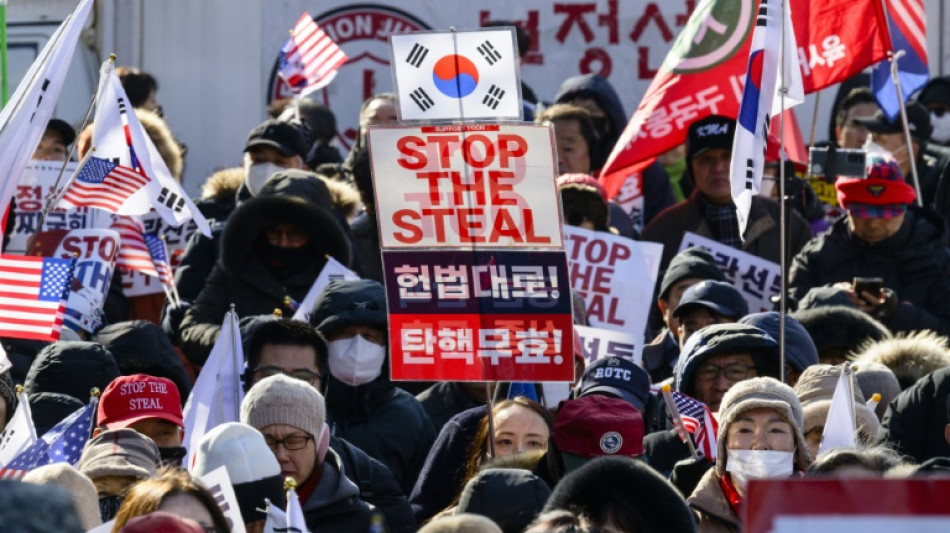
But it has plunged the democracy into months of political turmoil with protests, two impeachments and a surge of online disinformation.
F.Pavlenko--BTB