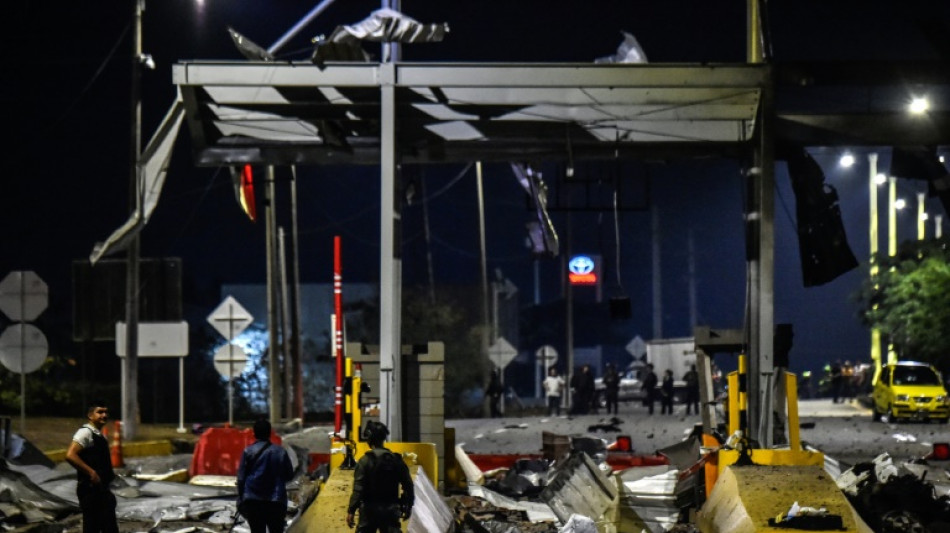
Curfew imposed after bomb attacks in Colombia injure six / Photo: © AFP

 Women's Asian Champions Trophy 2026 in Bhopal Revives Hockey Legacy

 California GOP Faces Near-Extinction After 2026 Midterms; Calls for New Vision

 St Francis School Leads €60,000 EU Project to Transform Early Childhood Education

 South Africa's Universal Health Coverage Depends on Tackling Poverty and Inequality

 Rare Siberian Rubythroat Dies in UK Garden After Cat Attack

 Go Kyung-pyo Drunk Driving Incident Prompts Heavy Editing Across Multiple TV Shows

 KFF Health News Reporters Discuss ACA Enrollment Challenges, Rising Costs, and Measles Risks

Guerrilla fighters carried out four bomb attacks that wounded six people in a restive region of northeast Colombia, prompting officials to declare an overnight curfew Thursday and stoking concerns for a fragile peace process.
The police and military blamed the ELN group, with which the government called off peace talks last month, for the attacks in a cocaine-producing region near Colombia's border with Venezuela on Wednesday night.
A car bomb all but destroyed a toll booth outside the city of Villa del Rosario, while explosives were also detonated at police stations in the same city and in neighboring Cucuta, police commander General William Quintero told W Radio.
A source in the Norte de Santander departmental government, of which Cucuta is the capital, told AFP on Thursday that six people were injured.
Cucuta Mayor Jorge Acevedo announced an 11-hour curfew starting at 7:00 pm Thursday (midnight GMT), with schools shuttered on Friday.
Analysts say the security situation in Colombia has deteriorated under President Gustavo Petro's peace drive, which has seen an easing of the state's military offensive against armed groups, who are gaining strength.
Petro was elected in 2022 on promises of bringing "total peace" to a country battling to extricate itself from six decades of armed conflict between leftist guerrillas, right-wing paramilitaries, drug cartels and the government.
Talks with remaining armed groups have broken down several times since a deal inked in 2016 led to the disarmament of the FARC, the biggest among the rebel armies.
The Norte de Santander department is a stronghold of the 5,800-strong National Liberation Army (ELN), which last month launched an offensive targeting rival fighters and civilians it alleged to be sympathizers in the Catatumbo region.
More than 60 people have been killed and some 50,000 driven from their homes, prompting Petro's government to suspend talks with the ELN.
The ELN has taken part in failed negotiations with Colombia's last five governments.
The country also faces a political crisis, with deeply unpopular Petro this month asking his entire cabinet to resign on the grounds they were ineffective.
One of those to quit was Defense Minister Ivan Velasquez, whom Petro replaced with Air Force General Pedro Sanchez.
On Monday, the president claimed "big mafias" were plotting to down his plane with missiles.
A.Gasser--BTB