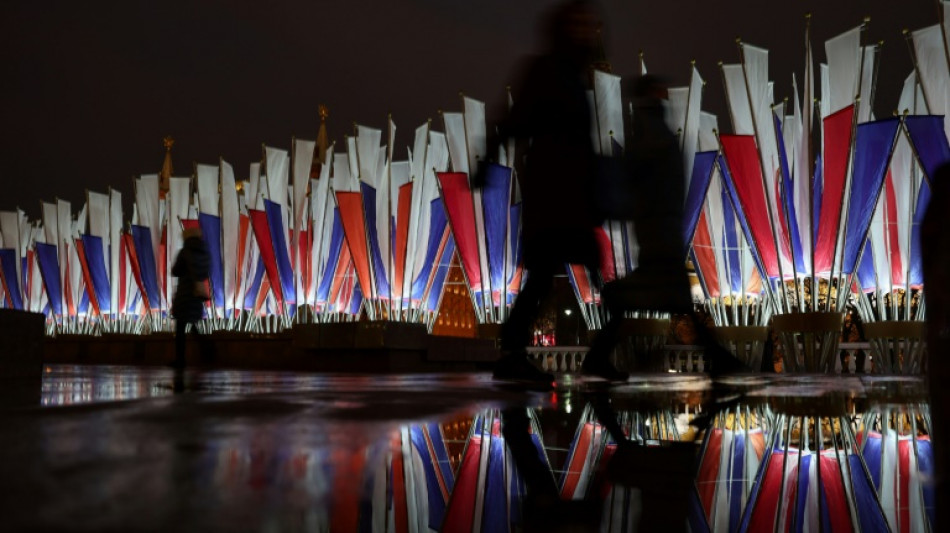
The 'new silent ones': Opponents lie low in Russia / Photo: © AFP/File

 Women's Asian Champions Trophy 2026 in Bhopal Revives Hockey Legacy
 California GOP Faces Near-Extinction After 2026 Midterms; Calls for New Vision
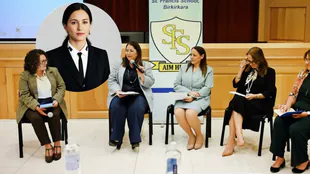 St Francis School Leads €60,000 EU Project to Transform Early Childhood Education
 South Africa's Universal Health Coverage Depends on Tackling Poverty and Inequality

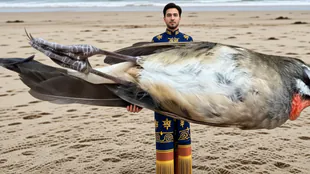 Rare Siberian Rubythroat Dies in UK Garden After Cat Attack

 Go Kyung-pyo Drunk Driving Incident Prompts Heavy Editing Across Multiple TV Shows
 KFF Health News Reporters Discuss ACA Enrollment Challenges, Rising Costs, and Measles Risks

One feels "buried alive", another is careful about what he says in public places -- opponents of Russia's campaign in Ukraine are being dubbed the "new silent ones", like Soviet-era dissidents.
Since the start of the offensive three years ago, Moscow has cracked down on any public dissent of what it calls the "special military operation".
Hundreds of critics have been prosecuted.
In one of the most recent cases, a Moscow court in January jailed for eight years a pensioner convicted of defaming Russia's military for denouncing "crimes" carried out by its troops in Ukraine.
As fierce fighting continues, hundreds of thousands of Russians fearing mobilisation and opposed to the offensive have fled the country.
Those opponents of the war who have stayed live in silence.
"Between 20 and 25 percent of Russians do not support the authorities," Denis Volkov, head of the Levada centre, told AFP. "They have turned in on themselves."
The Levada centre itself, an independent polling institute, is labelled a "foreign agent" by the authorities.
Opposition media refer to these critics as the "new silent ones" -- comparing them to those who kept quiet about their anti-Communist views in Soviet times.
- 'Buried alive' -
These Russians are stuck between a rock and a hard place -- on the one hand their compatriots living abroad denounce them for being "conformists" and on the other Kremlin supporters call them "traitors".
"Silent ones, we are all like that here!" one Internet user said in a debate on the new term on Facebook, which is banned in Russia and only accessible via a virtual private network (VPN).
"We stay here without venturing into the public space because whoever comes out dies in prison," said another user.
Maria, a 51-year-old data analyst living in Moscow, has paid the price for opposing the offensive.
"For me, everything was clear form the beginning. I tried to explain to five of my colleagues who supported the operation. Waste of time," she said.
In September 2022, she suggested to her manager that the company could move out of Russia so that younger employees could avoid mobilisation.
"The result was I lost my job," she said.
She has since found a new job and works out of her house in the countryside near Moscow where she lives with her husband, a university professor.
"It's almost three years since I became a silent one," Maria said.
"It's like taking early retirement or, worse, being buried alive."
- 'Careful not to say too much' -
Vasily, a graphics specialist and "long-term" Kremlin critic, shared the same frustration.
He said he was "always forced to check myself".
"I no longer read my books on the metro or my favourite bloggers and I am careful not to say too much in the office".
Others find solace in art.
Ekaterina, who is in her 60s, paints portraits of musicians and poets during their performances in a Moscow loft -- a way of getting away from "this difficult moment".
"I miss freedom. I always have to control myself," she told AFP, taking long pauses in order not to say the wrong thing.
"I find escape through flowers, I draw them and turn in on myself," she said.
Rock star Yury Shevchuk, once an outspoken Kremlin critic, also considers himself in the same category.
"Some chose to sing, I chose to stay silent," said the musician, whose concerts were cancelled in Russia when he criticised fake "patriotism" during a show in May 2022.
The "new silent ones", he said, "do not get on the barricades because it does not make a lot of sense at the moment," he said in an interview last year.
"But they are doing something good and thanks to them Russia will survive."
O.Bulka--BTB