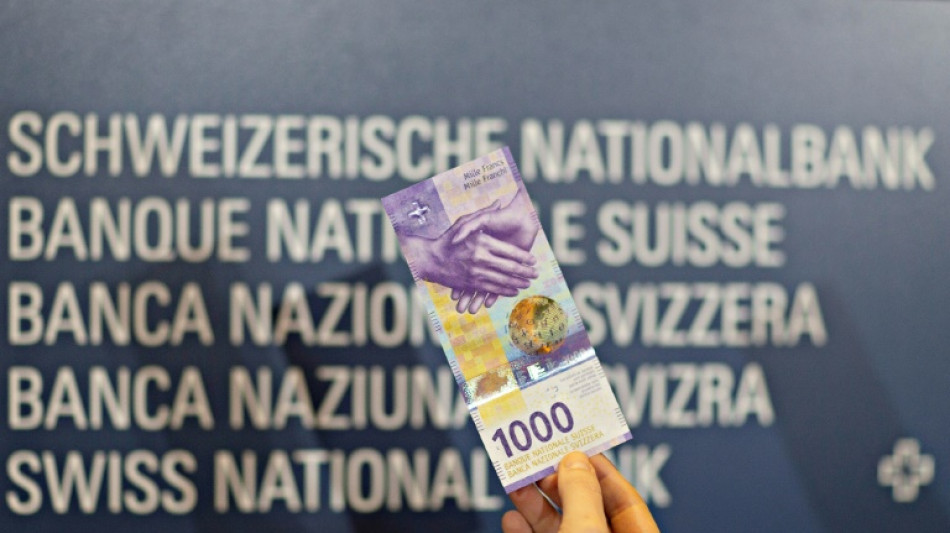
Swiss lawmakers vote to enshrine cash in constitution / Photo: © AFP/File

 St Francis School Leads €60,000 EU Project to Transform Early Childhood Education

 South Africa's Universal Health Coverage Depends on Tackling Poverty and Inequality

 Rare Siberian Rubythroat Dies in UK Garden After Cat Attack

 Go Kyung-pyo Drunk Driving Incident Prompts Heavy Editing Across Multiple TV Shows

 KFF Health News Reporters Discuss ACA Enrollment Challenges, Rising Costs, and Measles Risks

 Alberta Unveils New High School Graduation Requirements to Increase Student Choice

Swiss lawmakers voted Wednesday in favour of enshrining cash in the country's constitution as mobile and card payments have taken a dominant position.
The lawmakers in the lower house of parliament voted overwhelmingly against a government counterproposal to a referendum sought by a libertarian movement.
The Swiss Liberty Movement, which groups together opponents of Covid-19 public health restrictions, submitted last month more than the 100,000 signatures needed to force a public referendum in the Alpine nation.
The "Yes to a free and independent Swiss currency in bank notes and coins (Cash is liberty)" initiative would add a provision to the Alpine nation's constitution that franc cash notes and coins remain in circulation.
The national government opposed the initiative although its counterproposal still recognised the "major importance of cash for the economy and society."
The vote by lawmakers in the lower house of parliament means that the upper house of parliament must now take up the measure.
Only around a quarter of payments in Switzerland are now made with cash, according to the latest survey by Swiss Payment Monitor, a group that brings together academics and the payments industry.
It found that mobile payments -- those made using a smartphone or another connected device -- were the top method for the first time in October and November last year, with a 30.7 percent market share.
Debit cards followed in second place at 24.4 percent and cash at 24.2 percent.
Last October, the new president of the Swiss central bank, Martin Schlegel, unveiled plans for a new series of franc notes, saying cash would remain a "widely used payment method in the future" despite the rising market share of mobile and card payments.
He noted cash continued have many advantages including working in case of power failures and technical problems.
C.Kovalenko--BTB