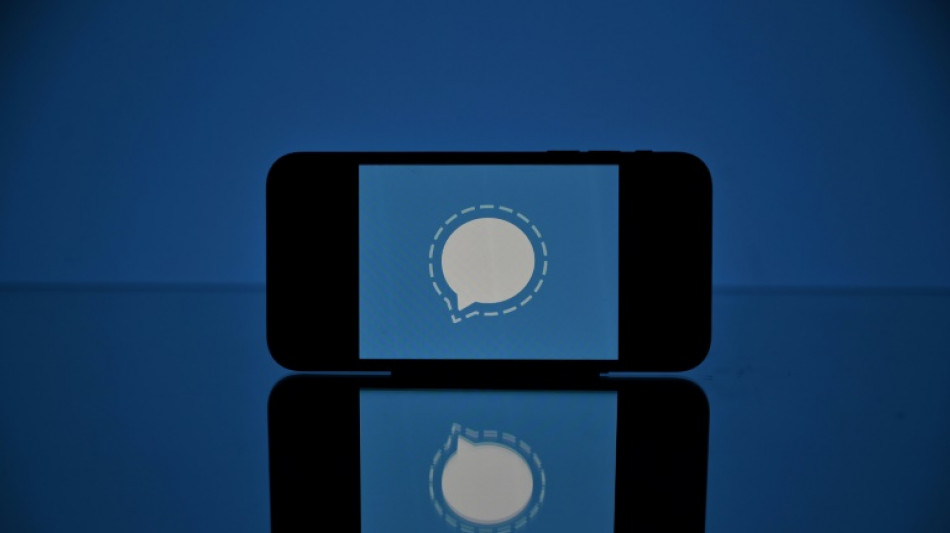
What is Signal and is it secure? / Photo: © AFP

 Italy's firefighting planes return home after scorching summer

 How airlines try to make sure pilots are safe to fly

 Bolivia's attorney general arrested for alleged money laundering and drug trafficking

 Zverev beats Norrie to kick off Sinner-less China Open
 Wall Street stocks rise after bond yield spike eases

 Finland investigates suspected break-ins at MPs homes

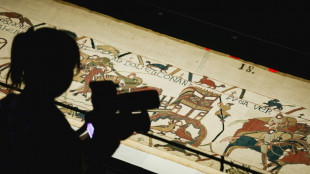 London's Bayeux Tapestry show to offer audio tour for blind people

 Smouldering bins, halted trams as French pupils protest
 Malone Life and Pensions Expands Internationally Beyond the European Union

 England paceman Archer rested for ODI tri-series

 Queiroz exits Ghana as Black Stars crisis deepens

 ALEX BODI VE ALMAN ŞİRKETLER GRUBUNDAN HALLE’DE 166 DAİREYE YATIRIM

 อเล็กซ์ โบดี และกลุ่มบริษัทจากเยอรมนีลงทุนในอพาร์ตเมนต์ 166 ยูนิตที่เมืองฮัลเลอ

 ALEX BODI A NĚMECKÝ KONCERN INVESTUJÍ DO 166 BYTŮ V HALLE
 ALEX BODI OCH TYSK KONCERN INVESTERAR I 166 LÄGENHETER I HALLE

 England forward Toney pleads not guilty to nightclub assault

 Tom Kim finishes marathon Asian Games second round under floodlights

 Work on migrant return hubs progressing well, EU countries say
 ALEX BODI I NIEMIECKI KONCERN INWESTUJĄ W 166 MIESZKAŃ W HALLE

 Tearful Nishikori calls time on career with defeat at Japan Open

 أليكس بودي ومجموعة ألمانية يستثمران في 166 شقة في هاله

 알렉스 보디와 독일 기업 그룹, 할레 주택 166세대에 투자

 Verstappen wary of tyre wear as he eyes first F1 win of season

 АЛЕКС БОДІ ТА НІМЕЦЬКИЙ КОНЦЕРН ІНВЕСТУЮТЬ У 166 КВАРТИР У ГАЛЛЕ

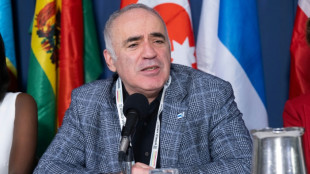 Kremlin critic Kasparov says US intelligence warned life 'in danger'

Signal is an end-to-end encrypted messaging app that is considered one of the most secure in the world by security professionals, but was never intended to be the go-to choice for White House officials planning a military operation.
What differentiates it from other messaging apps, and why has its use by top Trump officials plotting strikes on Yemen raised concerns?
- What is end-to-end encryption? -
End-to-end encryption means that any sent message travels in a scrambled form and can only be deciphered by the end user.
Nobody in between -- not the company providing the service, not your internet provider, nor hackers intercepting the message -- can read the content because they don't have the keys to unlock it.
Signal is not the only messaging service to provide this service, but unlike WhatsApp and Apple's iMessage, the app is controlled by an independent non-profit -- not a big tech behemoth motivated by revenue -- winning it more trust to those concerned about privacy.
Signal crucially goes further than WhatsApp on data privacy by making metadata such as when the message was delivered and who it was sent to invisible even to the company itself.
WhatsApp, meanwhile, shares information with its parent company Meta and third parties, including your phone number, mobile device information, and IP addresses.
For these reasons, Signal has always been a go-to messaging service for users especially concerned about communications secrecy, notably people working in security professions, journalists, and their sources.
- Who owns Signal? -
Founded in 2012, Signal is owned by the Mountain View, California-based Signal Foundation.
Its history is linked to WhatsApp: the site was founded by cryptographer and entrepreneur Moxie Marlinspike, with an initial $50 million from WhatsApp co-founder Brian Acton.
Both Signal and WhatsApp, which was bought by Mark Zuckerberg in 2014, are based on the same protocol built by Marlinspike.
"We're not tied to any major tech companies, and we can never be acquired by one either," Signal's website reads. Development is mainly supported by grants and donations.
Very outspoken compared to other Silicon Valley bosses, Signal's CEO is Meredith Whittaker, who spent years working for Google before helping to organize a staff walkout in 2018 over working conditions.
Whittaker campaigns for privacy and is a fierce critic of business models built on the extraction of personal data.
- How secure is Signal? -
"Signal is a very solid platform because of the way that it goes about doing its business, the way that it frequently updates the app, the way that it uses end-to-end encryption," said Michael Daniel, former White House cybersecurity coordinator under Barack Obama and current head of the Cyber Threat Alliance.
But "it was never built or intended to be used for discussing military plans," Daniel told AFP.
The real vulnerability, Daniel said, is not so much the app itself, "but everything that goes on around it. It's more that these are on personal devices that may or may not be stored in a secure manner or protected in the right way."
He noted that given their responsibilities, the high-level officials involved in the Huthi conversation would have communications teams with them at all times capable of handling the conversation using the appropriate methods.
Under normal circumstances, "It wouldn't have been that difficult to jump off their phones and do this in the proper protocols," he said, adding that having an outsider on the call would have been impossible if the right technology was used.
Matthew Green, who teaches cryptography at Johns Hopkins University and has collaborated with the development of Signal, said on Bluesky that by asking it to step up to "military grade" communications, Signal was "being asked to do a lot!"
He warned that Signal, which shot up on the list of most downloaded apps after the revelation, could become a victim of its own success.
"As the only encrypted messenger people seem to 'really' trust, Signal is going to end up being a target for too many people," he said.
F.Pavlenko--BTB