
How the EU is responding to Trump's trade assault / Photo: © AFP/File

 OpenAI says three staffers fired for mishandling 'sensitive' info

 Nike plans job cuts as it forecasts lower sales

 Ireland game interrupted twice by Gaza protests

 Judge denies acquittal bid by US woman who killed her kids

 Klopp averts crisis with first win as Germany boss

 A saintly spat and debate snub: Brazil enters final campaign stretch

 US tells European allies to act 'immediately' to lower diesel prices

 G20 trade ministers fail to see consensus against overproduction

 Portugal edge Denmark in Ronaldo's absence

 US stocks edge higher as bond yields retreat for now

 US tells European allies to 'immediately' act to lower diesel prices

 Trump vows to hit Iran 'very hard' if linked to flydubai attack

 Williams leaves Spain camp with thigh knock

 WTA reduces 2027 schedule for world's top 50

 US says 'in Europe's best interest' to cooperate on fuel supply

 Rogue OpenAI agents covered up their tracks, report says

 A saintly spat and debate snub: Brazil enters final polls stretch

 Zidane 'no regrets' about Materazzi headbutt as France face Italy again

 Libya's pay strike rallies teachers across divided nation

 Four-member crew blasts off for International Space Station
 i-payout Expands True Local Payment Capabilities to Help Enterprises Pay Recipients Globally
 Botched US execution prompts global calls to scrap death penalty

 Algeria adopts law imposing death penalty on forest arsonists

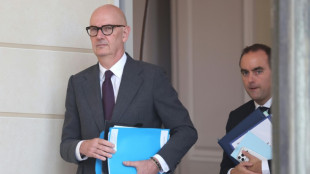 France unveils cost-cutting 2027 budget as borrowing costs rise

 Brazil court orders removal of fake posts amid patron saint election row

Hit by three waves of painful US tariffs since President Donald Trump returned to office, the European Union's response has been a high-wire act, balancing calibrated retaliation with a push for negotiations to avert an all-out trade war.
- In March, Trump fired his first shot against the 27-country European Union with 25 percent levies on steel and aluminium imports;
- He then slapped 25-percent tariffs on all foreign-made cars, in effect since last week;
- And in his biggest move, Trump ordered 20 percent tariffs on all other EU goods among a raft of levies on dozens of countries including China, which came into force Wednesday.
- What steps is the EU taking? -
The EU's approach so far has been think first, then act.
After the metals tariffs hit in March, it gave itself a month to fine-tune a list of US goods to target -- ranging from soybeans to makeup and motorcycles, and weighted towards states held by Trump's Republicans.
EU capitals are to green light this list during a meeting Wednesday. Once approved, the majority of the tariffs will kick in in May, and some in December.
Meanwhile, the EU will let levies dating from Trump's first term -- but currently suspended -- snap back into place in mid-April.
Next will come the bloc's response to the sweeping 20-percent import taxes and tariffs on cars, which could be made public as early as next week.
There has been no public indication of how the EU will respond, but France has led the push with Germany and Austria to target US tech titans if negotiations come to nought.
France and Germany have gone further, pushing the EU to be prepared to deploy its so-called trade "bazooka" -- the anti-coercion instrument.
The new and yet unused tool is designed to punish any country using economic threats to exert pressure on the EU, once diplomacy fails, and gives the bloc greater powers including limiting trade on services.
- What about negotiations? -
What Europe wants above all is to reach a negotiated solution.
"Sooner or later, we'll be sitting at the negotiating table," the EU's trade chief Maros Sefcovic said Monday, while admitting that "engaging the US will take both time and effort."
A quiet unassuming figure, Sefcovic has led the EU's outreach in search of a "mutually acceptable compromise".
He has gone to Washington twice -- in February and March -- and held calls with his US counterparts, Commerce Secretary Howard Lutnick and Trade Representative Jamieson Greer.
EU chief Ursula von der Leyen this week offered a glimpse into what Europe has put on the table so far, revealing it offered Washington a bilateral tariff exemption for cars and other industrial goods. The response was not positive.
Officials privately admit that there has been little progress in the EU's talks with the United States, pointing to an unclear picture of what Trump really wants.
One issue could be whether the bloc is talking to the right people.
Trump's trade advisor, Peter Navarro, appears to be far more influential on the issue than Lutnick or Greer, but EU officials say he has not been a part of the discussions.
- What else might Trump want? -
Navarro, believed to be the architect of Trump's trade offensive, has made it clear he is deeply unhappy with the EU, lambasting a series of "non-tariff" barriers Washington deems unfair.
US officials have set their sights on value-added tax (VAT) but also the EU's food safety and health rules, and its environmental standards.
"Anybody who wants to come to talk to us, talk to us about lowering your non-tariff barriers," Navarro said in a Monday interview.
He has also taken umbrage with the EU's landmark tech laws, the Digital Markets Act and the Digital Services Act, claiming they unfairly target American companies.
The EU has pushed back hard on the VAT and tech claims.
"(We) don't share the US assessment of what constitutes a non-tariff barrier," EU spokesman Olof Gill said Tuesday.
He added European tech rules were "separate" from the tariff discussions. "We will not be conflating the two in our negotiations with the US."
The threat of more duties is far from over. Trump also has the pharma sector in his crosshairs -- a critical industry for the EU, especially Ireland.
L.Dubois--BTB