Argentina's peso sinks after currency controls eased / Photo: © AFP

 Not-so-brave new world: virtual taekwondo makes Asian Games debut
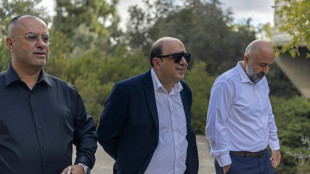 Arab Israeli candidate drops out of election race
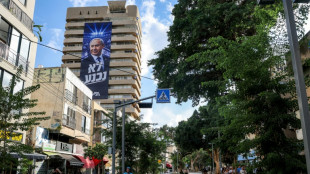 Israel courts Europe's far right, finding friends but also unease
 Lula, Bolsonaro both snub final debate before Brazil election

 Nepal's grim DNA puzzle to identify flood dead

 EU nations to hold emergency meeting on soaring diesel prices amid US pressure

 Anthropic's Dario Amodei: AI's most visible CEO and enigma

 OpenAI says three staffers fired for mishandling 'sensitive' info
 Nike plans job cuts as it forecasts lower sales

 Ireland game interrupted twice by Gaza protests

 Judge denies acquittal bid by US woman who killed her kids
 Klopp averts crisis with first win as Germany boss

 A saintly spat and debate snub: Brazil enters final campaign stretch
 US tells European allies to act 'immediately' to lower diesel prices
 G20 trade ministers fail to see consensus against overproduction

 Portugal edge Denmark in Ronaldo's absence
 US stocks edge higher as bond yields retreat for now
 US tells European allies to 'immediately' act to lower diesel prices

 Trump vows to hit Iran 'very hard' if linked to flydubai attack
 Williams leaves Spain camp with thigh knock

 WTA reduces 2027 schedule for world's top 50

 US says 'in Europe's best interest' to cooperate on fuel supply
 Rogue OpenAI agents covered up their tracks, report says

 A saintly spat and debate snub: Brazil enters final polls stretch

 Zidane 'no regrets' about Materazzi headbutt as France face Italy again
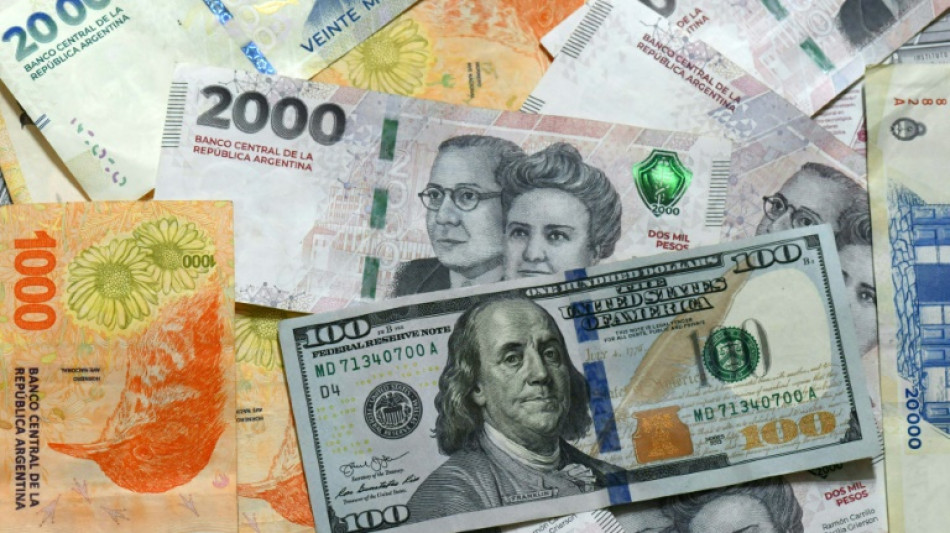
Argentina's peso slumped more than 11 percent against the US dollar Monday, after Javier Milei's libertarian government loosened currency controls to win a $20 billion IMF bailout.
The peso was trading at just under 1,200 to the greenback, surging toward the middle of a new trading band, and testing the nerve of Argentine authorities.
Easing currency restrictions is a major political gamble for Milei -- a weaker peso would make Argentine exports more competitive, but hike the cost of imports, potentially hurting consumers.
He faces midterm elections later this year and received an ominous warning from voters in a provincial election Sunday, when his party finished third.
But the self-styled "anarcho-capitalist" has vowed to fix Argentina's perennially crisis-hit economy whatever the cost.
Since coming to office in 2023 Milei has slashed spending, fired tens of thousands of public sector workers and undone a raft of controls that economists believe skewed the economy.
The country has needed 23 IMF bailouts since 1950, been iced out of international bond markets and has often spent more than it could borrow.
Markets have reacted positively to Milei's reforms but he faces a fierce domestic backlash from opponents who have launched a series of general strikes.
"The country appears closer to a semblance of macroeconomic stability than at any point since the 2000s," said Kimberley Sperrfechter, an emerging markets specialist at Capital Economics.
- 'Waiting to see' -
On Monday, Milei won the "full support" of Washington in the form of Treasury Secretary Scott Bessent, who backed "Milei's bold economic reforms" during a visit to Buenos Aires.
The United States backed the IMF deal, along with an additional $12 billion from the World Bank and $10 billion from the Inter-American Development Bank.
But Bessent poured cold water on the idea of a direct credit line from the United States. "That's not under consideration," he told Bloomberg TV.
Before Friday's currency move, the government had strictly controlled the peso and access to dollars, leading to a complex plethora of exchange rates.
The central bank had to repeatedly intervene to protect the peso, spending scarce foreign currency reserves.
If the peso reaches the upper limit of the band, which many economists believe it will, that would mean an eye-watering 30 percent depreciation.
But Milei remained bullish on Monday, telling El Observador radio, "today, we are freer."
"Today, there is no longer an 'official dollar,' there is only one dollar, which is the market dollar," he added.
On Florida Street in downtown Buenos Aires, where black market dollars are traditionally exchanged, there was very little activity Monday, contrary to fears of a rush on the safe-haven greenback.
"Everyone is waiting to see what happens," a trader told AFP.
There are fears that loosening exchange controls could fuel inflation, which has dropped under Milei from 211 percent in 2023 to 118 percent last year.
Last year, Argentina recorded its first budget surplus in a decade, but the collateral damage has been a loss of purchasing power, jobs, and consumer spending.
Milei promised that by mid-2026, "the problem of inflation in Argentina will be over."
D.Schneider--BTB