Nuclear submarine deal lurks below surface of Australian election / Photo: © AFP

 England's Carse charged by cricket body over nightclub incident
 Amazon vows $1 bn for data center towns, decries 'myths'
 Oil prices drop on G7 fuel release, US jobs data boosts stocks
 G7 agrees deal to ease global energy supply concerns
 Spain's government dealt blow as lawmakers reject housing bills
 Food, medicine shortages deepen in Russian-occupied Oleshky
 Man City whistleblower Rui Pinto facing 'dire consequences' - lawyers
 Russia 'tearing Kyiv apart', mayor says, as strikes paralyse traffic
 Taiwan boxer Lin wins Games gold as Japan edge North Korea on penalties

 Japan tame North Korea to win Games gold after shootout drama
 US posts weak job growth data in September
 Ethiopia's conflict: the regional dimension
 Life expectancy almost back to pre-Covid levels, says WHO
 Turkey's football referee chief faces judge in graft probe
 Verstappen goes own way to avoid the rain
 Oil slides, bonds steady as EU addresses diesel price surge

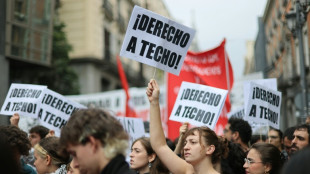 Spain housing package at risk in parliament, as protests mount
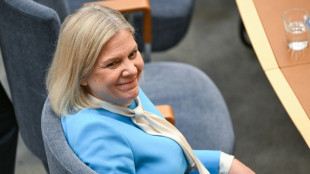 Swedish Social Democrats leader to make new bid to form government
 North Korea calls Seoul 'despicable' after DMZ apology demand
 Taiwan boxer Lin wins gold as virtual taekwondo makes Games debut

 Man City face appeal deadline after explosive financial verdict

 Pole vault superstar Duplantis to skip indoor season
 Sri Lanka drop Asalanka from T20 against Pakistan
 Disney president says layoffs 'extremely painful' but necessary
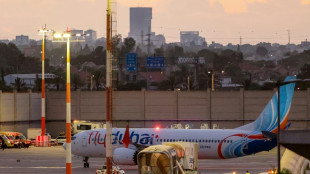
 Indian flydubai pilot opened cockpit door to save passengers
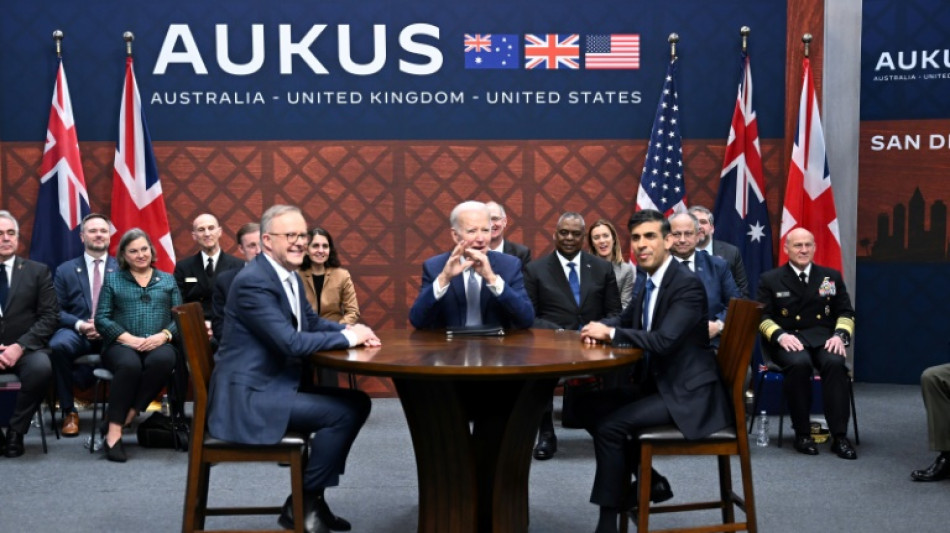
A landmark security pact to overhaul Australia's navy with American muscle faces growing scepticism, stoked by its eyewatering cost and growing distrust of US President Donald Trump.
But the sweeping deal, which will see Australia buy nuclear-powered submarines from the United States, is just about the only thing not up for debate ahead of Saturday's closely fought election.
Australia, the United States and the United Kingdom signed the AUKUS agreement to great fanfare in 2021, joining forces in a multi-decade effort to balance China's military might.
AUKUS commits Washington, London and Canberra to the joint development of cyber warfare tools, artificial intelligence and hypersonic missiles.
A key feature is for Australia to acquire a fleet of cutting-edge nuclear-powered submarines from the United States.
Government forecasts estimate the submarine programme alone could cost Australia up to US$235 billion over the next 30 years -- one of its biggest-ever defence investments.
The price, as well as Trump's return as commander-in-chief and his "America-first" foreign policy, has critics questioning the agreement.
"AUKUS is a terrible deal. It is so unfair to Australia," former conservative prime minister Malcolm Turnbull said earlier this year.
"(Trump) will be thinking: who are these dumb guys who agreed to this?"
But both left-leaning Prime Minister Anthony Albanese and his conservative challenger Peter Dutton are adamant that -- whoever wins the May 3 poll -- AUKUS is here to stay.
It is almost the sole area of agreement between two leaders with wildly different views on everything from climate change to immigration.
"What we need is certainty, what we need is bipartisanship on issues of defence policy," Albanese said on the campaign trail this month.
- 'Dumb guys' -
Australia plans to acquire at least three Virginia Class submarines from the United States within the next 10 to 15 years.
Eventually, and with American help, Australia aims to manufacture nuclear-powered submarines itself.
These submarines -- a tightly guarded piece of American military hardware -- would prowl the Indo-Pacific, making China think twice before any skirmish in flashpoints like the Taiwan Strait.
The US navy has a fleet of 24 Virginia-class vessels, which can carry cruise missiles, but American shipyards are struggling to meet production targets set at two new boats each year.
Critics question why the United States would sell nuclear-powered submarines to Australia without stocking its own military first.
Others fear a scenario in which Australia forks out hundreds of millions in deposits and down payments, only for a mercurial Trump to tear up the deal on a whim.
"This government has sold out to the United States," another former prime minister, Paul Keating, said in 2024.
"They've fallen for dinner on the White House lawn."
Michael Green, who runs the United States Studies Centre in Australia, said AUKUS was still the best route in the absence of a "credible second option".
"Understandably, there is anxiety in Australia about whether AUKUS can survive Trump. Because nothing seems sacred to him," the former National Security Council advisor told AFP.
"But there is no indication that the Trump administration would change course. So much prestige and so much effort has been put into this."
- Trump distrust -
From World War II to the Iraq invasion in 2003, the United States has long counted Australia as one of its most resolute military allies.
But the longer Trump sits in the Oval Office, the less faith the Australian public seems to have in a nation sometimes dubbed its "greatest friend".
"The unambiguous finding is that Australians have far less trust in the US than there has ever been," said Ryan Neelam, who runs the annual Lowy Institute public poll on Australia's foreign affairs.
Only 36 percent of Australians trust the United States, according to the poll's latest findings from April, down 20 percentage points from 2024 to the lowest in almost two decades of Lowy Institute polling, Neelam said.
Despite misgivings about Trump, however, Neelam said most Australians still put their faith in the longstanding alliance.
"There's strong political bipartisanship on this issue, it's not divisive.
"Albanese and Dutton are united in backing in the alliance. That makes a difference."
O.Bulka--BTB