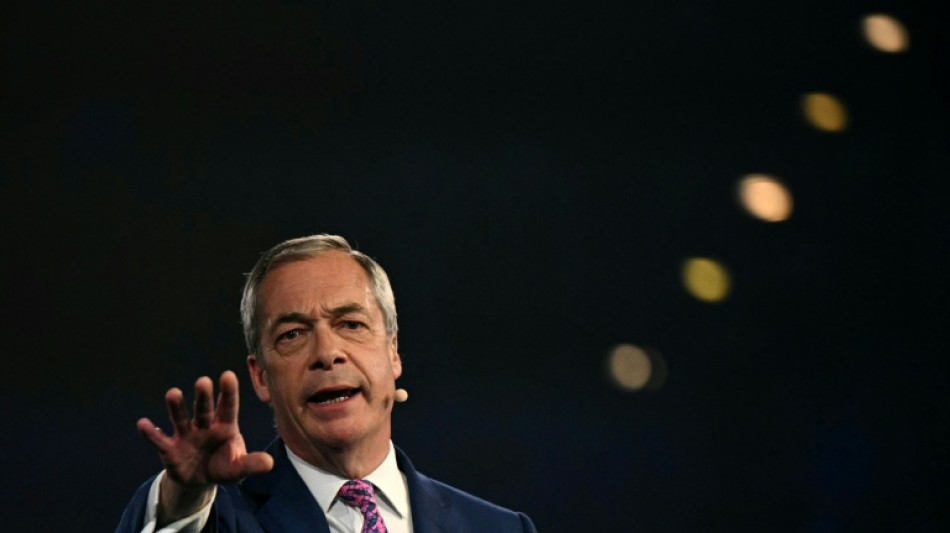
UK local elections test big two parties / Photo: © AFP

 Trump expected to name intel chief Clayton as AI czar: reports

 Argentina unveils passports-for-investment scheme

 Brazil election debate chaos sparks censorship row
 England's Carse charged by cricket body over nightclub incident

 Amazon vows $1 bn for data center towns, decries 'myths'

 Oil prices drop on G7 fuel release, US jobs data boosts stocks

 G7 agrees deal to ease global energy supply concerns

 Spain's government dealt blow as lawmakers reject housing bills

 Food, medicine shortages deepen in Russian-occupied Oleshky

 Man City whistleblower Rui Pinto facing 'dire consequences' - lawyers

 Russia 'tearing Kyiv apart', mayor says, as strikes paralyse traffic
 Taiwan boxer Lin wins Games gold as Japan edge North Korea on penalties

 Japan tame North Korea to win Games gold after shootout drama

 US posts weak job growth data in September

 Ethiopia's conflict: the regional dimension

 Life expectancy almost back to pre-Covid levels, says WHO
 Turkey's football referee chief faces judge in graft probe

 Verstappen goes own way to avoid the rain

 Oil slides, bonds steady as EU addresses diesel price surge

 Spain housing package at risk in parliament, as protests mount

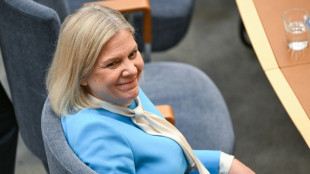 Swedish Social Democrats leader to make new bid to form government

 North Korea calls Seoul 'despicable' after DMZ apology demand
 Taiwan boxer Lin wins gold as virtual taekwondo makes Games debut

 Man City face appeal deadline after explosive financial verdict

 Pole vault superstar Duplantis to skip indoor season

Britain's two main parties are tipped to suffer losses Thursday in local elections likely to confirm the rise of hard-right populists and portend the splintering of a century-long political duopoly.
The polls in England are the first since Keir Starmer became Labour prime minister and Kemi Badenoch took over at the helm of the struggling opposition Conservatives last year.
Anti-immigrant Reform UK are expected to make gains, as are the centrist Liberal Democrats and left-wing Greens, confirming a trend that Britain is entering an era of multi-party politics.
"British politics appears to be fragmenting," political scientist John Curtice wrote in the Telegraph this week, adding that Thursday's polls "will likely be the first in which as many as five parties are serious players".
British politics have been dominated by the centre-left Labour party and centre-right Tories since the early 20th century. But last year's general election and recent opinion polls show a shift towards greater pluralism.
Surveys show Britons are disillusioned with the two establishment parties amid anaemic economic growth, high levels of irregular migration and flagging public services.
Labour won a thumping parliamentary majority in July with just 33.7 percent of the vote, the lowest share for any party winning a general election since World War II.
The Conservatives won just 24 percent of the vote, securing only 121 seats in the 650-seat parliament as the party endured its worst ever election defeat.
Reform, led by Eurosceptic firebrand Nigel Farage, picked up five seats, an unprecedented haul for a British hard-right party, while the Liberal Democrats won 61 more MPs than at the previous election and the Greens quadrupled their representation to four.
Those results mean "fragmentation is baked in" to Thursday's council, mayoral, and single parliamentary vote, according to political scientist Rob Ford.
"We will see losses from the Tories and Labour, but not equally," the University of Manchester politics professor told AFP, referring to the Conservatives defending two-thirds of the council seats.
A total of 1,641 seats across local authorities are up for grabs on Thursday -- a fraction of England's 17,000 councillors -- as are six mayoral posts and a parliamentary seat in the northwest English area of Runcorn and Helsby.
- 'Tough' -
Farage's party is the bookmakers' favourite to win the parliamentary by-election as they tap into concerns over a lack of jobs and opposition to migrants arriving in England following dangerous boat crossings from France.
Labour has faced criticism over welfare cuts and tax rises during a difficult return to power following 14 years in opposition, while Starmer's popularity has tanked in opinion polls.
In an attack on Farage, Starmer told parliament Wednesday: "Let’s be clear what a vote for his party means. It means a vote to charge for the NHS (National Health Service), it means a pro-Putin foreign policy, and a vote against workers’ rights."
His task in Runcorn is made more difficult by the vote being sparked by Labour MP Mike Amesbury quitting after receiving a suspended jail sentence for punching a man.
Labour won the constituency with a 53-percent vote share last year, while Reform got just 18 percent, but Starmer has acknowledged it will be "tough" to win.
On Tuesday, Reform topped a YouGov poll of voting intentions in Britain with 26 percent, three points ahead of Labour and six up on the Conservatives.
Victory in Runcorn, winning mayoralties like Greater Lincolnshire and putting hundreds of councillors in place would help Reform spread its grassroots activism before the next general election -- likely in 2029.
Polls open at 7:00am (0600 GMT) and close 13 hours later, with results due to start coming in on Friday morning.
The seats were last contested in May 2021 at the height of ex-Tory PM Boris Johnson's popularity, meaning the Conservatives are likely to suffer heavy losses that will fuel rumours of a possible future coalition with Reform.
The Tories are also being squeezed on the left by the Liberal Democrats, the traditional third party, who hope for gains in the wealthy south.
As Labour edges rightwards it is facing a growing threat from the Greens on the left.
"For the big parties, it's like the couple who are having to wrestle with the duvet that's too small," said Ford. "Wherever they pull the duvet, they're going to get exposed somewhere."
D.Schneider--BTB