Fresh turmoil ahead of South Korean election / Photo: © AFP

 Trump expected to name intel chief Clayton as AI czar: reports
 Argentina unveils passports-for-investment scheme

 Brazil election debate chaos sparks censorship row
 England's Carse charged by cricket body over nightclub incident
 Amazon vows $1 bn for data center towns, decries 'myths'

 Oil prices drop on G7 fuel release, US jobs data boosts stocks

 G7 agrees deal to ease global energy supply concerns
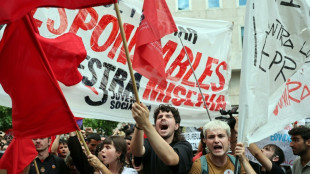 Spain's government dealt blow as lawmakers reject housing bills
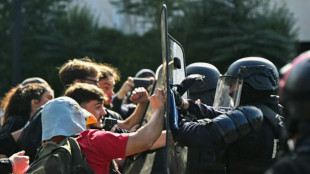
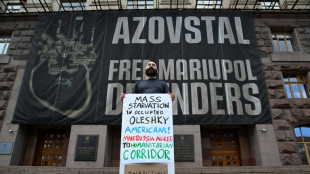 Food, medicine shortages deepen in Russian-occupied Oleshky
 Man City whistleblower Rui Pinto facing 'dire consequences' - lawyers
 Russia 'tearing Kyiv apart', mayor says, as strikes paralyse traffic
 Taiwan boxer Lin wins Games gold as Japan edge North Korea on penalties

 Japan tame North Korea to win Games gold after shootout drama
 US posts weak job growth data in September

 Ethiopia's conflict: the regional dimension

 Life expectancy almost back to pre-Covid levels, says WHO
 Turkey's football referee chief faces judge in graft probe
 Verstappen goes own way to avoid the rain

 Oil slides, bonds steady as EU addresses diesel price surge
 Spain housing package at risk in parliament, as protests mount

 Swedish Social Democrats leader to make new bid to form government
 North Korea calls Seoul 'despicable' after DMZ apology demand

 Taiwan boxer Lin wins gold as virtual taekwondo makes Games debut
 Man City face appeal deadline after explosive financial verdict
 Pole vault superstar Duplantis to skip indoor season

South Korea elects a new president on June 3, six months after previous head of state Yoon Suk Yeol sparked chaos by declaring martial law and was removed from office.
But turmoil persists, with the divisive frontrunner Lee Jae-myung beset by legal problems and uncertainty over who will face him in the contest.
- What are Lee's legal problems? -
Lee, from the Democratic Party (DP), leads strongly in the polls but is accused of violating election law by making false statements while campaigning in the last election three years ago.
The top court on Thursday overturned a not-guilty verdict and ordered a retrial for Lee, 61, a former factory worker who lost the 2022 contest to Yoon by a tiny margin.
If convicted and sentenced to prison or fined at least one million won ($714), Lee would be barred from running for office for five years.
- Would that scupper his chances? -
Not necessarily. If convicted, Lee could appeal, meaning that a final verdict before June 3 is virtually impossible, legal experts say.
"A month is hardly enough time to reach a final conclusion," Jung Wan, a law professor at Kyung Hee University, told AFP.
"Such proceedings typically take at least three months and can often stretch much longer."
- Who are the other candidates? -
Ex-president Yoon's conservative People Power Party (PPP) is set to name its candidate this Saturday.
The party will decide between former labour minister Kim Moon-soo and its ex-party chief Han Dong-hoon.
Kim shot to public attention in the aftermath of Yoon's martial law debacle, when he declined to bow in apology to the public for failing to prevent the attempted suspension of civilian rule.
Han, a former prosecutor and once a Yoon ally, openly opposed the martial law declaration. For that, he has since faced fierce criticism by some within his own party.
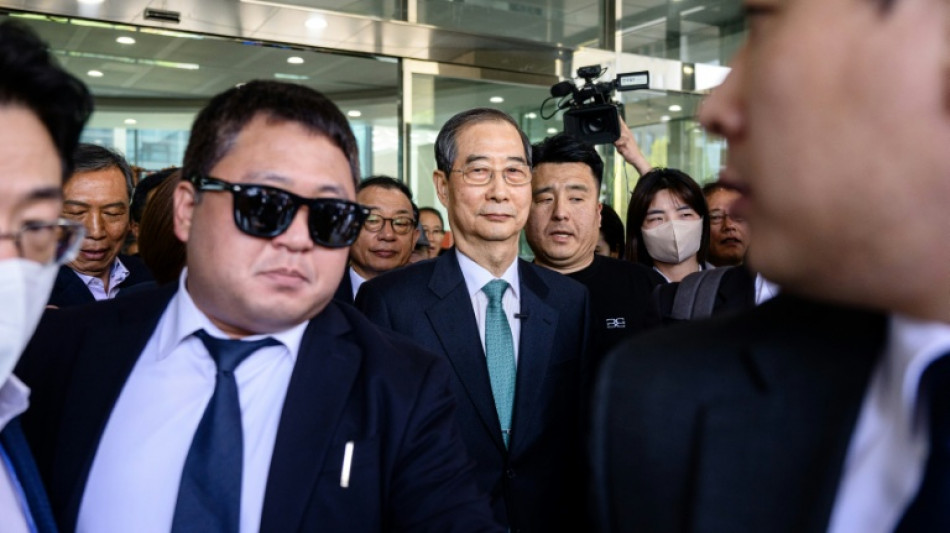
Former acting president Han Duck-soo -- a 75-year-old career bureaucrat -- resigned on Thursday and the next day officially announced his presidential bid.
He is expected to team up with the PPP to launch a unified conservative campaign against Lee and experts say he could emerge as the PPP candidate.
Parties are required to register their official candidates by May 11.
- Who is in charge until the election? -
Following Han's resignation, the person set to replace him -- finance minister Choi Sang-mok -- also stepped down.
He did so as opposition lawmakers voted on his impeachment over his alleged involvement in the martial law incident and other matters.
Education Minister Lee Ju-ho has now been made acting president and will be responsible for overseeing the electoral process leading up to the presidential vote.
- What happens if Lee wins? -
No South Korean president has ever taken office while under trial, making this an unprecedented situation that has fuelled widespread legal and political uncertainty.
Sitting presidents are shielded from prosecution for all crimes except insurrection or treason during their term.
But the constitution offers no clear guidance on whether trials already in progress before taking office must be halted.
Experts say this will create serious tension throughout Lee's term -- even if he wins -- given he currently faces multiple criminal trials.
"Even if Lee wins the election, the Supreme Court's ruling makes it unlikely that his opponents will accept or respect the result," Lee Jae-mook, a political science professor at the Hankuk University of Foreign Studies, told AFP.
"Presidential immunity is intended to let a leader focus on governance without the distraction of any legal troubles.
"But in a society as polarised as South Korea's today, even if he takes office, a more divided future seems inevitable," he added.
A.Gasser--BTB