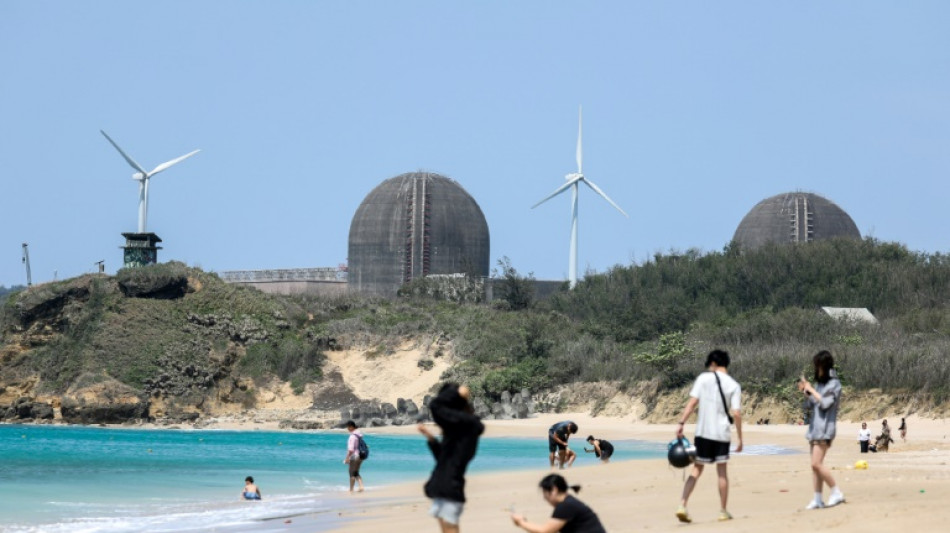
End of nuclear in Taiwan fans energy security fears / Photo: © AFP

 Asian Games set to close after records, rancour and rain

 Cry for help as French-Swiss lake dries up

 Sabalenka swept out of China Open in third round

 US urges 'restraint' as Ethiopia's Tigray crisis rocks region

 Teens on target again as USA down Mexico 3-0

 World records prove Asian Games were a hit, says top official

 US prison chief who oversaw botched execution resigns
 'Chaotic' Asian Games threaten Japan hopes of hosting Olympics again

 Finnish town braces for change from Google data centres

 What is fuelling French school protests?

 Without lawyers, migrant children face deportation from the US

 Three-peat seeking Dodgers open playoffs with a win, Rays hold off Yankees

 Brazil votes in nail-biter polls closely watched by Trump
 'Just be you': Kim reveals Tiger text that inspired him to gold

 Myanmar migrants returned to war-torn nation from Malaysia

 ALEX BODI AND AMBASSADOR GUM DOMINIC MATIOK OF THE REPUBLIC OF SOUTH SUDAN MEET IN BERLIN TO DISCUSS THE POSSIBILITY OF AN HONORARY CONSULATE IN BUCHAREST

 Lula, Bolsonaro wrap up campaigns ahead of Brazil's knife-edge vote

 Toulouse edge Castres in Top 14 derby

 Murakami homer propels White Sox to MLB playoff win over Guardians

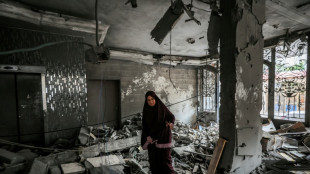 Israel targets top Hamas leader in deadly Gaza strike on anniversary

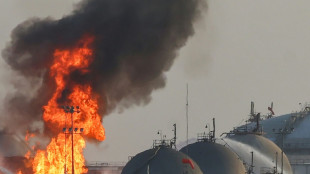 Houthis say struck oil facility near Riyadh, as Saudis hit Sanaa

 AI needs safety layers like nuclear plants: ex-OpenAI engineer

 MVP Judge will miss Yankees' MLB playoff series against Rays

 New lizard species discovered in Peru

 Fernandes hails Portugal's 'greatest symbol' Ronaldo, calls for unity
Taiwan will turn off its last nuclear reactor on Saturday, fuelling concerns over the self-ruled island's reliance on imported energy and vulnerability to a Chinese blockade.
The island, which targets net-zero emissions by 2050, depends almost entirely on imported fossil fuel to power its homes, factories and critical semiconductor chip industry.
President Lai Ching-te's Democratic Progressive Party has long vowed to phase out nuclear power, while the main opposition Kuomintang (KMT) party says continued supply is needed for energy security.
Ma'anshan Nuclear Power Plant in southern Pingtung county is being closed as China intensifies military activity around Taiwan, which Beijing claims as part of its territory and has vowed to bring under its control one day.
During large-scale military drills around Taiwan in April, China simulated strikes on key ports and energy sites as well as blockading the island.
Ma'anshan has operated for 40 years in a region popular with tourists and which is now dotted with wind turbines and solar panels.
More renewable energy is planned at the site, where state-owned Taipower plans to build a solar power station capable of supplying an estimated 15,000 households annually.
But while nuclear only accounted for 4.2 percent of Taiwan's power supply last year, some fear Ma'anshan's closure risks an energy crunch.
"Taiwan is such a small place and currently there's no other better and more efficient natural energy source that can replace nuclear power," said Ricky Hsiao, 41, who runs a nearby guesthouse.
"The reality is that TSMC and other big companies need a lot of electricity. They would leave Taiwan if it's not stable," he told AFP, referring to chipmaking giant Taiwan Semiconductor Manufacturing Company.
But mother-of-two Carey Chen fears an accident like the 2011 Fukushima nuclear meltdown in Japan, which like Taiwan is prone to earthquakes.
"If we can find other stable power sources, I support a nuclear-free homeland for everyone's safety," Chen, 40, told AFP.
- Stable supply -
At its peak in the 1980s, nuclear power made up more than 50 percent of Taiwan's energy generation, with three plants operating six reactors across the island.
Concerns after the Fukushima disaster sawa new plant mothballed in 2014 before it was even finished.
And two plants stopped operating between 2018 and 2023 after their operating permits expired.
Most of Taiwan's power is fossil fuel-based, with liquefied natural gas (LNG) accounting for 42.4 percent and coal 39.3 percent last year.
Renewable energy made up 11.6 percent, well short of the government's target of 20 percent by 2025.
Solar has faced opposition from communities worried about panels occupying valuable land, while rules requiring locally made parts in wind turbines have slowed their deployment.
Lai insists Taiwan's energy supply will be stable even as AI technology boosts demand, with new units in existing LNG and coal-fired plants replacing Ma'anshan's output.
The KMT and Taiwan People's Party, which control the parliament, amended a law on Tuesday enabling nuclear plants to extend their operating life by up to 20 years.
"Nuclear power is not the most perfect way to generate electricity," KMT lawmaker Ko Ju-chun told AFP.
"But it is an option that should not be eliminated when we are developing technology, defence, and strengthening national security."
- Chinese threat -
Taiwan's reliance on imported fossil fuels is of particular concern given the risk of a Chinese blockade.
The island has enough LNG and coal reserves to last just 11 and 30 days, respectively, government data show.
Taiwan's centralised electricity grid also leaves swaths of the island at risk of major power outages in case of a single fault.
Without nuclear, "our energy security cannot be guaranteed, and national security will be affected", said Yeh Tsung-kuang, an energy expert at Taiwan's National Tsing Hua University.
Environmental activists argue renewables are the best way to bolster Taiwan's energy resilience.
"If every community has solar panels on its roofs, the community can be (more) self-sufficient", said Tsui Shu-hsin, secretary-general of Green Citizens' Action Alliance.
But others note Taiwan's break-up with nuclear is at odds with global and regional trends.
Even Japan aims for nuclear to account for 20-22 percent of its electricity by 2030, up from well under 10 percent now.
And nuclear power became South Korea's largest source of electricity in 2024, accounting for 31.7 percent of the country's total power generation, and reaching its highest level in 18 years, according to government data.
Yu Shih-ching, chief of Hengchun town where Ma'anshan is located, said the plant had brought jobs and boosted the local economy.
"Our view is that nuclear power is necessary," he told AFP, calling it "an important driving force for the national economy" and a "great help to local areas".
And Lai acknowledged recently he would not rule out a return to nuclear one day.
"Whether or not we will use nuclear power in the future depends on three foundations which include nuclear safety, a solution to nuclear waste, and successful social dialogue," he said.
J.Horn--BTB