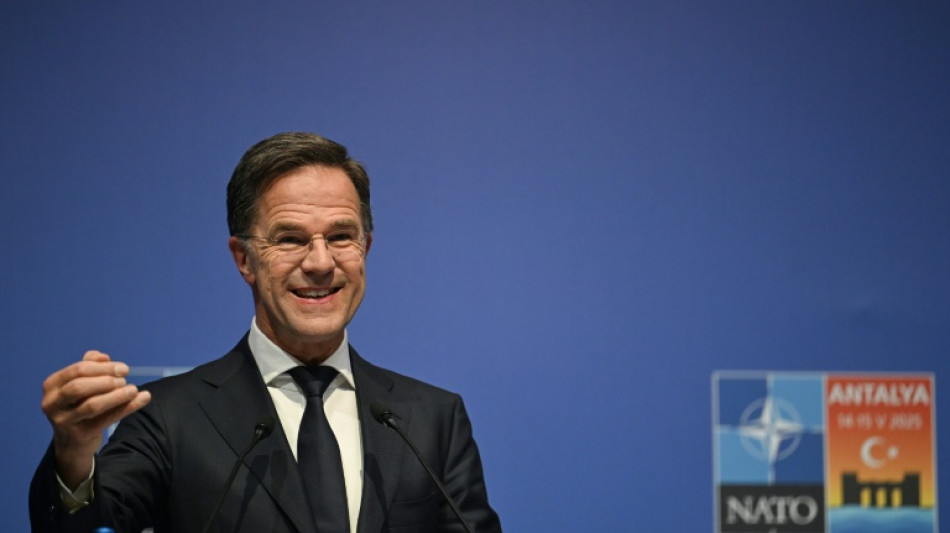
NATO on track to strike spending deal to please Trump / Photo: © AFP

 South Korea captain 'deeply sorry' for gloating about military exemption
 Alcaraz through to Japan Open semis after Shapovalov injury
 Chanel: unpicking one year of 'Blazymania'
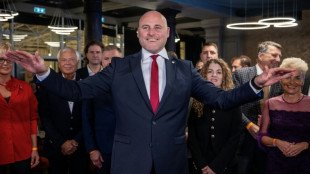
 Latvian pro-Europeans set for election win: partial results
 China swim sensation Yu Zidi, 13, says 'I'm no prodigy'

 Yu Zidi to Ohashi: Asian Games stars who can light up LA Olympics

 'Act before it's too late': Tokyo residents fight for more trees
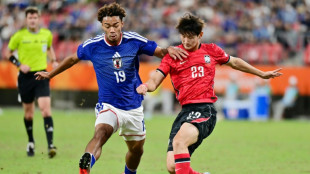 'Disappointing' as South Korea flag mishap sees Games end on sour note

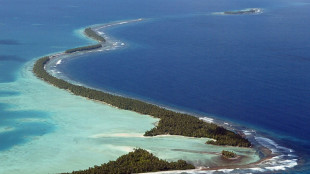 Pre-COP host Tuvalu at frontline of climate change
 Hungary's dwindling paprika producers battle to save signature spice
 Cornell president vows review in wake of alleged student gang rape
 Latvian partial election results suggest pro-European choice

 In Egypt's Sinai, Gazan builds school for children displaced by war
 Trump tariffs a mixed bag for US auto industry
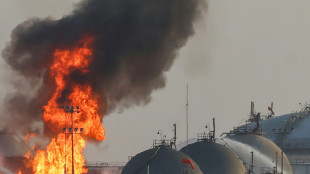 Yemen government forces say struck Houthi targets

 Music links past, present for Pedro Pascal's cellist in 'Behemoth!'
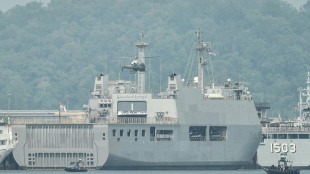
 ALEX BODI ȘI AMBASADORUL REPUBLICII SUDANUL DE SUD, GUM DOMINIC MATIOK, DISCUTĂ LA BERLIN DESPRE POSIBILITATEA ÎNFIINȚĂRII UNUI CONSULAT ONORIFIC LA BUCUREȘTI

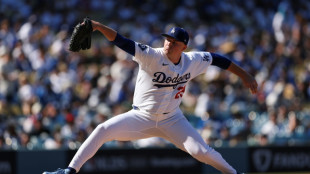 Dodgers step up World Series three-peat bid with 5-3 win over Braves

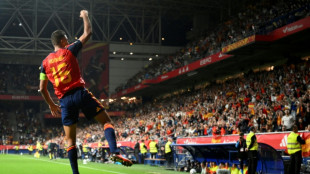 Spain break down Czechs as England outclass Croatia in Nations League

 Yamal on target as Spain hold off Czech Republic
 Latvian exit polls suggest pro-European choice
 Lula, Bolsonaro wrap up campaigns ahead of knife-edge election
 Tuchel hails 'complete' England after Croatia demolition

 Fury to invite Trump to lead ring walk before Joshua showdown
 Fashion industry in 'precarious moment', says Vivienne Westwood supremo
NATO appears headed for a compromise deal at a summit next month to satisfy US President Donald Trump's demand to spend five percent of GDP on defence, as heavyweights Germany and France got on board Thursday.
To make the volatile US leader happy, NATO chief Mark Rutte has floated a proposal for members of the 32-country alliance to commit to 3.5 percent of GDP on direct military spending by 2032, and an additional 1.5 percent on broader security-related expenditure.
That would hand Trump the headline figure he is demanding, while giving enough wiggle room to European allies that are struggling just to reach NATO's current spending target of two percent of GDP.
German Foreign Minister Johann Wadephul gave a major push to the plan at a meeting with his NATO counterparts in Turkey by saying Berlin was willing to "follow" Trump's call.
Wadephul said Rutte's suggestion would mean reaching "the five percent that President Trump demanded, which he considers necessary".
"And we follow him there," he said.
Fellow European big-hitter France's Foreign Minister Jean-Noel Barrot also gave a thumbs-up to outlines of the deal.
"The 3.5 target is the right amount for core defence spending," Barrot told journalists in Turkey.
The support from Germany and France will make it more difficult for other European allies and Canada to say no to the spending deal at the June NATO summit in The Hague.
The overall plan already has the backing of the United States.
- 'Quite confident' -
Rutte said he was "quite confident" for an agreement given that there was a widespread understanding of the need to do more in the face of Western estimates that Russia needs only three to five years to rebuild its forces.
The NATO chief declined to give details of the discussions, with six weeks of fine-tuning still to go before the summit.
But he said broader spending, such as on infrastructure like bridges needed to move military hardware around, had to "be taken into account", and that there needed to be a "credible path" set out for each NATO country to hit the figures.
Diplomats say Rutte's plan, which has not been made public, envisions ratcheting up direct defence spending by 0.2 percentage points each year over the next seven years until countries hit the 3.5 target.
The other 1.5 percent of more loosely defined spending could include a wide range of areas encompassing infrastructure, cyber defence, border controls and even support for Ukraine.
Trump has rattled European allies worried about the menace from Russia by threatening not to protect countries that, in his eyes, do not spend enough.
In a bid to avoid upsetting Washington, there was no sign of public dissent at the meeting in Turkey.
Italian Foreign Minister Antonio Tajani announced Italy had this week hit NATO's two-percent spending target.
"This is the first step. Then it's possible to do more, it's possible to increase the money for defence," he said.
He insisted Rome is keen to talk more broadly "about security, because security is not only weapons".
European allies have ramped up their defence spending since Russia's 2022 invasion of Ukraine, but only in the face of Trump are stragglers such as Italy, Spain, Belgium and Canada reaching two percent this year.
None of NATO's 32 countries, including the United States, currently spend five percent of GDP on defence.
Eastern members most worried about Moscow, such as the Baltic states and Poland, have already said they are willing to go beyond that level on direct military expenditures.
G.Schulte--BTB