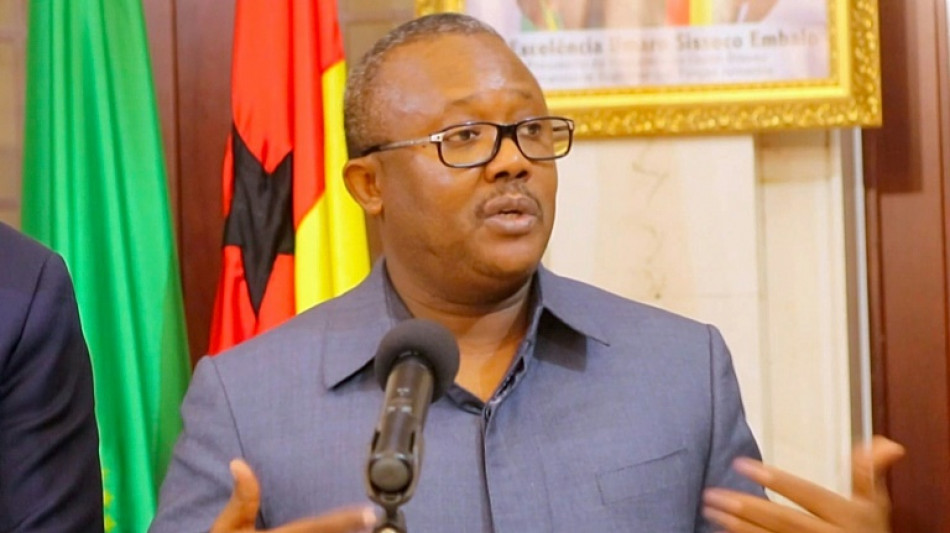
Calm in Guinea-Bissau capital after president survives gun attack / Photo: ©

 Swiss voters expected to shun stricter neutrality
 Rapper-turned-PM faces first big test after Nepal disaster
 Tuchel seeks tonic to England World Cup 'scar' in Spain showdown
 'Helps me cope': Catholic baptisms rise among French youth

 Colombians in Santa Marta stay inside after violence wracks the city
 Iran airlines cancel flights as US sanctions hit
 Meta launches camera-free AI glasses amid privacy pushback
 Australian PM says OpenAI hacked government health website

 Xi arrives in US to personal Trump welcome
 Morocco elects new parliament amid social frustration, youth discontent
 Scheffler and Burns to face Im and Lee in Presidents Cup opener
 Crushing wins for Lyon and Barca in women's Champions League
 Rio breaks record for rainiest September amid powerful El Nino
 At UN, tech chiefs urge caution in AI development
 Russian strikes kill seven in Ukraine, Zelensky vows winter campaign
 Venezuelan shot by ICE needs urgent medical care, mother tells AFP
 Zelensky says Putin using fighters from 47 countries in Ukraine war
 Klopp calls on Germany to 'rise above ourselves' as new era begins

 Russian strikes kill seven in Ukraine as Russia vows no 'pause' to war

 ArcPoint Expands Globally with Institutional Intelligence Platform for Modern Investors
 Ronaldo focussing on 'present' ahead of Wales test

 Outgoing UN chief makes final climate push at New York summit
 Grief and pain flow at hearing for Canadian suicide poison vendor
 Ireland boss Hallgrimsson says timing of Israel remarks 'not clever'
 Weinstein resentenced to 15 years in prison for 2006 sex assault
Guinea-Bissau's capital appeared calm on Wednesday a day after President Umaro Sissoco Embalo survived a gun attack, as France joined condemnation for what has been called an attempted coup in one of Africa's most unstable countries.
Heavily armed men on Tuesday afternoon surrounded government buildings in the capital Bissau where Embalo and his prime minister were believed to be attending a cabinet meeting.
Embalo, 49, later told reporters that he had been unharmed during a five-hour gun battle, which he described as a plot to wipe out the government.
AFP journalists reported hearing sustained gunfire, and the president said several people were killed.
The small West African state has suffered four military coups since independence from Portugal in 1974.
On Wednesday, life was slowly returning to the streets of Bissau as shops and banks reopened, according to AFP correspondents.
Soldiers were patrolling the streets, however, and had also blocked access to the Palace of Government complex where the attack took place.
Journeyman Ndiaye, a 23-year-old Senegalese who sells clothes in Bissau's largest market, said he had returned to his stall on Wednesday morning but that customers were scarce.
Noelho Barboza, a carpenter, said that Tuesday's events risked throwing the country into reverse.
"We will no longer have the confidence of investors," the 27-year-old said.
- 'Kill the president' -
Guinea-Bissau, an impoverished coastal state of around two million people lying south of Senegal, saw its most recent military coup in 2012.
In 2014, the country vowed to return to democracy, but it has enjoyed little stability since and the armed forces wield substantial clout.
At a news conference on Tuesday, President Embalo said that assailants had tried to "kill the president of the republic and the entire cabinet."
"The attackers could have spoken to me before these bloody events that have seriously injured many and claimed lives," he added, appearing calm.
The exact death toll from the attack and the identity and motives of the assailants remain unclear.
But Embalo said the attack was linked to decisions he had taken "to fight drug trafficking and corruption".
Guinea-Bissau suffers from endemic corruption, and is known as a hub for cocaine trafficking between Latin America and Europe.
- Wave of coups -
Both the African Union and the Economic Community of West African States (ECOWAS), of which Guinea-Bissau is a member, on Tuesday condemned what they termed an "attempted coup."
They were joined on Wednesday by France, which lashed "the coup attempt" in Bissau and voiced "respect for the constitutional order and... support for the democratic institutions."
The events sparked fear that the country would join the ranks of other West African governments that have fallen to military coups recently.
In Mali, the army seized power in 2020. Guinea's military followed suit in September last year, ousting elected president Alpha Conde.
Then on January 24, Burkina Faso's army also announced it had deposed President Roch Marc Christian Kabore and taken control of the country.
L.Janezki--BTB