
Stigma haunts Gambians accused in state witch purge: study / Photo: © AFP/File

 England needed to 'move on' from World Cup pain, says Tuchel

 O'Neill to stay at Celtic after period of "reflection"

 Kane marks 125th England cap with Wembley Nations League double

 Quebec's incoming separatist leader wants to block Crown from swearing-in

 Emmys gala will now stream its premier television awards

 Paramount completes Warner Bros takeover, creating Skydance
 Trump blames France unrest on Islam, migration
 Apple's Cook praises EU over efforts to protect children online

 Nobel winner Halzen says years of October 'misery' finally over

 Quebec separatist win rattles Carney's unity push

 'Itching' for change: Shiffrin cuts back slaloms this season

 'Gen Z has risen up': Tens of thousands mass for tense France school protests
 Caribbean tourism hotspot loses men to Russian war machine
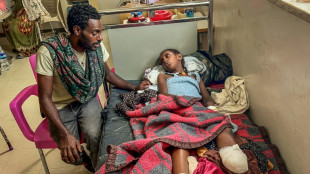
 Danish reservists practice war games to respond to 'aggression'

 Bhuvneshwar returns to India's T20 squad for New Zealand tour

 Asos says probing 'unauthorised activity' after phone alerts

 Stocks climb as oil prices retreat under $100 per barrel

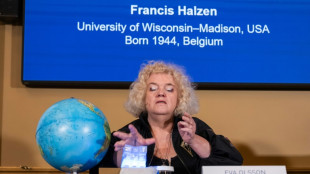 Neutrinos: space particles that change our view of universe

 'Destined' Djokovic wins China Open, extending unbeaten record

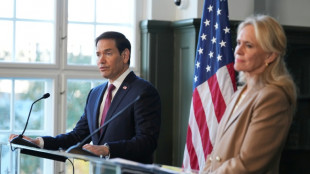 Iceland is 'critical outpost' for security, says Rubio during visit

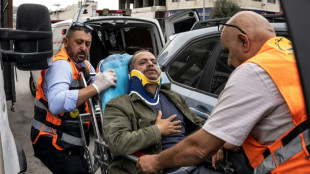 Israeli settlers beat AFP photographer covering West Bank

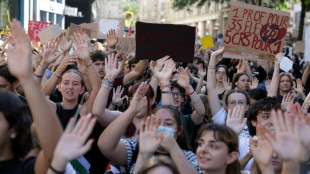 'Gen Z has risen up': Tens of thousands demand better education in France

 $10 Million and Counting: Hola Prime Hits Major Trader Payout Milestone
 UEFA investigate Ireland-Israel tunnel bustup after spitting claim
 Djokovic wins China Open and keeps unbeaten record after de Minaur retires

The years have passed but the stigma remains for Gambians accused of being witches, who were detained more than a decade ago under the abusive dictatorship of Yahya Jammeh, research published Wednesday revealed.
Hundreds of people, many of them elderly women, were targeted under the eccentric west African dictator's 2008-2009 purge on witchcraft.
The victims were taken to his compound and other secret locations where they were subjected to beatings, rape and forced to drink hallucinogenic concoctions.
The episode created lasting psychological and social scars that endure not just for the victims but also their families and communities, according to a new study in the Journal of Community and Applied Social Psychology.
The research, funded by the United Nations Development Programme, involved interviews and surveys in the five communities most affected by Jammeh's witchcraft purges, located in western Gambia.
Under the study, led by researcher Mick Finlay of the UK's Anglia Ruskin University and conducted in collaboration with the University of The Gambia and Nottingham Trent University, a total of 153 people were interviewed and 128 surveyed.
Although many of the participants believed the witch hunts were organised to frighten people not to speak out against Jammeh (89 percent) or to create divisions (87 percent), a full quarter also believed the threat from witches was real, according to the research.
To keep citizens in a permanent state of fear during his 22-year rule , Jammeh wielded a potent mix of brute force, mysticism and pervasive superstition -- including beliefs that Jammeh had supernatural powers.
Belief in witchcraft has strong roots in The Gambia, particularly rural areas, where witches are said to cause illness, infertility, financial misfortune and death, and are additionally believed to eat children.
The fact that the witchcraft accusations were state-orchestrated makes the situation unique, Finley told AFP.
Normally, witchcraft accusations are "more gossip and rumour", he said in an interview.
Against the state-backed nature of these witch hunts, victims felt the issue should be dealt with at the community or even government level.
"The victims often said, you know, we want the government to come out and tell everybody that we are not witches," Finlay told AFP.
There are "really simple things in terms of mending people's reputations that need to happen after dictatorships and war", Finlay added.
A Truth, Reconciliation and Reparations Commission (TRRC) to investigate human rights abuses carried out under Jammeh's rule between 1994 and 2017 recommended the establishment of a law making witchcraft accusations illegal.
- People 'avoid us' -
Approximately 41 deaths occurred during the witch hunts, with victims also suffering long-term health issues from being forced to drink toxic liquids, beatings and other abuse, according to the TRRC.
Research for the new report, which was conducted in 2022, revealed that victims were the targets of shaming, mocking and gossip and often felt unable to attend traditional cultural events.
"People tend to avoid us", one victim told the researchers. "We don't go their funerals or their naming ceremonies."
Self-isolation was also reported, as was stigmatisation of victims' families, children and larger communities.
To conduct the purges, Jammeh invited Guinean and Malian witch hunters into The Gambia, while his Green Boys and Girls vigilante group and the armed forces also helped carry out the roundups, according to the report.
While the exact motivation behind the episode is unclear, Jammeh believed that witches had killed his aunt.
Victims were taken to a compound in the southern village of Kanilai where Jammeh lived.
There, they were generally held for several days while being forced to drink noxious liquid and sometimes bathe in an herbal concoction.
Although a wide variety of community members were invited to participate in the survey, researchers said those comfortable with talking about stigmatisation could be over-represented, while those with a fear of witches could be under-represented.
After losing an election to current President Adama Barrow in 2016, Jammeh fled The Gambia the following January for Equatorial Guinea.
M.Odermatt--BTB