Biden battles accusations of 'weakness' against US rivals / Photo: ©

 Thailand slams chaotic Asian Games organisation as 'musical chairs'

 North Korea to keep nuclear weapons 'forever': foreign minister

 Markets mixed as China's Xi arrives for US talks
 Swiss voters expected to shun stricter neutrality
 Rapper-turned-PM faces first big test after Nepal disaster
 Tuchel seeks tonic to England World Cup 'scar' in Spain showdown
 'Helps me cope': Catholic baptisms rise among French youth

 Colombians in Santa Marta stay inside after violence wracks the city

 Iran airlines cancel flights as US sanctions hit
 Meta launches camera-free AI glasses amid privacy pushback
 Australian PM says OpenAI hacked government health website

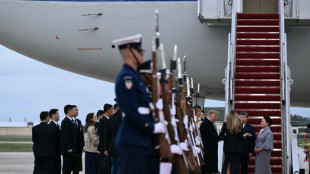 Xi arrives in US to personal Trump welcome
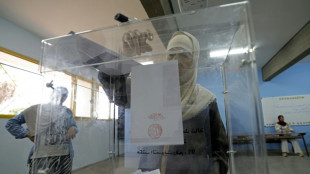 Morocco elects new parliament amid social frustration, youth discontent

 Scheffler and Burns to face Im and Lee in Presidents Cup opener
 Crushing wins for Lyon and Barca in women's Champions League
 Rio breaks record for rainiest September amid powerful El Nino
 At UN, tech chiefs urge caution in AI development
 Russian strikes kill seven in Ukraine, Zelensky vows winter campaign
 Venezuelan shot by ICE needs urgent medical care, mother tells AFP
 Zelensky says Putin using fighters from 47 countries in Ukraine war

 Klopp calls on Germany to 'rise above ourselves' as new era begins

 Russian strikes kill seven in Ukraine as Russia vows no 'pause' to war

 ArcPoint Expands Globally with Institutional Intelligence Platform for Modern Investors

 Ronaldo focussing on 'present' ahead of Wales test

 Outgoing UN chief makes final climate push at New York summit
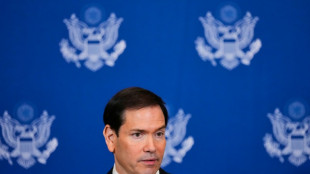
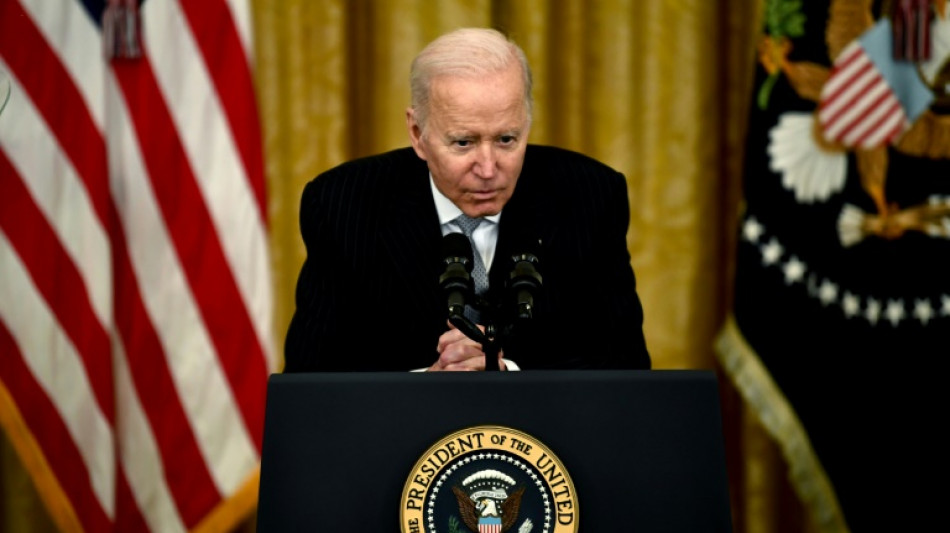
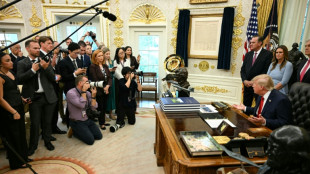
Is Joe Biden "weak" in the face of Russia, Iran or North Korea? This is the accusation leveled by opponents of the US president, who is trying to balance a firm hand with pragmatism to overcome multiple international crises and focus on a rising China.
"Is it any surprise that Chinese planes are flying over Taiwan? Or that North Korea is testing missiles again? Or that Iran is ramping up its nuclear program? They all sense Biden's weakness," Nikki Haley, who served as UN ambassador under Donald Trump, tweeted this week, summing up grievances of Republican hawks.
The standoff with Russia over its buildup of troops on Ukraine's borders fanned the flames of these accusations, which broke out in earnest amid the chaotic US withdrawal from Afghanistan in late August.
The Democratic president may have adopted a martial tone, amped up warnings and even sent troops to Eastern Europe this week, but his resolve is being called into question.
The Republican opposition, including its moderate fringe, have reproached Biden for ruling out preemptive sanctions against Moscow to discourage an attack on Ukraine.
The choice is, in fact, in the hands of Biden's administration, which is betting that the threat of "devastating" punitive measures in the event of an invasion will dissuade Russian President Vladimir Putin.
- 'Minor incursion' -
Some of the most hawkish in Washington have criticized the president for ruling out the option of direct military intervention to defend Ukraine.
But criticism came from many more corners when Biden made an apparent gaffe in mid-January.
The 79-year-old leader had sowed confusion by suggesting a "minor incursion" by Russia would prompt less pushback from the West, and indicated divisions between NATO countries on the scale of response that such an invasion would warrant.
Republican lawmakers quickly blasted Biden, accusing him of having tacitly "green-lighted" an invasion and forcing the White House to backpedal.
"It's typical of Biden: he responds often more like an analyst than a president," said Celia Belin, a researcher at the Brookings Institution think tank in Washington.
She nonetheless deems the US handling of the Ukraine crisis effective so far.
But his analytical responses are "a mistake as a leader," she said, especially as "Republicans harp on the idea of weakness because it resonates with the general perception of Biden as elderly, frail and not determined enough."
However, she underscored that this "trial of weakness" is typical of America, with a "constant" push and pull between a neoconservative bent toward the use of force to re-establish order and a camp that prefers to "choose its battles."
For Kori Schake, Director of Foreign and Defense Policy Studies at the American Enterprise Institute, a right-leaning think tank, these disparities don't negate that the US government is doing a "pretty good job balancing the competing demands" in the crisis.
- Hesitation -
US intelligence agencies quickly identified the "pattern of Russian aggression," allies were consulted early enough to "come to consensus," and the Pentagon has displayed "steadiness and readiness," she told AFP.
Biden entered the White House with a promise to US allies that "America is back," indicating a willingness to seek compromise at the risk of giving an impression of hesitation.
But this re-investment in the international arena, after the unilateralism of the Trump era, does not mean that Washington intends to play policeman everywhere at all times.
Democrats want to extract the United States from protracted conflicts and concentrate on a rising China, which the Biden and Trump administrations characterized as the top challenge of the 21st century.
Though Belin warned that pulling out isn't without consequence, like the withdrawal from Afghanistan "at the cost of a debacle," which she said may have pushed "Putin to legitimately say, 'I'm taking advantage of this.'"
And there is no shortage of challenges to divert the 46th US president from this priority, both new and protracted.
Iran looms large, with Biden in need of a deal to round off long-running multilateral talks with Tehran aimed at salvaging a 2015 nuclear deal and avoiding another crisis.
Here, too, he will likely be accused of weakness, even among Democrats, over the hot-button issue of containing Iran's nuclear program.
At the same time, the United States seems for the moment to be turning a blind eye to the recent flurry of North Korean missile launches.
On China, while Biden has held up the hard line adopted by predecessor Trump, some conservatives continue to criticize the current president for his willingness to engage in dialogue on climate issues or his refusal to boycott the Beijing Olympics entirely.
But for Schake, "Biden is no weaker on China or North Korea than the prior administration."
C.Kovalenko--BTB