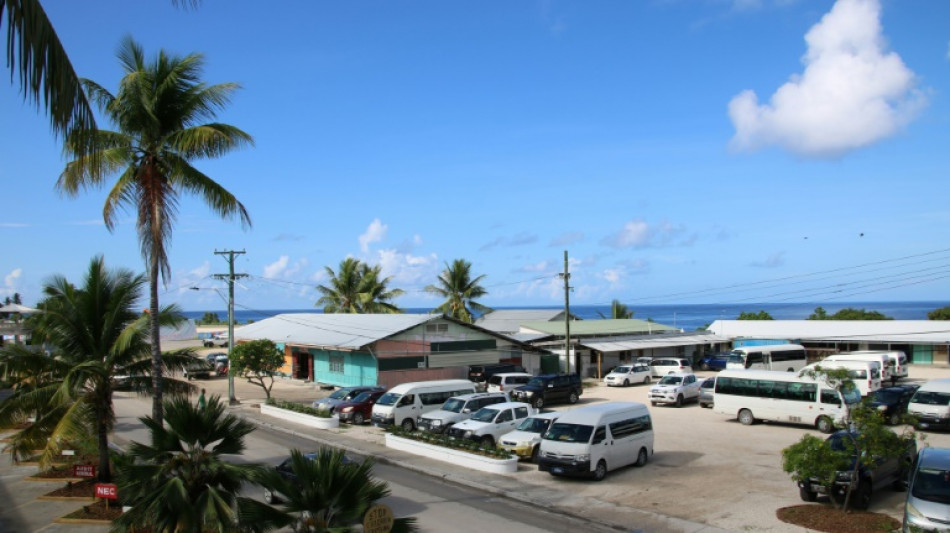
Pacific microstate sells first passports to fund climate action / Photo: © AFP/File

 Hotel Blacklist Launches New Accommodation Industry Risk Assessment Tool

 Bangladesh nuclear plant draws hope -- and worry
 US beat Canada 1-0 to wrap up four-win international break
 Turkey, Australia's joint COP31 leadership raises doubts

 For Turkish NGOs, COP31 offers rare space for action

 Sleep, appetite, gene-editing experts contend for Nobel chemistry prize
 Nobel Peace Prize haunted by the 'spectre' of Trump

 Africa launches own credit agency in bid for cheaper borrowing

 US, China, EU: three paths to regulating AI

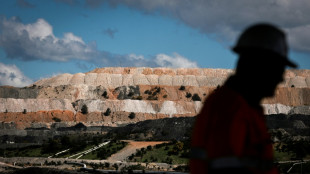 Australia's High Court rules against coal mine in landmark climate case

 Australia touts new funds for Pacific infrastructure at Fiji 'pre-COP'

 Eva Marie Saint, Oscar winner of Hollywood classics, dies at 102

 Australia probes app used in cheap smart glasses over privacy fears

 England needed to 'move on' from World Cup pain, says Tuchel

 O'Neill to stay at Celtic after period of "reflection"

 Kane marks 125th England cap with Wembley Nations League double
 Quebec's incoming separatist leader wants to block Crown from swearing-in

 Emmys gala will now stream its premier television awards

 Paramount completes Warner Bros takeover, creating Skydance
 Trump blames France unrest on Islam, migration

 Apple's Cook praises EU over efforts to protect children online
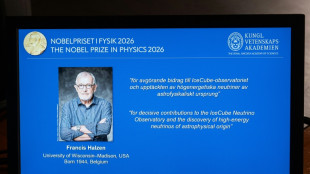 Nobel winner Halzen says years of October 'misery' finally over

 Quebec separatist win rattles Carney's unity push

 'Itching' for change: Shiffrin cuts back slaloms this season

 'Gen Z has risen up': Tens of thousands mass for tense France school protests

A remote Pacific nation has started selling passports to fund climate action, but is so far struggling to attract new citizens to the low-lying, largely barren island.
Pacific microstate Nauru, one of the world's smallest nations, has a novel plan to fund its fight against climate change by selling so-called "golden passports".
Selling for US$105,000 each, Nauru plans to drum up more than US$5 million in the first year of the "climate resilience citizenship" programme.
Almost six months after the scheme opened in February, Nauru has so far approved just six applications -- covering two families and four individuals.
Despite the slow start -- Nauru eventually hopes to sell 66 passports in the scheme's first year -- President David Adeang remained upbeat.
"We welcome our new citizens whose investment will assist Nauru to secure a sustainable and prosperous future for generations to come," he told AFP on Thursday.
Nauru believes the passport programme could eventually generate $43 million -– or about 500 successful applicants -- which would account for almost 20 percent of total government revenue.
But there are fears the scheme could be ripe for exploitation.
Edward Clark, who runs Nauru's climate passport programme, said one application has already been withdrawn after officials flagged "adverse findings" during background checks.
"The application would have been rejected had it not been withdrawn," he told AFP.
A previous Nauru attempt to sell passports ended in disaster.
In 2003, Nauru officials sold citizenship to Al-Qaeda members who were later arrested in Asia.
Among the first batch of climate passports approved was an unnamed German family of four living in Dubai, said Clark touting the "major milestone".
- 'Political volatility' -
"They were looking for a second citizenship to provide them with a Plan B given the current global political volatility."
The Nauru passport provides visa-free entry into 89 countries, including the United Kingdom, Ireland, United Arab Emirates and Hong Kong.
More than 60 different nations offer some form of migration for investment schemes, Australia's Lowy Institute has found.
Pacific nations such as Vanuatu, Samoa and Tonga have all dabbled in selling passports.
The island republic of Nauru sits on a small plateau of phosphate rock in the sparsely populated South Pacific.
With a total landmass of just 21 square kilometres (eight square miles), it is one of the world's smallest nations.
Unusually pure phosphate deposits -- a key ingredient in fertiliser -- once made Nauru one of the wealthiest places, per capita, on the planet.
But these supplies have long dried up, and researchers today estimate 80 percent of Nauru has been rendered uninhabitable by mining.
What little land Nauru has left is threatened by encroaching tides. Scientists have measured sea levels rising 1.5 times faster than global averages.
Nauru will eventually need to relocate 90 percent of its population as creeping seas start to eat away at its coastal fringe.
The first phase of this mass relocation is estimated to cost more than $60 million.
F.Müller--BTB