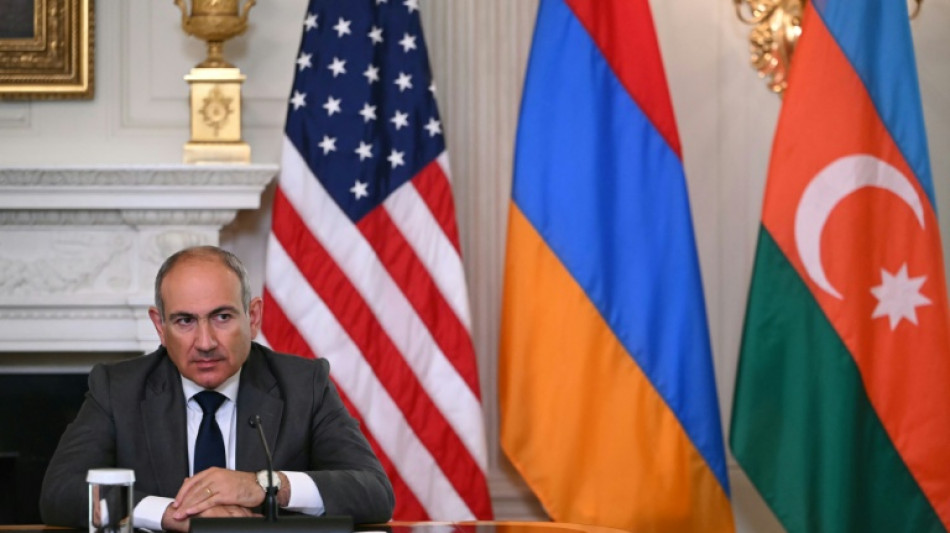
Armenians caught between hope and distrust after accord with Azerbaijan / Photo: © AFP

 Chip industry activists call for South Korea to recognise cancer cases
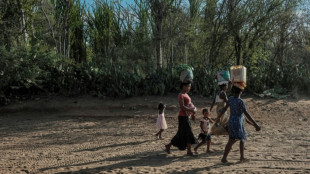 Famine-scarred southern Madagascar braces for El Nino
 How the EU regulates lobbyists

 I.Coast refuge offers lifelong care for youngsters scorned as 'sorcerers'

 Indian central bank hikes rates for first time in more than 3 years

 Hotel Blacklist Launches New Accommodation Industry Risk Assessment Tool

 Bangladesh nuclear plant draws hope -- and worry

 US beat Canada 1-0 to wrap up four-win international break

 Turkey, Australia's joint COP31 leadership raises doubts

 For Turkish NGOs, COP31 offers rare space for action

 Sleep, appetite, gene-editing experts contend for Nobel chemistry prize
 Nobel Peace Prize haunted by the 'spectre' of Trump

 Africa launches own credit agency in bid for cheaper borrowing

 US, China, EU: three paths to regulating AI

 Australia's High Court rules against coal mine in landmark climate case
 Australia touts new funds for Pacific infrastructure at Fiji 'pre-COP'

 Eva Marie Saint, Oscar winner of Hollywood classics, dies at 102

 Australia probes app used in cheap smart glasses over privacy fears

 England needed to 'move on' from World Cup pain, says Tuchel

 O'Neill to stay at Celtic after period of "reflection"

 Kane marks 125th England cap with Wembley Nations League double

 Quebec's incoming separatist leader wants to block Crown from swearing-in

 Emmys gala will now stream its premier television awards

 Paramount completes Warner Bros takeover, creating Skydance
 Trump blames France unrest on Islam, migration

The streets were almost deserted in Yerevan Saturday because of the summer heat, but at shaded parks and fountains, Armenians struggled to make sense of what the accord signed a day earlier in Washington means for them.
The leaders of Armenia and Azerbaijan, two Caucasian countries embroiled in a territorial conflict since the fall of the USSR, met Friday and signed a peace treaty under the watch of US President Donald Trump.
In Yerevan, however, few of the people asked by AFP were enthusiastic.
- 'Acceptable' -
"It's a good thing that this document was signed because Armenia has no other choice," said Asatur Srapyan, an 81-year-old retiree.
He believes Armenia hasn't achieved much with this draft agreement, but it's a step in the right direction.
"We are very few in number, we don't have a powerful army, we don't have a powerful ally behind us, unlike Azerbaijan," he said. "This accord is a good opportunity for peace."
Maro Huneyan, a 31-year-old aspiring diplomat, also considers the pact "acceptable", provided it does not contradict her country's constitution.
"If Azerbaijan respects all the agreements, it's very important for us. But I'm not sure it will keep its promises and respect the points of the agreement," she added.
- 'endless concessions' -
But Anahit Eylasyan, 69, opposes the agreement and, more specifically, the plan to create a transit zone crossing Armenia to connect the Nakhchivan region to the rest of Azerbaijan.
"We are effectively losing control of our territory. It's as if, in my own apartment, I had to ask a stranger if I could go from one room to another," she explains.
She also hopes not to see Russia, an ally of Armenia despite recent tensions, expelled from the region."
Anahit also criticizes Prime Minister Nikol Pashinyan for "making decisions for everyone" and for his "endless concessions to Azerbaijan".
"We got nothing in exchange, not our prisoners, nor our occupied lands, nothing. It's just a piece of paper to us," she fumes.
Shavarsh Hovhannisyan, a 68-year-old construction engineer, agrees, saying the agreement "is just an administrative formality that brings nothing to Armenia."
"We can't trust Azerbaijan," Hovhannisyan asserted, while accusing Pashinyan of having "turned his back" on Russia and Iran.
"It's more of a surrender document than a peace treaty, while Trump only thinks about his image, the Nobel Prize."
- 'More stability... in the short term' -
According to President Trump, Armenia and Azerbaijan have committed "to stop all fighting forever; open up commerce, travel and diplomatic relations; and respect each other’s sovereignty and territorial integrity."
For Olesya Vartanyan, an independent researcher specializing in the Caucasus, the Washington agreement "certainly brings greater stability and more guarantees for the months, if not years, to come."
But given the long-lasting tensions between Armenia and Azerbaijan, "I fear that we will have to plan only for the very short term," she said.
D.Schneider--BTB