Chinese firms pay price of jihadist strikes against Mali junta / Photo: © AFP

 Rubio touts US power, calls on Europe to emerge from 'slumber'

 Trump says 'we don't think' Russian plague is bio-weapon

 Five children among 26 killed in Ukraine after Russian strikes

 Man City should 'accept' punishment for rule breaches, says Lineker

 US woman who survived botched execution is awake and speaking

 From 1800s to modern pharma: a Nobel-winning chemistry quest

 Southampton boss Eckert given suspended ban over 'Spygate'

 Russia warns of 'false' information as second plague case reported

 IEA ready to release more oil reserves if necessary

 HSBC 'consults' over UK unit job cuts amid AI adoption

 UK court quashes five ex-traders' Libor rate rigging convictions
 XM Receives “Global Customer Experience Leader Award 2026” at the TrustFinance Performance Awards
 Stocks slide as oil climbs on Mideast flareup

 Heavy casualties in Ukraine after Russian strikes

 French wine harvest set to hit historic low

 Kyiv 'cannot agree' to EU membership limiting food exports: minister

 Arteta targets more Arsenal glory after signing new deal until 2030

 Russell hit with Singapore grid penalty for taking new power unit

 Spotify expands audiobooks to more than 180 markets

 French-Japanese duo wins chemistry Nobel for solving molecular 'mystery'

 England's Nations League surge helps heal World Cup wounds

 Mayor of opposition stronghold Izmir defects to Erdogan party

 Mertens beats Gauff to set up Swiatek clash at China Open

 Benin full of pride at role in Messi's last dance

 France suspends stun grenade use at student protests ahead of PM speech

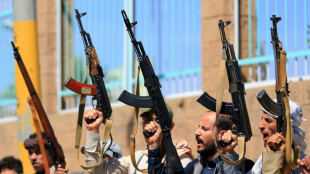
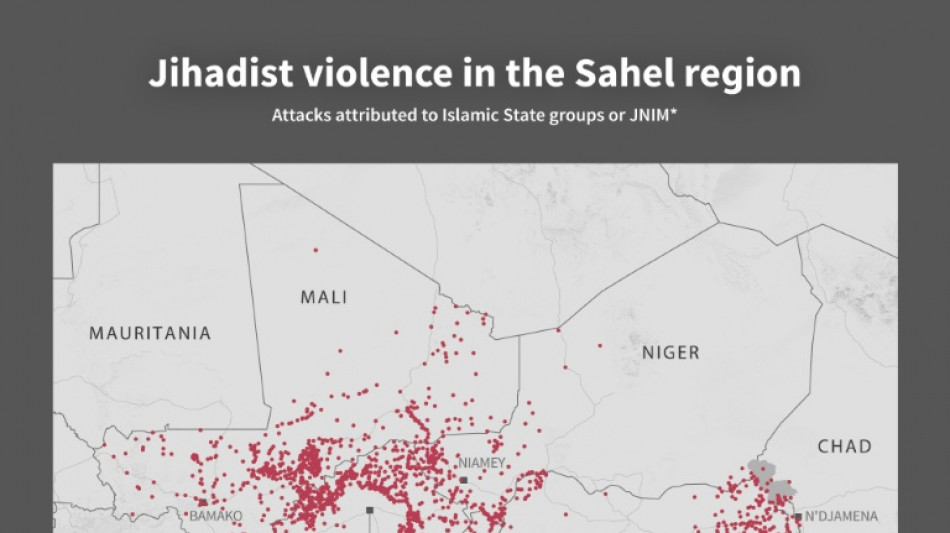
Jihadists allied to Al-Qaeda have launched a blitz of raids on Malian industrial sites run by foreign firms, especially Chinese, as a tactic to undermine the ruling junta.
While present across wider west Africa, the powerful Group for the Support of Islam and Muslims, known by its Arabic acronym JNIM, represents the greatest threat to the arid Sahel region today, the United Nations says.
In June, the JNIM warned that its well-armed fighters would target all foreign companies at work in Mali, run by the army since back-to-back coups in 2020 and 2021, as well as any business doing public works for the state without "its authorisation".
A recent UN report found the group's "core ambition remains the creation of an emirate that could challenge the legitimacy of military regimes, force them to cede authority and implement sharia" law, or the Islamic legal code.
To that end, the JNIM's raids in the west could allow it "to establish a racketeering network that extorts foreign companies and undermines the legitimacy of the Malian government", while kidnapping foreigners "to ransom them back to their governments", the American Enterprise Institute (AEI) said.
- Chinese workers abducted -
From the end of July, the JNIM has made good on its threats, attacking seven foreign-run industrial sites in one of Africa's top producers of gold and lithium, according to the AEI.
Six of those were run by Chinese firms, most of them in the gold-rich Kayes region to the west, with the jihadists abducting at least 11 Chinese citizens in the raids, AEI analyst Liam Karr told AFP.
"From what we can tell, China is bearing the brunt," Karr said.
In the wake of the attacks, China's foreign affairs ministry said it had urged the junta "to spare no effort in searching for and rescuing the kidnapped individuals".
It said it had "further taken practical and effective measures to ensure the safety of local Chinese citizen institutions and projects".
Besides Chinese, the JNIM also kidnapped three Indians at a cement works in the west in early July.
"The group has no grievances against the Chinese, but it stems from the group's desire to deal a blow to the Malian economy instead," said Bakary Sambe, director of the Dakar-based Timbuktu Institute think tank.
"Kayes holds strategic value for JNIM as a key economic hub. The region accounts for roughly 80 percent of Mali's gold production and serves as a trade corridor to Senegal", the country's top supplier, according to the Soufan Center consultancy.
As a result, the JNIM's western campaign "threatens to undermine business ties" with China, "one of Mali's largest economic partners", warned the AEI.
Chinese private investment in Mali came to $1.6 billion between 2009 and 2024, while the Chinese government has poured in $1.8 billion across 137 projects since 2000, AEI figures show.
- Raids spread -
Mali's reliance on Beijing has only grown since the coups that brought the military to power.
After turning its back on former colonial ruler France and the West more broadly, the junta has sought closer ties with China, as well as Russia and Turkey.
Russian mercenaries from the Wagner paramilitary group and its successor, Africa Corps, Chinese armoured cars and Turkish drones have helped the Malian army in its more than a decade-long fight against the jihadist insurgency.
For Karr, Russian willingness "to be a disruptor to strengthen its influence" stands "at odds with China, because China wants stability for its business interests".
Despite the outside help, the Malian junta has struggled to contain the JNIM and its rival, the Islamic State-Sahel Province group.
Deadly attacks across the Kayes region piled up in August, while the JNIM hit businesses in the Malian centre "for the first time", Karr said, with Chinese sugar refineries near the town of Segou among the targets.
Several days later, an assault on a British-run lithium mine in Bougouni in the south left a security guard dead.
The rash of jihadist raids comes as the junta, which trumpets a nationalist policy of greater domestic sovereignty over Mali's riches, is bidding to tighten its grip on the country's mining resources.
The military government has seized control of Mali's largest goldmine, the Loulo-Gounkoto site in the Kayes region, from Canadian giant Barrick Mining, demanding hundreds of millions of dollars in back taxes.
O.Lorenz--BTB