Draghi, Berlusconi in mix as Italy elects new president / Photo: ©

 Inside the Venezuelan prison meant to 'drive you insane'

 UK king braces as memoir by Diana's brother goes on sale

 No green light to lift EU sanctions on Russian oligarchs, talks to resume
 UK agrees support for Saudi in struggle with Houthis: reports
 EU foreign policy chief calls for continued sanctions on Russia

 Flights scrapped, evacuations urged as Typhoon Dujuan wallops Japan

 Fonseca to take break from tennis

 A Cuban zoo, and its animals, in epic battle for survival
 Infantino proposes consulting federations to reform FIFA
 El Nino weather pattern enters record territory: scientist
 OpenAI calls for US to lead global effort on AI standards
 South African ostriches plucked alive for luxury fashion: report
 US networks halt Trump coverage in revolt over White House ban
 Paramount settles with US states to clear Warner Bros. mega-merger

 Climate crisis a job for world leaders, not just activists: UK FM

 US networks halt Trump coverage over White House ban
 French singer accuses Miley Cyrus of plagiarism
 EU fines Google 403 mn euros for location data breach
 'Best is yet to come,' says De la Fuente after Spain extension
 Why diesel prices are rising more than crude oil
 COP31 host says AI's climate footprint to be a summit priority
 Renewables hit record in 2025, but world must move faster: report
 US media outlets to sue Trump administration after White House ban
 Global stocks rally on lower oil prices, US-China hopes
 EU proposes energy rating for data centres
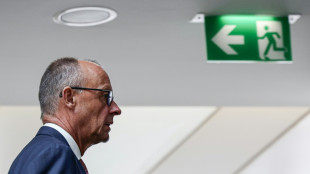
Italy's parliament begins voting for a new president Monday, with Prime Minister Mario Draghi tipped for election in a high-stakes version of musical chairs which threatens the survival of the government.
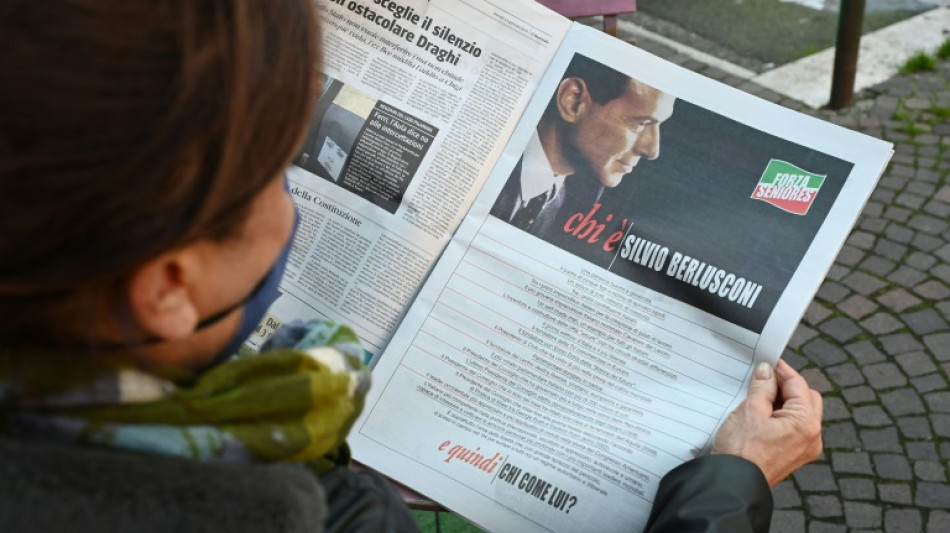
As backroom negotiations hit fever pitch this week, the brashest campaigner has been billionaire Silvio Berlusconi, whose charm offensive has included bragging about his raunchy "bunga bunga" parties.
The 85-year-former premier has long coveted Italy's top job, even reportedly promising his late mother he would get it, although few believe he has the necessary votes.
It is notoriously hard to predict who will win the secret ballot for the seven-year post.
While a largely ceremonial role, the president wields considerable power in times of political crises, from dissolving parliament to picking new prime ministers and denying mandates to fragile coalitions.
Italy needs a stabilising figurehead now more than ever: the disparate parties who share power in Draghi's government are already in battle mode ahead of next year's elections, and chaos could put precious European recovery funds at risk.
"This is a key and very complicated election, because the political parties are weak, they are in a utterly fragmented state," Giovanni Orsina, head of the Luiss School of Government in Rome, told AFP.
- 'Like an earthquake' -
The leading Corriere della Sera newspaper warned Thursday the vote could "hit the government like an earthquake" as Italy battles a fresh wave of coronavirus infections that risk disrupting the recovery from 2020's lockdown-induced recession.
Just over 1,000 senators, MPs and regional representatives will begin voting Monday, and candidates must secure either two-thirds of votes in the first three rounds, or an absolute majority thereafter.
Due to social distancing requirements, each round will take a day and, as is traditional, there are no official candidates.
Former European Central Bank president Draghi, 74, has hinted that he is interested, but his elevation to Rome's Quirinale Palace -- once home to popes -- would mean leaving his job vacant at a delicate time.
Brought in by outgoing president Sergio Mattarella in February 2021, Draghi has led a remarkably united government -- comprising almost all Italy's political parties -- and driven post-pandemic growth.
He has also overseen key reforms demanded in exchange for funds from the EU's post-pandemic recovery scheme, of which Rome is the main beneficiary, to the tune of almost 200 billion euros.
There is concern among international investors that debt-laden Italy would slip behind on the tight reform schedule should Draghi step down as prime minister.
- Pre-election year -
But most Italian experts say Draghi would be better placed as president to ensure political stability and good relations with Brussels -- particularly should the far-right win the next general election.
It is also far from sure that he would be able to continue driving through reforms if he stayed put -- and risks losing office anyway in next year's vote.
"This is a pre-election year. Even if Draghi stayed as prime minister, the truth is he would find it difficult to control the political situation, and nothing would get done after the summer break," Orsina said.
A deal could be made by which Italy's oldest minister Renato Brunetta, 71, takes over as prime minister, with the leaders of Italy's main parties taking the top cabinet posts until elections.
Should Draghi remain PM, there are many other names in the mix for head of state, including EU commissioner and ex-premier Paolo Gentiloni, former Socialist premier Giuliano Amato, and Justice Minister Marta Cartabia -- who if successful, would be the first female president.
C.Kovalenko--BTB