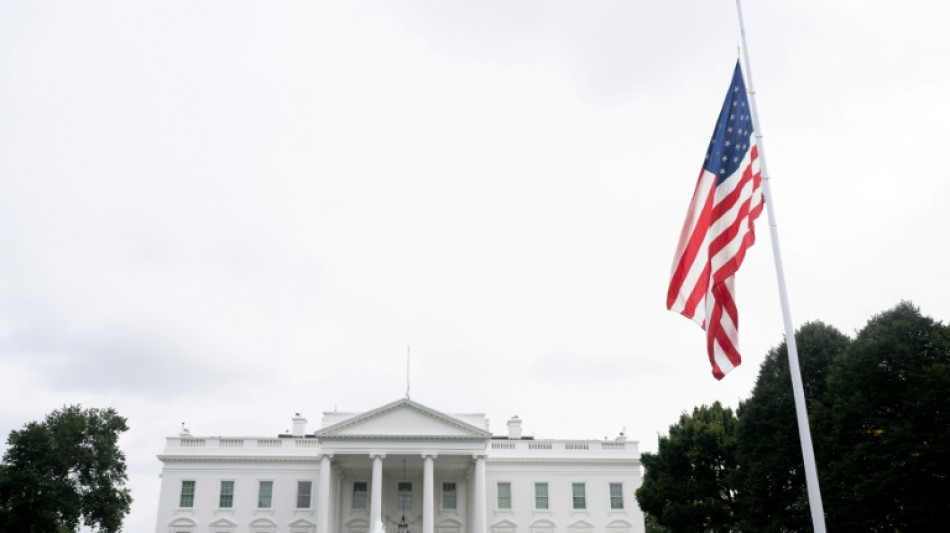
Kirk killing sparks fierce US free speech debate / Photo: © AFP

 Bad COP, worse COP? EU tempers hopes for UN climate summit
 Rookie Henry named in Wallabies midfield to face All Blacks
 Housing crisis set to dominate Spain's snap election

 Gas, health care, utilities: high costs squeeze US midterm voters
 New Zealand Rugby seeks injunction over PNG Chiefs name
 Samsung expects 780% quarterly operating profit jump on AI boom
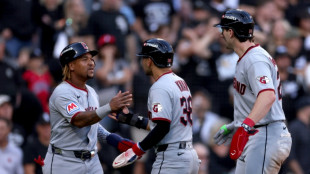 Guardians survive with 9-3 win over White Sox
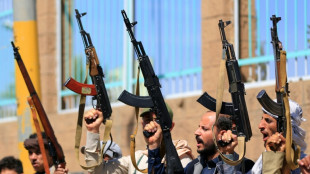 Saudi Arabia says 3 dead at airports after Houthis claim attacks

 Stocks slide as oil sees volatile trading day over Iran war fears
 Microsoft pushes AI vision with new, expensive Surface laptop
 Five children among 28 killed in Russian strikes on Ukraine
 Odell Beckham Jr signs with Minnesota Vikings
 Saudi Arabia says three dead at airports after Houthis claim attacks
 Trump plans to turn Florida golf course into presidential retreat
 WHO says cannot conduct full risk assessment on Russia plague reports
 After botched execution, US woman is awake and shackled to bed
 New Zealand fly-half Mo'unga ruled out of Australia Tests
 Protests in major Turkish city after mayor defects to Erdogan party
 Climate change strips island's title of largest penguin colony: study
 Rubio says West must choose between national power or decline
 Russia's plague scare: What we know

 French luxury giant to fund redevelopment of two Paris streets: city hall
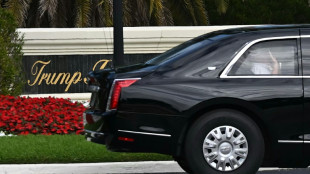 Trump wants to turn Florida golf course into presidential retreat

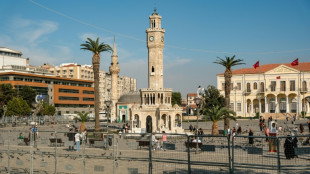 Mayor of Turkish opposition stronghold defects to Erdogan party
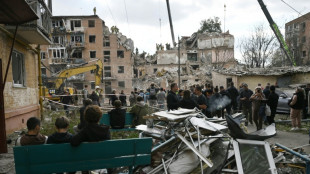 Children among heavy casualties in Ukraine after Russian strikes
For Americans, the words are practically sacred: the First Amendment to the US Constitution guarantees freedom of speech.
But that right is now the subject of bitter debate, following the assassination of right-wing activist Charlie Kirk.
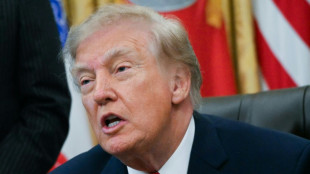
On Thursday, several high-ranking Democrats accused President Donald Trump of waging war on free speech, after he celebrated ABC's suspension of talk show host Jimmy Kimmel, who accused the political right of using Kirk's death to score points.
The American Civil Liberties Union, a rights advocacy group, accused the Trump administration of operating outside constitutional safeguards to target its opponents, likening it to the Red Scare of the late 1940 and 1950s under senator Joseph McCarthy.
"This is beyond McCarthyism. Trump officials are repeatedly abusing their power to stop ideas they don't like, deciding who can speak, write, and even joke," said Christopher Anders, director of the ACLU's democracy and technology division.
So what does the First Amendment say? And why is it up for debate?
- 'How we identify ourselves' -
Ratified in 1791, the Bill of Rights comprises the first 10 amendments to the US Constitution, protecting the fundamental rights of Americans.
"Congress shall make no law respecting an establishment of religion, or prohibiting the free exercise thereof; or abridging the freedom of speech, or of the press; or the right of the people peaceably to assemble," the First Amendment says.
For David Super, a professor at Georgetown University's law school, the amendment is "really how we identify ourselves as a nation."
Beyond the varied ethnicities and background of the nation's 340 million people, "we are thought to be drawn together by a belief in open discussion and a belief that the government can't shut any of us up," Super told AFP.
The First Amendment even protects speech that is "morally repulsive," explained Eugene Volokh, a professor of law at the University of California, Los Angeles.
Volokh however emphasized that the history of the United States has been marked by attempts to stifle dissident voices.
- 'Malicious writings' -
In 1798, America's second president John Adams signed into law the Sedition Act, which forbade "any false, scandalous and malicious writing or writings against the government of the United States."
Then during World War I, the expression of pacifist ideology was banned.
From the 1920s to the 1950s, anyone expressing support for communist ideals risked serious repercussions. And in the 1960s, officials in several southern US states battled to silence the civil rights movement.
One of the key pillars of Trump's political movement has been to eviscerate "cancel culture" -- the process of criticizing someone for voicing an opinion seen as unacceptable, to the point of that person being ostracized or fired.
Trump has often called "cancel culture" a scourge of leftist progressives, claiming that it has been used to silence conservative pundits and politicians.
But Democrats have turned the tables on Trump, accusing him of doing the same to US media organizations, major universities and, now, Kimmel -- a frequent target of Trump's ire.
"After years of complaining about cancel culture, the current administration has taken it to a new and dangerous level," Democratic former president Barack Obama wrote Thursday on X.
- Conservative push-back -
US Attorney General Pam Bondi sparked controversy among conservatives by saying earlier this week that the Justice Department would pursue anyone guilty of "hate speech" linked to the slain influencer.
Republican Senator Ted Cruz quickly countered that the Constitution "absolutely protects hate speech." Bondi then said she meant to refer to "threats of violence that individuals incite against others."
Conservative commentator Tucker Carlson called for "civil disobedience" should Kirk's murder result in an uptick in laws limiting free speech.
And some voices on the far right have criticized a decree signed by Trump in August that makes burning the American flag punishable by up to a year in prison.
The US Supreme Court ruled in 1989 that burning the Stars and Stripes indeed amounted to free speech, and was protected by the First Amendment.
"I would never in a million years harm the American flag," conservative radio host Jesse Kelly wrote on X.
"But a president telling me I can't has me as close as I’ll ever be to lighting one on fire. I am a free American citizen. And if I ever feel like torching one, I will."
F.Müller--BTB