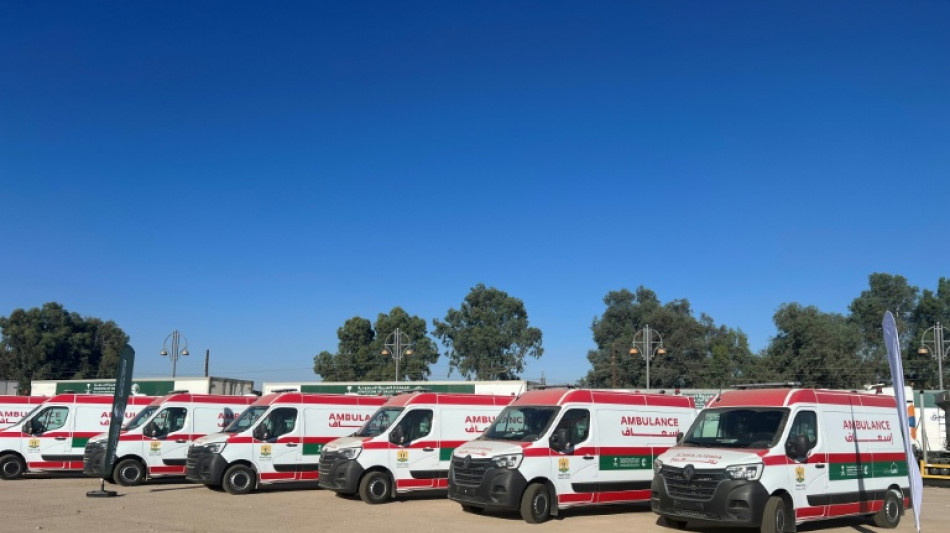
With cash and aid, Saudi Arabia pursues soft power push in Syria / Photo: © AFP

 Bad COP, worse COP? EU tempers hopes for UN climate summit

 Rookie Henry named in Wallabies midfield to face All Blacks
 Housing crisis set to dominate Spain's snap election

 Gas, health care, utilities: high costs squeeze US midterm voters
 New Zealand Rugby seeks injunction over PNG Chiefs name
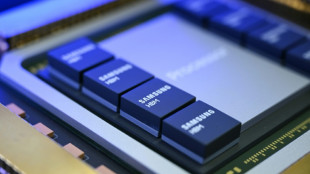 Samsung expects 780% quarterly operating profit jump on AI boom
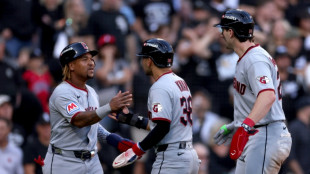 Guardians survive with 9-3 win over White Sox
 Saudi Arabia says 3 dead at airports after Houthis claim attacks
 Stocks slide as oil sees volatile trading day over Iran war fears

 Microsoft pushes AI vision with new, expensive Surface laptop
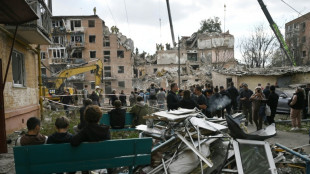
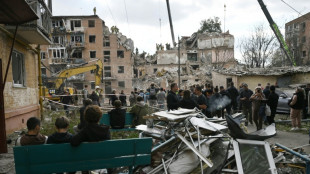 Five children among 28 killed in Russian strikes on Ukraine

 Odell Beckham Jr signs with Minnesota Vikings
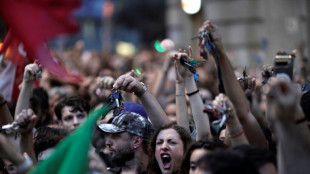
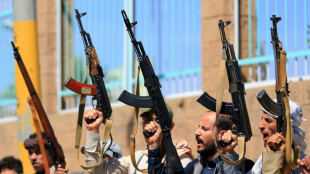 Saudi Arabia says three dead at airports after Houthis claim attacks
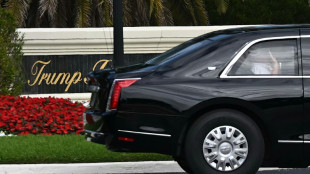 Trump plans to turn Florida golf course into presidential retreat

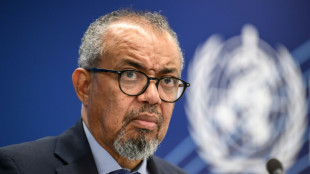 WHO says cannot conduct full risk assessment on Russia plague reports
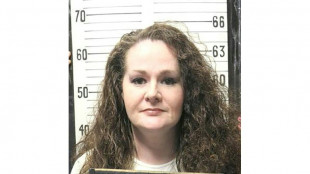 After botched execution, US woman is awake and shackled to bed
 New Zealand fly-half Mo'unga ruled out of Australia Tests
 Protests in major Turkish city after mayor defects to Erdogan party
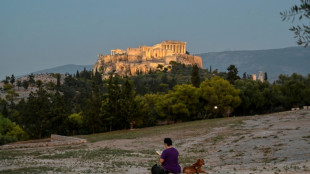
 Climate change strips island's title of largest penguin colony: study
 Rubio says West must choose between national power or decline
 Russia's plague scare: What we know
 French luxury giant to fund redevelopment of two Paris streets: city hall

 Trump wants to turn Florida golf course into presidential retreat
 Mayor of Turkish opposition stronghold defects to Erdogan party
 Children among heavy casualties in Ukraine after Russian strikes
After losing his arms in an ordnance explosion, Syrian teenager Mohammed Hasram was fitted with prosthetic limbs funded by Saudi Arabia, which is leveraging major investments and aid to gain influence over Damascus.
Since the overthrow of President Bashar al-Assad in December, Saudi Arabia has showered the new leadership with millions of dollars in assistance and investment pledges in the hope of steering it further into the kingdom's sphere of influence, analysts told AFP.
Syria was a battleground for outside powers throughout the conflict, with Iran and Russia backing Assad, and Turkey and the United States supporting various armed groups.
As the Assad allies withdraw and Syria seeks to rebuild, Saudi Arabia is leveraging its oil wealth to expand its influence.
Its main goals are "keeping Syria within the Saudi camp" and "keeping the new Syria aligned on issues related to Lebanon, Hezbollah and Iran," said Umar Karim, a Saudi policy expert at the University of Birmingham.
Saudi Arabia has spent months courting Syria's new leaders, aiming to draw closer a country long dominated by Iran and Russia.
In May, Saudi Crown Prince Mohammed bin Salman convinced visiting US President Donald Trump to promise to lift Syria sanctions.
He also arranged a landmark meeting with Trump for Syrian President Ahmad al-Sharaa, a former jihadist who spent five years in US custody in Iraq.
The kingdom has deployed its vast oil wealth in pursuit of its goals. In July, Saudi Arabia signed investment and partnership deals with Syria valued at $6.4 billion to help with post-war reconstruction.
In April, Saudi Arabia vowed, alongside Qatar, to settle $15 million in Syrian debt to the World Bank.
- 'Fill the vacuum' -
It pledged to rebuild schools, hospitals and bakeries, and remove rubble from Syrian cities, as well as provide 1.65 million barrels of crude oil for electricity generation.
Saudi Arabia's soft power push comes as Qatar and Turkey, key supporters of Syria's new government, also vie for influence.
Riyadh wants to ensure that the "influence of other Gulf states never overrides that of Saudi, and lastly to balance out against Turkish influence", Karim said.
Since Assad's ouster, Saudi medical teams have fanned out across Syria, performing open-heart surgeries and cochlear implant operations.
Hasram, 13, beamed with joy as he spoke about his new limbs. "Now I can use the pen again, draw and play with my classmates," he told AFP.
Saudi aid efforts have been praised by Emergencies and Disaster Management Minister Raed al-Saleh, who told AFP the projects "strengthen Saudi Arabia's standing among Syrians".
During a visit to Damascus by Saudi aid agency KSrelief earlier this month, he described Riyadh as "a supporter on political, economic and humanitarian levels".
"Saudi support is clearly helping rebuild Syria, teacher Ahmad Hood told AFP at an aid handover ceremony.
But in the new rulers' wartime base in Idlib province in the northwest, shopkeeper Hamadi al-Rifai, 40, cautioned that Saudi "investments are good as long there is no political impact or interference in domestic affairs".
For Rabha Seif Allam, a Syria expert at the Al-Ahram Center for Political Studies in Cairo, the kingdom is "trying to fill the huge vacuum" left by the ending of more than half a century of Assad family rule.
- Alternative to captagon -
Saudi economic and humanitarian support aims to create "a forward defensive line for the Gulf to prevent Syria from sliding back into chaos or aligning with destabilising regional axes", Allam said.
It is also hoping to curtail a rampant trade in the amphetamine-like narcotic captagon -- which became Syria's largest export during the civil war and a key source of government revenue.
The kingdom has become a major market for captagon and normalised ties with the Assad government in 2023 after more than a decade of estrangement in the hope that Damascus would rein in the traffic.
Since Assad's overthrow, the new authorities have announced seizures of millions of pills -- but the smuggling has not stopped.
"One of the goals remains the complete eradication of the captagon industry by providing a legitimate economic alternative," Allam said.
F.Müller--BTB