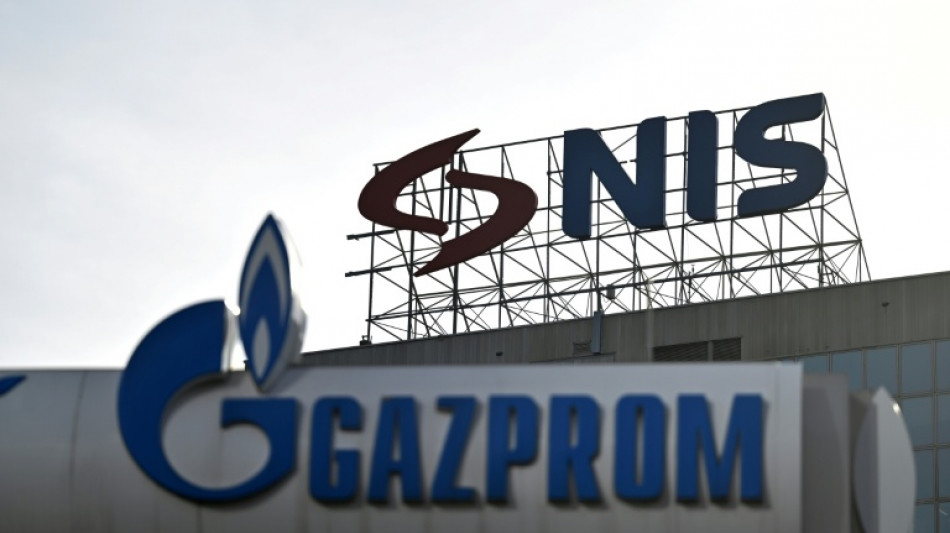
US sanctions hit Serbia's oil firm / Photo: © AFP/File

 Bid by Italy's Intesa bank to take over MPS gets boost
 Stablecoins Are Quietly Becoming Business Infrastructure, NOWPayments Data Shows
 Oil surges, stocks sink as US reportedly eyes new Iran strikes

 Woman in botched US execution walking, mentally 'foggy': lawyer
 Farhan hopes Pakistan's new combination takes off in Sri Lanka T20Is

 Teenager Andreeva seals China Open semi-final with Bartunkova
 Britain's Burnham says open to Germany joining warplane project

 Kovac's tough love has Dortmund dreaming of title charge

 China announces candidate for WHO chief

 South Korea test-fires its first homegrown hypersonic weapon: presidency

 ONAR Advances Nasdaq Listing Preparation Following Advertise Purple Acquisition and Financing
 Thailand opens extradition process for reporter sought by China

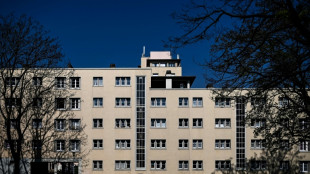 France struggles to wean social housing off gas

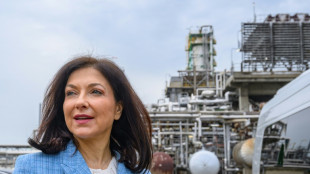 Germany lifts GDP forecast as economy withstands Iran war

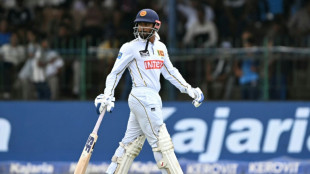 Sri Lanka appoints Kusal Mendis as Test captain
 Norris confident McLaren can shine in Singapore
 Alex Bodi pushes ahead with expansion: ALIX LASERS showroom planned for Bucharest
 Fossil fuels off COP31 agenda as global output keeps rising
 Haze not 'a threat' to Singapore F1 race: organisers
 COP31 organisers say to seek 'ambitious' action with their text
 Bartunkova thrashes Muchova to reach China Open semi-finals
 Drone hits Yandex data centre, in first such attack on Russia
 Oil prices surge and stocks sink on fresh inflation worries

 AI startup Manus raises $500m after Meta acquisition blocked by China
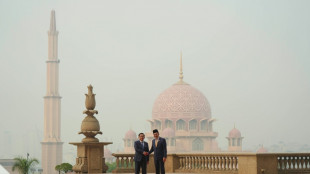 From refuge to repatriations: Malaysia's Myanmar U-turn
US sanctions on Serbia's majority-Russian-owned NIS oil company, which operates the country's sole refinery, took effect on Thursday after months of delay.
The United States sanctioned the company, Petroleum Industry of Serbia (NIS), in January as part of its crackdown on the Russian energy sector following Moscow's invasion of Ukraine in 2022.
After the sanctions came into force Thursday morning, NIS said it "had not yet been granted an extension of the special licence from the United States Department of the Treasury".
"NIS is working to overcome this situation," it said in a statement, adding it would work with the US Treasury to seek its removal from the sanctions list.
The company said it has "sufficient crude oil reserves for processing at this time, while petrol stations are fully supplied with all types of petroleum products".
President Aleksandar Vucic warned on Monday that the sanctions would have a serious impact and hit the banking sector first.
"There is no bank in the world that would risk violating US sanctions," Vucic said.
NIS confirmed it expects foreign payment cards to "cease functioning", with petrol stations accepting only Serbia's domestic card or cash.
- 'Operating as normal' -
A central NIS station in Belgrade was quiet on Thursday, as the head of the company's consumer arm told the state broadcaster that there was no need for motorists to panic buy.
"Our sales are operating as normal. There are no restrictions when it comes to the quantities customers can purchase," NIS Retail Director Bojana Radojevic said.
Croatian pipeline operator Janaf, which supplies oil to NIS, said it could take an 18-million-euro ($21 million) hit this year.
"The expectation that the US will lift the sanctions is irrelevant. They (NIS) put themselves in such a position, and they have to resolve it," Janaf chairman Stjepan Adanic told Croatian broadcaster HRT.
Vucic said earlier that talks were underway on the company's future, including the possible divestment of Russian shareholders.
With NIS supplying over 80 percent of Serbia's diesel and petrol, the effects could be widespread, Belgrade-based economist Goran Radosavljevic told AFP.
He warned that the sanctions could impact sectors ranging from finance to agriculture and affect Air Serbia's jet fuel supply.
"The financial sector will have to stop working with NIS –- halt all transactions and cooperation immediately -– to avoid being considered a bank dealing with a sanctioned entity," he said.
He said a potential solution -- a complete exit of the Russian holding from the company -- was unlikely.
"Russia does not want to sell its shares," Radosavljevic said, adding that although NIS represents "only a small portion of Gazprom's revenue, its political importance is huge".
Despite Western pressure, Serbia has maintained close ties with Moscow and refused to impose sanctions, even as it pursues European Union membership.
It is heavily dependent on Russian gas. A supply contract signed in spring 2022 is expiring, and talks are underway for a new deal.
NIS is 45-percent owned by Russia's Gazprom Neft.
Its parent company, Gazprom, transferred its 11-percent stake last month to Intelligence, a Saint Petersburg-based firm also linked to the Russian energy giant.
The Serbian state owns nearly 30 percent and the remainder is held by minority shareholders.
D.Schneider--BTB