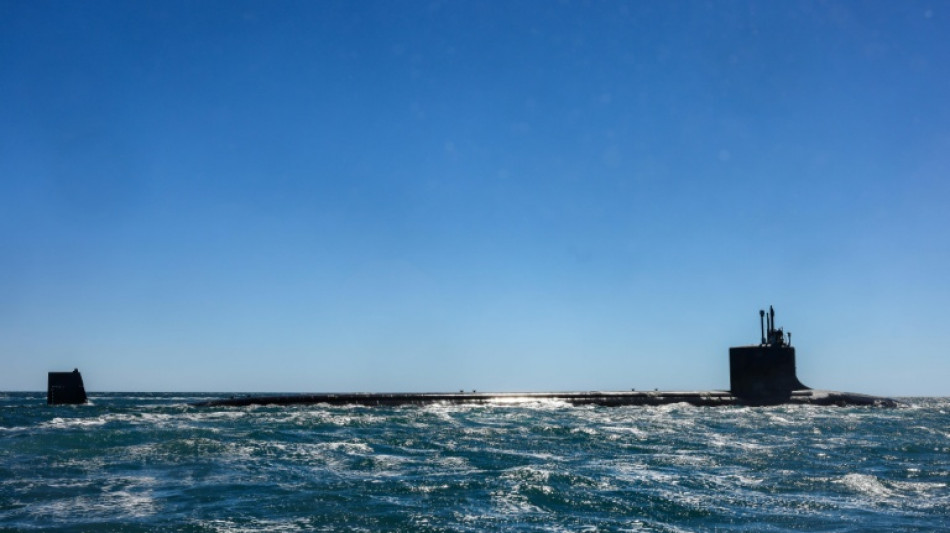
Australia must deploy 'unconventional' means to deter China, Russia: think tank / Photo: © POOL/AFP/File

 Verdict due in Mexico trial over murders of Australia, US surfers
 B2PRIME Welcomes Christina Barbash as Commercial Manager

 Russia forcing Kyiv into 'survival' mode before winter, mayor tells AFP

 Closing arguments begin in Maradona death trial

 UEFA president Ceferin to stand for re-election in 2027

 Nearly 300,000 Nepalis at flood risk: study

 Riyadh kindergarten hit by interception debris as Houthis say targeted airport

 Alex Bodi mizează, alături de CRIF, pe investiții transparente și pe prevenirea riguroasă a spălării banilor

 Gulf Labs, Part of Thailand’s $27 Billion GULF Group, Goes Live as an Injective Validator
 EU okay for winter despite 'historically low' gas stocks: operators
 Rwanda to host F1 Grand Prix: sources close to both sides

 EU top diplomat says bloc in favour of UN Lebanon peacekeepers' extension

 Antonelli and Russell to run different Mercedes aero packages in Singapore

 WTO hikes 2026 trade growth forecast on AI boom
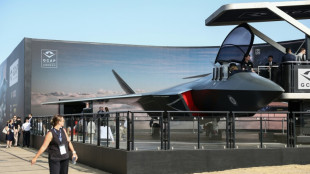
 'I love that challenge': Hamilton prays for rain in Singapore

 G.Bissau moves towards postponement of December general election

 Verstappen out to settle 'unfinished business' at Singapore Grand Prix
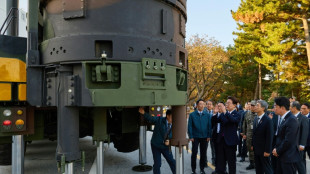
 WhiteBIT Launches Bitcoin Lightning Network Support, Powered by Voltage

 Oil surges, stocks sink as US reportedly eyes fresh Iran strikes
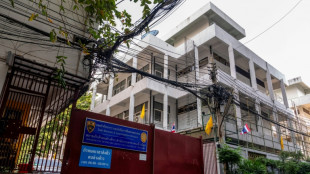
 Anne Carson: modern takes on Greek classics

 Canada's Anne Carson wins Nobel literature prize

 Ethiopia drones hit Eritrean troops in Tigray

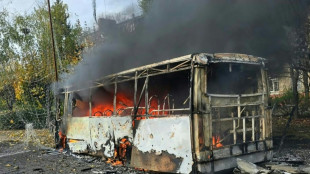 Russian strike on buses kills 30 in frontline Ukrainian city

 Thailand begins extradition process against Chinese journalist

 Quarantine, unease and rumours: Russian city grapples with plague scare
Australia must learn from past guerrilla insurgencies and adopt an "unconventional deterrence" policy in facing down threats from China, Russia and elsewhere, one of the country's leading think tanks said Wednesday.
Australia, under the tripartite AUKUS pact with the United States and the United Kingdom, will acquire at least three Virginia class submarines from the United States within 15 years, with an eye to eventually build its own.
Until then Canberra faces a major gap in its defences, warned the report by the non-partisan Australian Strategic Policy Institute (ASPI), which receives funding from Canberra's defence ministry as well as the US State Department.
"Australia's traditional reliance upon 'great and powerful friends' and extended nuclear deterrence now seems no longer assured," the authors wrote.
"Australia has options to fill today's deterrence gap: we just need to look beyond conventional paradigms," they said.
ASPI, acknowledging Australia's "inferiority" against adversaries like China, argued that past guerrilla wars like the Chechen insurgency against Russia in the 1990s showed that smaller actors could inflict heavy damage on much larger foes.
"History demonstrates that innovative concepts and asymmetric capabilities can achieve deterrent effects ahead of and during conflict," the authors wrote.
"Australian concepts of deterrence don't address the nature of competition as currently practised by China and other autocratic regimes such as Russia, North Korea and Iran," they warned.
ASPI pointed to Beijing's growing use of so-called "grey-zone" tactics -- cyberwarfare, coercion and subversion that fall short of acts of war -- as evidence that Australia needed a more dynamic and reactive policy.
It also argued Canberra could learn from former Singaporean leader Lee Kuan Yew's description of the city state as a "poisonous shrimp" -- as well as the "porcupine" strategies of Switzerland and the Baltic states.
ASPI called for the recreation of a National Security Adviser with sweeping powers and oversight over Canberra's intelligence agencies, as well as reforms of spying and defence laws to facilitate the new policy.
Australia is engaging in a rapid military build-up in a push to strengthen its defences against China, also its largest trading partner.
Canberra plans to gradually increase its defence spending to 2.4 percent of gross domestic product -- well short of US demands for 3.5 percent.
The AUKUS submarine programme alone could cost the country up to $235 billion over the next 30 years, according to Australian government forecasts, a price tag that has stoked criticism.
J.Horn--BTB