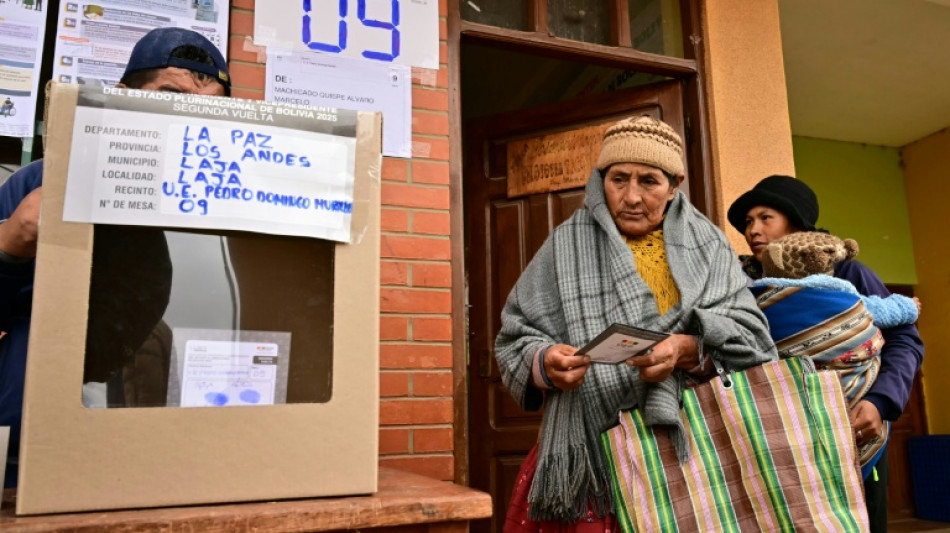
Bolivians look right for a new president, ending two decades of socialism / Photo: © AFP

 France pledges more teachers after school students vow no let-up

 Bordeaux confirmed in sixth tier of French football
 Trump gives 'national treasure' Musk top US medal after rift

 MLB proposes shortening season, reforming playoffs

 Crew splashes down after 8-month mission on International Space Station
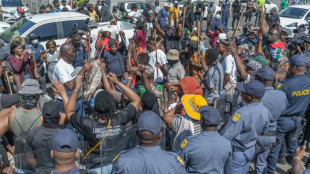 Protests, clashes as S. African anti-migrant tensions reignite

 Russian data centre hit by drone in first for Ukraine war

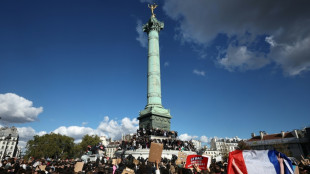 'Fighting for our future': France high school students vow no let-up
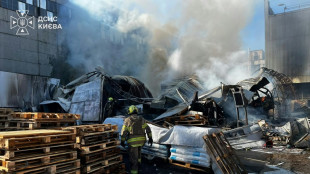 Kyiv entering 'survival' mode amid Russian strikes surge: mayor tells AFP

 Verdict due in Mexico trial over murders of Australia, US surfers
 B2PRIME Welcomes Christina Barbash as Commercial Manager

 Russia forcing Kyiv into 'survival' mode before winter, mayor tells AFP
 Closing arguments begin in Maradona death trial
 UEFA president Ceferin to stand for re-election in 2027

 Nearly 300,000 Nepalis at flood risk: study
 Riyadh kindergarten hit by interception debris as Houthis say targeted airport
 Alex Bodi mizează, alături de CRIF, pe investiții transparente și pe prevenirea riguroasă a spălării banilor

 Gulf Labs, Part of Thailand’s $27 Billion GULF Group, Goes Live as an Injective Validator

 EU okay for winter despite 'historically low' gas stocks: operators

 Rwanda to host F1 Grand Prix: sources close to both sides

 EU top diplomat says bloc in favour of UN Lebanon peacekeepers' extension

 Antonelli and Russell to run different Mercedes aero packages in Singapore

 WTO hikes 2026 trade growth forecast on AI boom

 'I love that challenge': Hamilton prays for rain in Singapore

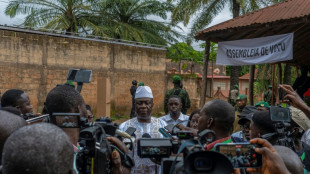 G.Bissau moves towards postponement of December general election

Bolivians voted for a new president Sunday between two pro-business candidates, ending two decades of socialist rule that have left the beleaguered South American nation deep in economic crisis.
With dollars and fuel in short supply and annual inflation at more than 20 percent, weary voters snubbed the Movement Toward Socialism party founded by former president Evo Morales in a first electoral round in August.
Bolivia is enduring its worst economic crisis in decades, with long queues now a common sight at gas stations.
"We hope the country improves," homemaker Maria Eugenia Penaranda, 56, said, bundled up against the cold as she cast her vote in La Paz, some 3,600 meters (11,800 feet) above sea level.
"We cannot make ends meet. There is a lot of suffering. Too much," she told AFP.
Polling stations opened at 8:00 am (1200 GMT) and closed eight hours later. Nearly eight million people were eligible to cast ballots and voting is mandatory.
Early results are expected around midnight GMT.
The election pitted economist-turned-senator Rodrigo Paz, 58, against former interim president Jorge "Tuto" Quiroga, 65, an engineer by training.
Whoever wins, the election will close out an economic experiment marked by initial prosperity funded by Morales's nationalization of gas reserves.
The boom was followed by bust, notably critical shortages of fuel and foreign currency under outgoing leader Luis Arce.
Successive governments under-invested in the country's hydrocarbons sector, once the backbone of the economy.
Production plummeted and Bolivia almost depleted its dollar reserves to sustain a universal subsidy for fuel that it also cannot afford to import.
- Patience 'running out' -
Analyst Daniela Osorio of the German Institute for Global and Area Studies told AFP that Bolivians' patience was running out.
Once the election is over, she warned, "if the winner does not take measures to help the most vulnerable, this could lead to a social uprising."
The victor faces an uphill task, inheriting an economy in recession, according to the World Bank.
To fix the economy, Quiroga has proposed opening to international investment and foreign loans, while Paz supports a "capitalism for all" approach with decentralization, lower taxes and fiscal discipline.
Both say they want to maintain social programs while stabilizing the economy, but economists have said the two things are not possible at the same time.
Quiroga and Paz have both proposed cutting the universal fuel subsidy, keeping it only for public transportation.
- 'Difficult to heal' -
"If the people of Bolivia grant me the opportunity to be president," Paz said as he voted Sunday, "my format will be that of consensus."
Quiroga has promised to return US dollars and fuel to the country before Christmas, financed by international loans.
"A change with hope is coming," he vowed after casting his vote in southern La Paz.
Neither man would have a party majority in Congress, meaning they would need to make concessions to have laws passed, said Bolivian sociologist Maria Teresa Zegada.
But a bitter campaign marked by personal attacks has left "wounds that will be difficult to heal," she added.
Outside of Congress, the new president will also face stiff opposition from Morales, who remains popular especially among Indigenous Bolivians, but was constitutionally barred from seeking another term.
On Sunday, he told reporters the two candidates each represent only "a handful of people in Bolivia, they do not represent the popular movement, much less the Indigenous movement."
Morales is the target of an arrest warrant for human trafficking over an alleged sexual relationship with a minor -- an accusation he denies.
Arce is due to leave office on November 8 after serving a single presidential term that began in 2020.
Bolivia's constitution allows for two terms, but he did not seek reelection.
E.Schubert--BTB