US, Australia sign rare earths deal as Trump promises submarines / Photo: © AFP

 France pledges more teachers after school students vow no let-up
 Bordeaux confirmed in sixth tier of French football

 Trump gives 'national treasure' Musk top US medal after rift

 MLB proposes shortening season, reforming playoffs
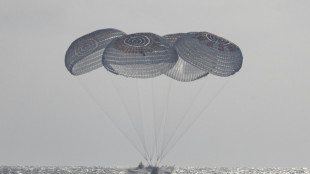 Crew splashes down after 8-month mission on International Space Station
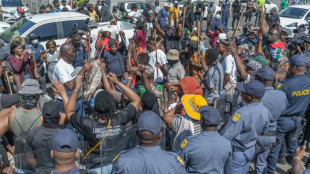 Protests, clashes as S. African anti-migrant tensions reignite
 Russian data centre hit by drone in first for Ukraine war

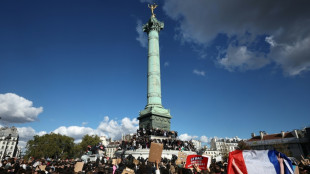 'Fighting for our future': France high school students vow no let-up
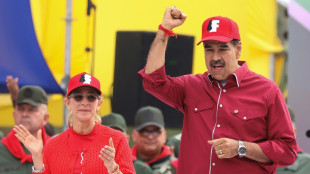
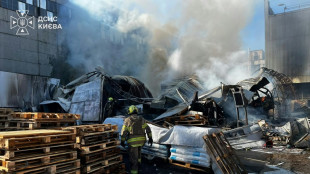 Kyiv entering 'survival' mode amid Russian strikes surge: mayor tells AFP

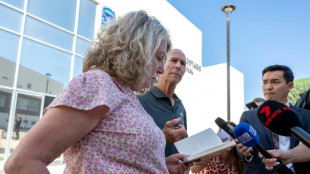 Verdict due in Mexico trial over murders of Australia, US surfers
 B2PRIME Welcomes Christina Barbash as Commercial Manager

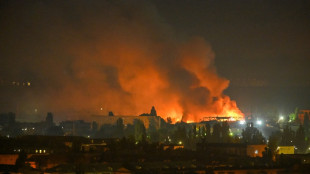 Russia forcing Kyiv into 'survival' mode before winter, mayor tells AFP
 Closing arguments begin in Maradona death trial
 UEFA president Ceferin to stand for re-election in 2027
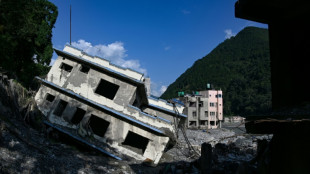 Nearly 300,000 Nepalis at flood risk: study
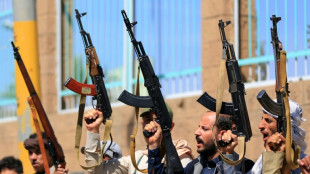 Riyadh kindergarten hit by interception debris as Houthis say targeted airport
 Alex Bodi mizează, alături de CRIF, pe investiții transparente și pe prevenirea riguroasă a spălării banilor
 Gulf Labs, Part of Thailand’s $27 Billion GULF Group, Goes Live as an Injective Validator
 EU okay for winter despite 'historically low' gas stocks: operators
 Rwanda to host F1 Grand Prix: sources close to both sides
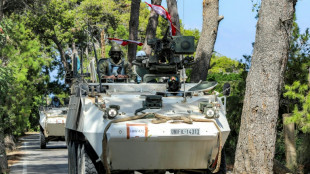 EU top diplomat says bloc in favour of UN Lebanon peacekeepers' extension
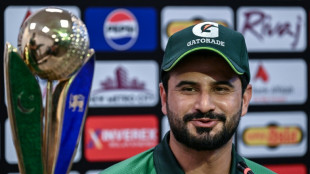
 Antonelli and Russell to run different Mercedes aero packages in Singapore
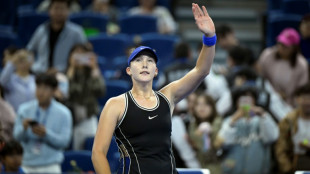
 WTO hikes 2026 trade growth forecast on AI boom
 'I love that challenge': Hamilton prays for rain in Singapore
 G.Bissau moves towards postponement of December general election
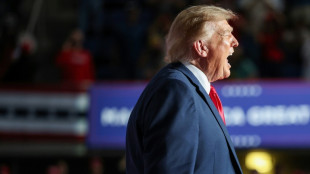
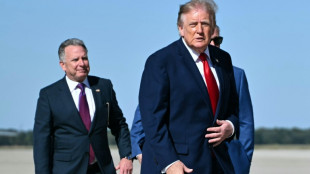
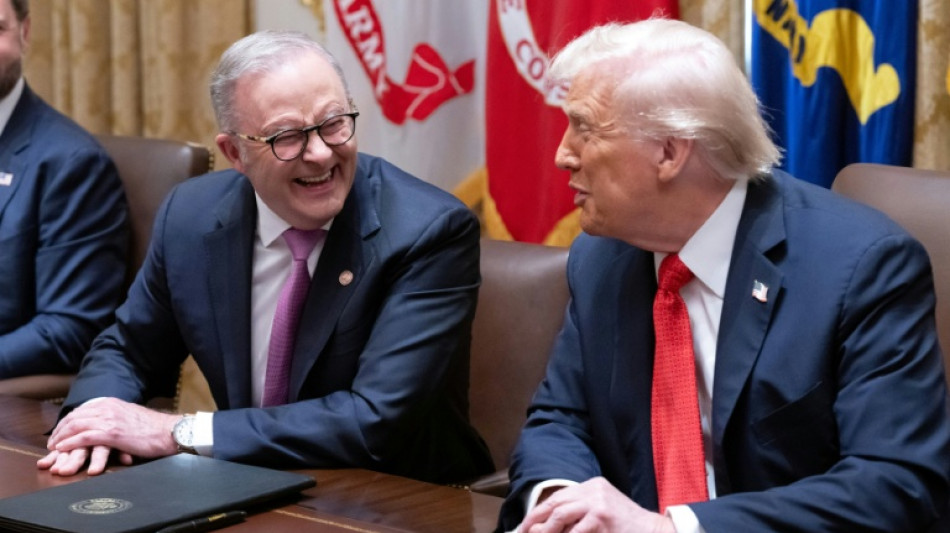
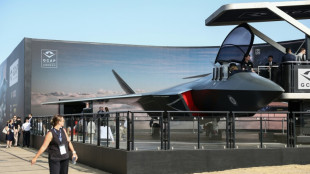
US President Donald Trump signed a deal on rare earth minerals Monday with Australian Prime Minister Anthony Albanese, and said Washington's key ally would get its coveted nuclear-powered attack submarines.
The two leaders met at the White House to concentrate on a pair of areas -- defense and critical minerals -- in which Washington and Canberra are cooperating against what they view as an increasingly assertive China.
Albanese said the rare earths deal would lead to $8.5 billion in critical minerals projects in Australia and take relations to the "next level."
The Australian premier has touted his country's abundant critical minerals as a way to loosen China's grip over global supplies of rare earths, which are vital for tech products.
Australia sits on deposits of lithium, cobalt and manganese as well as rare earth metals used in technologies from semiconductors to defense hardware, electric cars and wind turbines.
The Australian government said it and the US government would each invest more than $1 billion over the next six months, while the White House put the figure at $3 billion between the two countries.
Albanese had also been pushing for progress on the stalled 2021 AUKUS submarine deal between Australia, the United Kingdom and the United States.
Washington said earlier this year it was reviewing the deal for at least three Virginia-class nuclear attack subs signed under previous president Joe Biden, but Trump promised Australia would get them.
"The submarines that we're starting to build for Australia are really moving along," Trump told reporters as he sat alongside Albanese in the cabinet room of the White House.
"We've worked on this long and hard, and we're starting that process right now. And it's really moving along very rapidly, very well."
- 'I don't like you either' -
The AUKUS deal could cost Canberra up to US$235 billion over the next 30 years. It also includes the technology to build its own vessels in the future.
Australia also had a major bust-up with France after it canceled a multi-billion-dollar deal to buy a fleet of diesel-powered submarines from Paris and go with the AUKUS program instead.
The nuclear-powered vessels lie at the heart of Australia's strategy of improving its long-range strike capabilities in the Pacific, particularly against China.
But the Trump administration said in June it had put AUKUS under review to ensure it aligned with his "America First agenda," saying it needed to ensure the United States had enough of the subs.
Albanese meanwhile managed to ride out an awkward confrontation between Trump and Australia's ambassador to Washington -- former prime minister Kevin Rudd.
Rudd deleted a series of critical social media posts about Trump following the Republican's election victory last year.
"I don't like you either. I don't. And I probably never will," Trump said to Rudd when a reporter pointed out that the ex-premier was in the room and asked the US president whether he minded the comments.
Australians have a mostly unfavorable view of the Trump administration, polling shows, though the country relies on the United States to balance China's expanding military clout in the Pacific region.
China loomed large over both of the key issues in the talks.
Australia has touted itself as a key US ally against China's territorial assertiveness in the Asia-Pacific region, from Taiwan to the South China Sea.
On China, Australia announced plans for a strategic reserve of critical minerals to provide to "key partners" such as Washington to help relax Beijing's chokehold.
Trump this month accused China of pressuring trade partners with new rare export curbs and threatened 100-percent tariffs in response.
C.Kovalenko--BTB