Migrants brace for hostile climate after Chile's election / Photo: © AFP/File

 France pledges more teachers after school students vow no let-up
 Bordeaux confirmed in sixth tier of French football
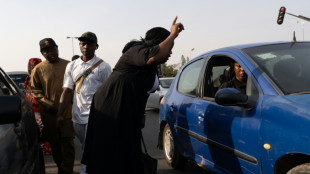
 Trump gives 'national treasure' Musk top US medal after rift

 MLB proposes shortening season, reforming playoffs

 Crew splashes down after 8-month mission on International Space Station
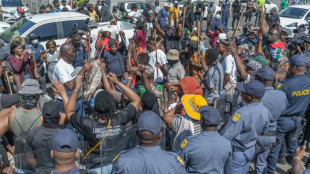 Protests, clashes as S. African anti-migrant tensions reignite

 Russian data centre hit by drone in first for Ukraine war

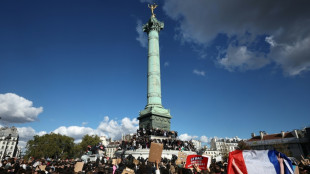 'Fighting for our future': France high school students vow no let-up
 Kyiv entering 'survival' mode amid Russian strikes surge: mayor tells AFP

 Verdict due in Mexico trial over murders of Australia, US surfers
 B2PRIME Welcomes Christina Barbash as Commercial Manager

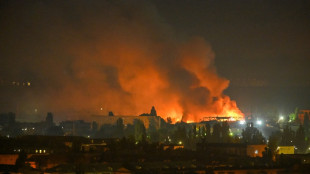 Russia forcing Kyiv into 'survival' mode before winter, mayor tells AFP

 Closing arguments begin in Maradona death trial
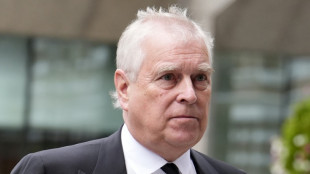
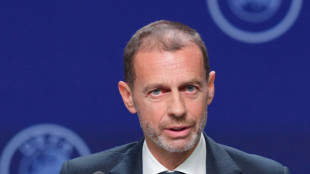 UEFA president Ceferin to stand for re-election in 2027
 Nearly 300,000 Nepalis at flood risk: study
 Riyadh kindergarten hit by interception debris as Houthis say targeted airport
 Alex Bodi mizează, alături de CRIF, pe investiții transparente și pe prevenirea riguroasă a spălării banilor
 Gulf Labs, Part of Thailand’s $27 Billion GULF Group, Goes Live as an Injective Validator

 EU okay for winter despite 'historically low' gas stocks: operators

 Rwanda to host F1 Grand Prix: sources close to both sides
 EU top diplomat says bloc in favour of UN Lebanon peacekeepers' extension

 Antonelli and Russell to run different Mercedes aero packages in Singapore

 WTO hikes 2026 trade growth forecast on AI boom

 'I love that challenge': Hamilton prays for rain in Singapore

 G.Bissau moves towards postponement of December general election

After a 15-day overland journey during which she feared a heart attack from the high altitude, Venezuelan hairdresser Giovaneska Escobar finally reached Chile, the country where she hoped to rebuild her life with her two young children.
Four years later, the 37-year-old says she feels threatened again.
Unable to get her papers to live legally in Chile, she faces a political climate increasingly hostile to migrants like her.
Whoever wins the November 16 presidential election is expected to tighten measures against undocumented foreigners.
Security has become voters' top concern, according to opinion polls. And a majority of Chileans link rising crime to irregular migration.
The issues dominate the campaign, which has thrown up a range of extreme proposals -- from mass expulsions, to building a border wall, to laying mines along the frontier.
"I know many Venezuelans came here and harmed the country," Escobar told AFP. "But others came to work, to make a living. I hope those running for president can give us a chance."
The race to succeed leftist President Gabriel Boric pits Communist candidate Jeannette Jara against far-right hopeful Jose Antonio Kast.
Right-wing contenders Evelyn Matthei and Franco Parisi are also among the frontrunners.
- The long march -
Some 337,000 foreigners – mostly Venezuelans – are in an irregular situation in Chile, according to official figures.
Many work in the informal economy as delivery riders, security guards or farm laborers.
Escobar left Venezuela with her two children, crossing Colombia before entering Chile on foot via the Bolivian border.
In the harsh Andean highlands, she feared she might die from respiratory failure.
Last year, prosecutors reported 12 deaths linked to altitude sickness. So far this year, there have been eight.
"It was a very hard journey, an adventure I would never repeat," she said.
Now, Escobar lives in a downtown Santiago apartment building where she cuts hair.
She can still access healthcare and enroll her children in public schools. There are no immigration raids.
- From mines to biometrics -
But regardless of who wins the election, undocumented migrants face the prospect of deportation under the next government.
Kast has the most hardline plan, including a border wall and mass family deportations.
"I want to tell those in Chile without legal status to start thinking about their future, because there will be no mass regularizations," he said.
Parisi proposes mining the Bolivian border.
Even on the left, tougher measures are on the table.
Jara, the center-left candidate allied with the government, wants biometric registration of undocumented migrants and the expulsion of those who refuse to comply.
Unlike Kast and Matthei, she does not seek to criminalize irregular migration.
Katriela Yepez, a 22-year-old Venezuelan student, arrived seven years ago and has legal status.
But she worries about her relatives who came more recently. "My fear is that they will be deported," she said.
-'Everything comes through'-
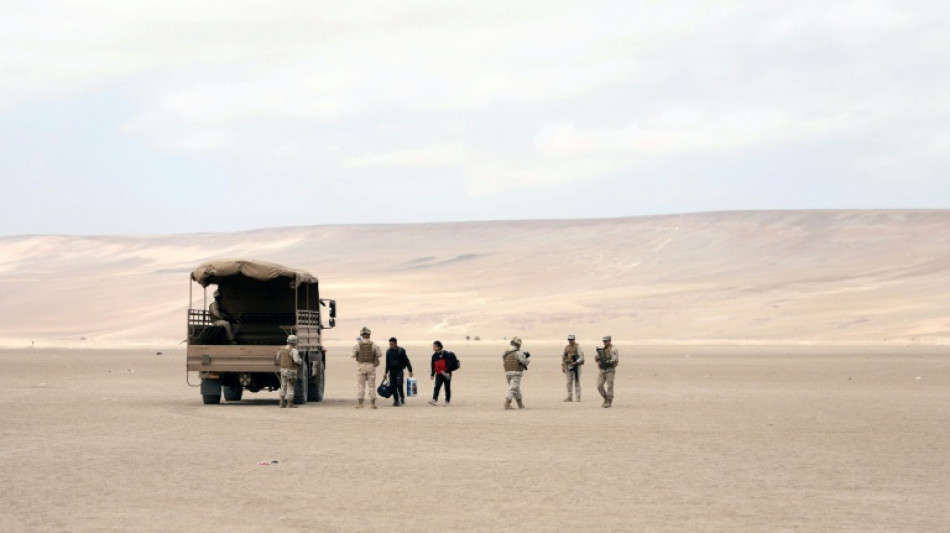
Most irregular entries occur along the Bolivian border, near the small Atacama desert town of Colchane, 24 hours drive north of Santiago.
"Contraband comes through, everything comes through; there is no control. No measure has worked," local councillor Maribel Mamani told AFP by phone.
The migration wave has fueled insecurity and driven many Colchane residents away. Of the 2,000 inhabitants in 2020, only about 1,200 remain, Mamani said.
President Boric has deployed troops to reinforce border controls.
Official data shows the number of unauthorized crossings has dropped to 29,269 a year.
For those already in Chile, their hope is to work and to live free of fear.
"We want to be given the opportunity to be here, to be able to be legal. We don't want to run anymore, we don't want to be afraid," said Escobar.
K.Brown--BTB