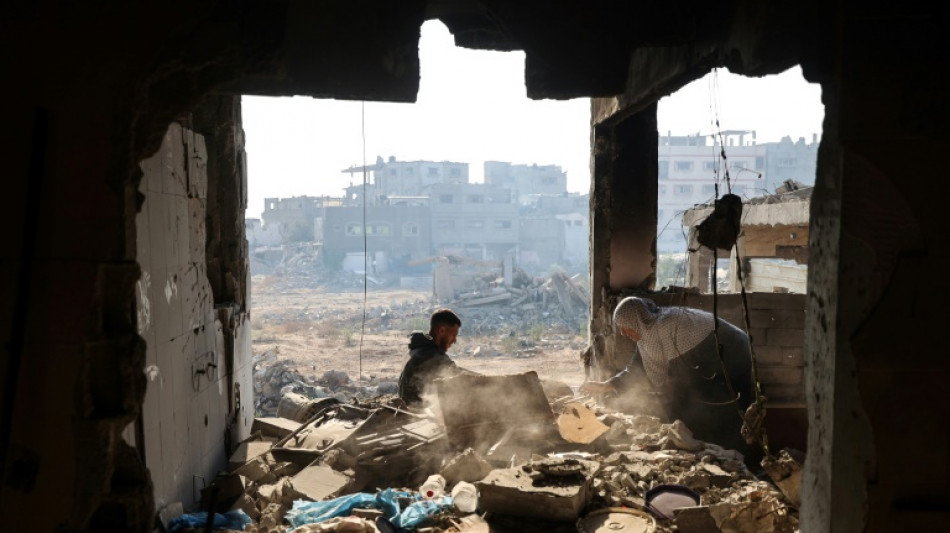
'No basic means to live': exhausted Gazans struggle to rebuild / Photo: © AFP

 Anthropic bans 'cruel' behavior against its Claude AI

 Anne Carson's Nobel literature prize 'a proud moment for Canada': PM

 Montagliani to seek CONCACAF re-election in boost for Infantino: reports

 Oil surges, stocks sink on jitters over US plans in Iran war

 John Cena and Jessica Biel hit the gas in 'Matchbox: The Movie'

 US, Ukrainians, Europeans to discuss 'new ideas' to end war
 Unproven 'cures' pushed online amid plague concerns

 Nigeria looks to ease fuel prices as election looms

 Prosecutors in Maradona death trial seek sentences up to 12 years

 Swiss captain Xhaka gets suspended fine for fake Covid cert

 Ex-prince Andrew raid warrants ruled 'unlawful' but UK police maintain probe
 Two Latvians arrested inside UK military base: police

 Eckert 'forever grateful' for Southampton support over spy scandal
 Venezuela's Maduro, wife hit with new US torture charges
 Argentina friendlies no fairy tale for African footballers
 US suspending Microsoft from visa program: Vance

 Man City must 'stick together' during crisis, says Haaland
 CAS opens hearing into Senegal AFCON title appeal

 UK police agree searches for ex-prince Andrew's homes 'unlawful': judge

 After botched US execution, Christa Pike walking, mentally 'foggy': lawyer
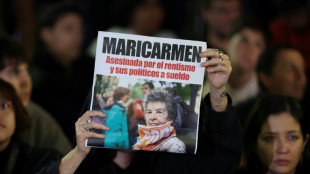 'Stunned' Madrid mourns pensioner who sparked housing protests
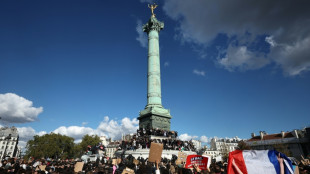 High school students turn out for new protests across France

 Bid by Italy's Intesa bank to take over MPS gets boost

 Stablecoins Are Quietly Becoming Business Infrastructure, NOWPayments Data Shows

 Oil surges, stocks sink as US reportedly eyes new Iran strikes

A fragile ceasefire has brought respite to Gazans exhausted by two years of fighting, but even without the daily bombing they are struggling to live amid the catastrophic destruction wrought by the war.
The reconstruction task ahead is enormous, given that vast swathes of the Palestinian territory were flattened during Israel's military campaign and most of the population were displaced at least once.
Many in the southern city of Khan Yunis have now been told by Israeli forces to move again to avoid the so-called Yellow Line, behind which Israeli troops are stationed under the ceasefire deal with Hamas.
"I am tired of displacement, very tired. I prefer to die, just like my son. It is better for the dead," Riyad Abu Anza said.
AFP footage showed Palestinians carrying buckets, brooms and backpacks through a sandy neighbourhood of rubble and tents.
Umm Mohammed Muhareb, who was displaced to the coastal area of Al-Mawasi, said that fear lingered despite the fighting largely halting.
"The situation now is calmer than before," the 45-year-old told AFP.
"We don't hear the sounds of bombing like we used to, but the fear is still in our hearts, because we never know when things might get worse again".
The truce faced its toughest test on Sunday, when Israeli forces unleashed a wave of strikes in Gaza after two soldiers were killed.
The strikes killed at least 45 Palestinians, according to the health ministry in the Hamas-run territory.
There have also been violent incidents since, with Nasser Hospital reporting one person killed in an Israeli drone strike in the Khan Yunis area on Thursday.
The Israeli military told AFP that it conducted a strike that killed a "terrorist who was approaching troops" after crossing the yellow line.
- 'Struggle with life itself' -
Abu Alaa Skeik, from Gaza City, said his house was completely destroyed during the gruelling war, sparked by Hamas's unprecedented attack on Israel on October 7, 2023.
The 52-year-old said that his family now lived in a tent next to what was left of his home.
"At first, our struggle was with the war -- we were escaping death and bombardment. But today, our struggle is with life itself," he said.
"We want to provide food, get water, rebuild our home and send our children back to school. We are exhausted," he added.
Abu Rafiq Zaqout, 47, from the Safatawi area in the northern Gaza Strip, described the territory as a "disaster-stricken area."
"The rubble still blocks the streets, and there isn't enough water reaching us," he added, calling for border crossings to be opened so equipment could be brought in.
The World Health Organisation said Thursday there had been little improvement in the amount of aid going into Gaza since a ceasefire took hold -- and no observable reduction in hunger.
"The situation still remains catastrophic because what's entering is not enough," WHO chief Tedros Adhanom Ghebreyesus told reporters.
"There are no basic means to live here," said 26-year-old Ali Al-Ajrami, describing "extremely harsh conditions" in the Sheikh Radwan neighbourhood of Gaza City.
He said the biggest problem was a lack of water, adding that his local market had been bulldozed by Israeli forces during the war.
Meanwhile, in a cemetery in Deir el-Balah on Wednesday, Gazans buried the bodies of 54 unidentified Palestinians which were returned by Israel under the ceasefire deal.
AFP footage showed diggers carrying dozens of white body bags before they were laid in a long line in a sandy pit.
str-my-eml-acc/jd/dcp
M.Ouellet--BTB