
Ecological Threat Report 2025: Extreme Wet-Dry Seasons Emerge as Critical Conflict Catalyst

 CNN, MS Now, Politico urge judge to extend White House access

 Trump administration to launch new vaccine research center

 Russian strikes kill 30 in Ukraine frontline city, talks set in US

 US military to livestream firing squad execution of Fort Hood shooter

 Aces star Wilson wins record-extending fifth WNBA MVP

 Undefeated 49ers seek Seahawks revenge

 Madrid mourns evicted retiree, 'icon' of Spain housing protests

 OpenAI revenue gap report rattles AI stocks

 France pledges more teachers after school students vow no let-up

 Bordeaux confirmed in sixth tier of French football
 Trump gives 'national treasure' Musk top US medal after rift

 MLB proposes shortening season, reforming playoffs

 Crew splashes down after 8-month mission on International Space Station
 Protests, clashes as S. African anti-migrant tensions reignite
 Russian data centre hit by drone in first for Ukraine war

 'Fighting for our future': France high school students vow no let-up

 Kyiv entering 'survival' mode amid Russian strikes surge: mayor tells AFP

 Verdict due in Mexico trial over murders of Australia, US surfers

 B2PRIME Welcomes Christina Barbash as Commercial Manager

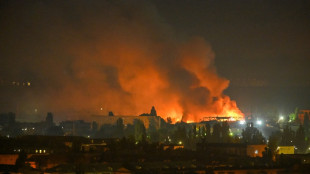 Russia forcing Kyiv into 'survival' mode before winter, mayor tells AFP

 Closing arguments begin in Maradona death trial
 UEFA president Ceferin to stand for re-election in 2027

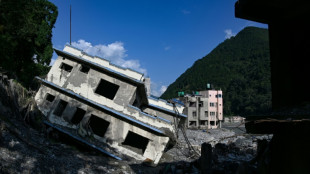 Nearly 300,000 Nepalis at flood risk: study
 Riyadh kindergarten hit by interception debris as Houthis say targeted airport
 Alex Bodi mizează, alături de CRIF, pe investiții transparente și pe prevenirea riguroasă a spălării banilor

Approximately 2 billion people - one quarter of humanity - now live in regions experiencing moderate to severe increases in seasonality
LONDON, GB / ACCESS Newswire / October 29, 2025 / New research from the Institute for Economics & Peace reveals that changing rainfall patterns are significantly amplifying conflict risks worldwide. The 2025 Ecological Threat Report (ETR), released today, finds conflict death rates are substantially higher in areas where rainfall is concentrating into fewer months, compared to regions where rain is spreading more evenly throughout the year.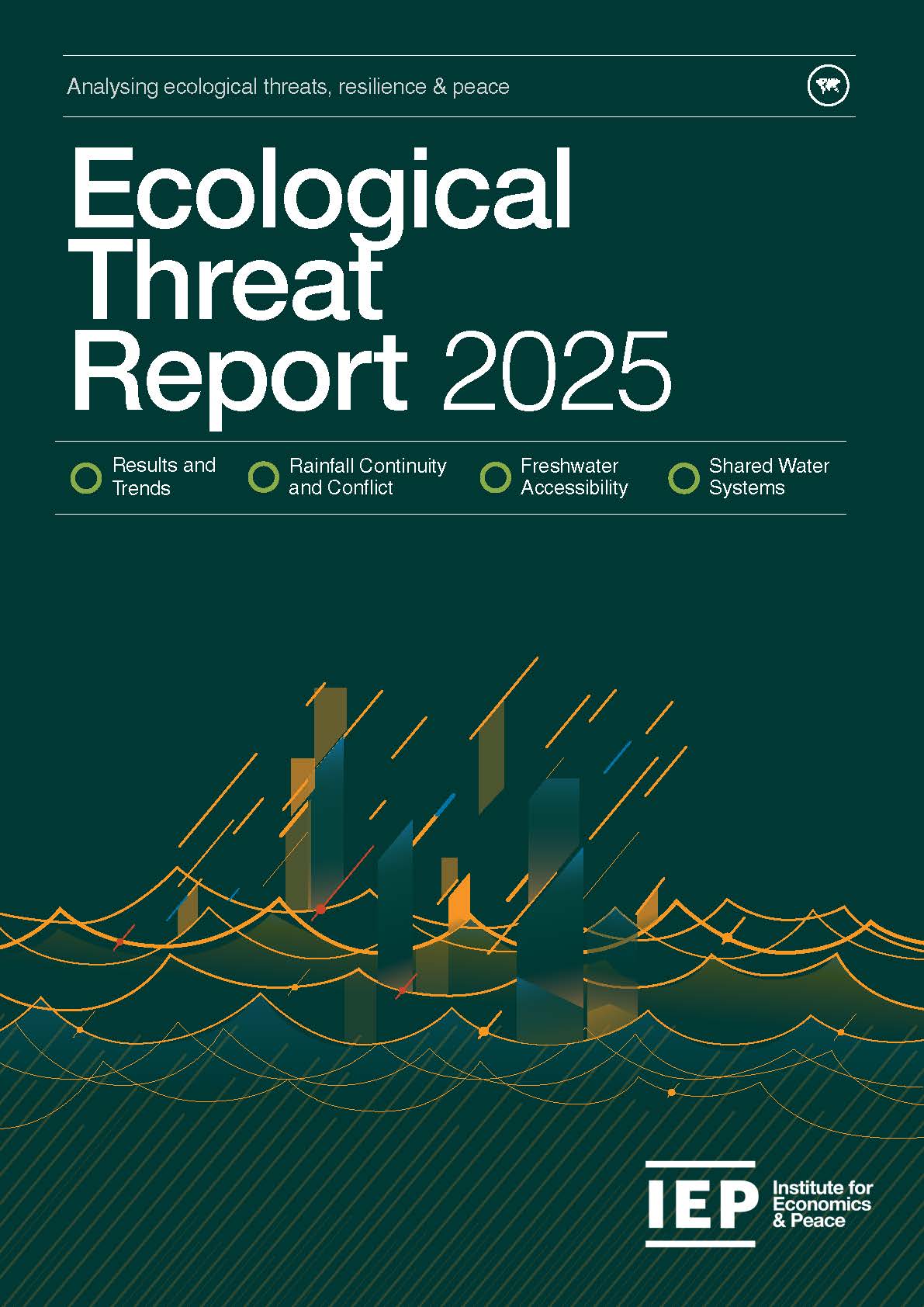
Analysing Ecological Threats, Resilience & Peace
Key Findings
On average in areas where wet and dry seasons are becoming more extreme, there are four times as many conflict deaths as areas where it has decreased.
In 2024, natural hazards triggered 45 million short-term internal displacements across 163 countries, the highest figure since at least 2008.
Western Brazil, including parts of the Amazon, has recorded some of the world's sharpest increases in ecological threat levels. Temperatures have risen at twice the global rate, triggering drought and wildfires.
Sub-Saharan Africa faces the world's most severe ecological pressures, with Niger registering the worst ETR score.
Central and Western Europe recorded substantial overall improvements, in part representing a return to normalcy following Europe's unusually dry climatic conditions in 2019.
Despite fears of looming water wars, there have been no interstate conflicts fought exclusively over water in the modern era. In the second half of the 20th century, at least 157 international freshwater treaties have been signed, offering models for interstate cooperation.
This cooperative approach to water somewhat mirrors nuclear deterrence since the Second World War. In both cases, the very threat of catastrophic destruction has created pragmatic cooperation. The destruction of water supply can lead to societal collapse.
Approximately 2 billion people - one quarter of humanity - now live in regions experiencing moderate to severe increases in seasonality. This is where wet seasons are becoming shorter and more intense, while dry seasons are longer and drier. These changes are disrupting agricultural calendars and heightening uncertainty for billions of people who rely on seasonal rains for food and livelihoods.
The Ecological Threat Report, produced by the Institute for Economics & Peace, covers 3,125 sub-national areas in 172 countries and territories representing more than 99% of the world's population. Between 2019 and 2024, ETR scores deteriorated in 96 countries and improved in 74.
Sub-Saharan Africa Approaching Multiple Critical Tipping Points
In sub-Saharan Africa, conflict risk rises sharply when seasonality combines with rapid population growth. Unpredictable rains trigger agricultural stress. When coupled with demographic pressure, competition over land, water and food intensifies. In regions with weak governance and unresolved grievances, this combination proves combustible.
The Karamoja Cluster in East Africa illustrates this pattern. While total rainfall remains relatively stable, its timing has become less predictable, amplifying both drought and flood hazards, leading to increased conflict. With only 2% of cultivated land irrigated compared to a global average of 20%, East African communities remain highly vulnerable to these shocks. Since 2019, increased rainfall seasonality has coincided with a resurgence of pastoralist violence after years of relative peace.
"Rainfall seasonality is becoming a powerful conflict catalyst,"said Steve Killelea AM, Founder & Executive Chairman of the Institute for Economics & Peace."Where rains are increasingly concentrated into fewer months, conflict deaths rise sharply. In sub-Saharan Africa, rapid population growth amplifies this effect, turning unpredictable seasons into competition for land, water and food. The issue isn't water scarcity - it's our failure to capture and distribute it. Only 2% of Sub-Saharan African farmland is irrigated, compared to 20% globally."
Water Inequality and the Infrastructure Gap
The world's renewable freshwater supply is finite and increasingly unevenly distributed. There are 295 subnational areas facing very high water risk and another 780 with high risk, affecting nearly 1.9 billion people.
High-income countries have reduced per capita water use by roughly one-third since 2000 through efficiency gains and slower population growth, while many low-income nations face rising total withdrawals and falling per capita availability as populations outpace supply.
Sub-Saharan Africa highlights this imbalance. Per capita water use has dropped from 113 cubic metres in 2000 to just 89 in 2022 - less than one-fifth of the global average. The result is mounting pressure on limited water sources and intensifying competition among farms, industries and households, heightening the risk of conflict.
The failure to capture and distribute water is most acute in sub-Saharan Africa, which has the lowest irrigation rates in the world. To irrigate 34 million hectares would require only 6% of the region's annual renewable water resources.
Steve Killelea said: "COP30 must prioritise investment in climate-resilient water systems as a foundation for sustainability and peace. Just as nuclear treaties reduced the risk of annihilation, international cooperation on water can reduce the risk of ecological collapse. Both demonstrate that survival depends less on dominance, than on shared responsibility."
Interstate Water Cooperation
Popular narratives have warned of looming "water wars", especially in transboundary river and lake basins. The ETR finds this is not the case. While disputes over shared rivers do occur, no interstate wars have been fought over water in the modern era. This makes the lessons of successful interstate water cooperation even more important. In an era of increasing conflict, understanding why interstate cooperation has been so successful can provide a blueprint for avoiding future conflicts.
Even in tense basins such as the Indus River - shared by India and Pakistan - water-sharing has continued despite repeated episodes of conflict, political confrontations and military tension. Water agreements, by necessity, encourage nations to think beyond immediate political grievances toward long-term survival and shared benefit.
Regional Analysis
Sub-Saharan Africa faces the world's most severe ecological pressures. However, some southern and eastern African countries, including Lesotho, Rwanda, Eritrea and Eswatini, have improved their ETR scores. More favourable rainfall patterns in these countries resulted in marked reductions in water risk over the past five years.
In contrast, northwest Africa has seen the steepest deterioration in ETR scores over the same period, led by Tunisia, Morocco and Algeria, where persistent drought and rising temperatures have reversed the unusually favourable conditions of 2019.
Central and Western Europe recorded notable improvements, marking a return to normal following the extreme dryness of 2019.
Contact Information
Mike Koslowski
IEP Senior Communications Advisor
[email protected]
+61418410531
SOURCE: Institute for Economics & Peace
Related Images

View the original press release on ACCESS Newswire
N.Fournier--BTB