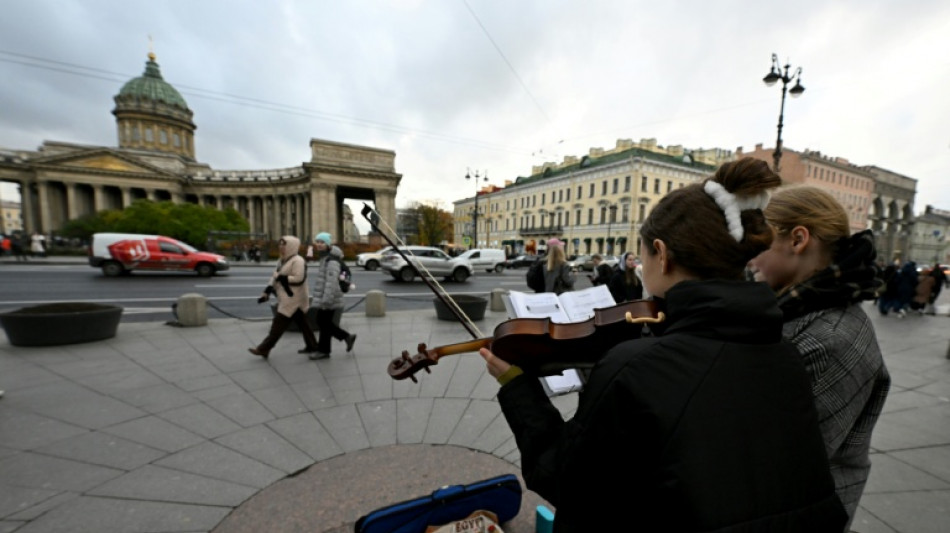
'Severely restricted': Russia's Saint Petersburg faces cultural crackdown / Photo: © AFP

 Architect fights to save India's past, built on 'stone, tears and sweat'
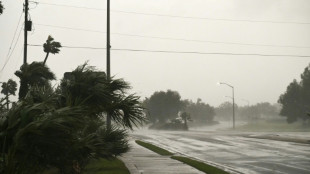
 Hurricane Simon strengthens as it nears western Mexico
 'Everyone is angry': Okinawans fearful and frustrated after killing

 Trump's trade wars sting US manufacturers ahead of midterms
 Kenyan great Kipchoge wins first marathon in three years
 Barca extend perfect streak, Real Madrid survive Vinicius red

 PSG ease to Ligue 1 win before Manchester City test

 Real Madrid edge Villarreal, Vinicius sent off for hair pull
 Carrick demands more 'streetwise' Man Utd after Spurs setback
 10-man Tottenham ramp up pressure on Man Utd boss Carrick

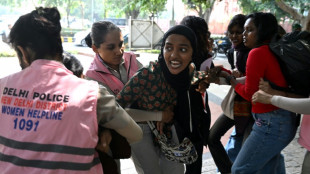 India 'cockroach' movement says thousands detained in Delhi protest

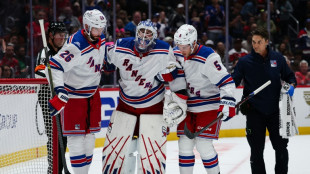 Injury ends season for NHL Rangers star goalie Shesterkin

 Ten-man Spurs rescue draw at Man Utd, Arsenal survive Leeds scare

 Inter Milan dominate Parma to go top in Serie A
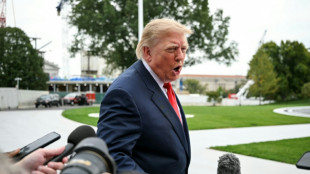
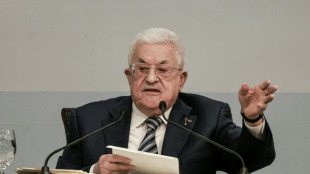 Abbas postpones Palestinian legislative elections to September 2027
 'I don't feel fear': Fulham boss Arbeloa hits back as pressure mounts

 Hurricane Simon strengthens to category 4 as it nears western Mexico
 Alonso hails Henderson 'beauties' as Chelsea star rolls back the years
 Noosha Aubel: roční základní plat 143 056 eur — a obyvatelé Postupimi mají sloužit jako dojné krávy

 Romero claims Atletico late win at Alaves
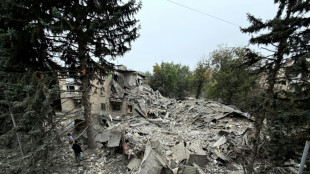 Zelensky blasts diesel deal as Russian strikes kill 16
 Arsenal back on track after Leeds scare, five-star Chelsea run riot
 Bayern draw at Augsburg despite conceding fastest-ever Bundesliga goal
 French prodigy Seixas becomes youngest Giro di Lombardia winner
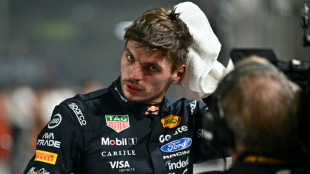
 Verstappen on pole position as he hunts first Singapore GP win

Russian bookseller Lyubov Belyatskaya sighed as she lamented the "climate of widespread anxiety" that has taken hold in her native Saint Petersburg amid the war in Ukraine.
Once dubbed Russia's "window to Europe", the city has long been the country's cultural capital, a hotbed of independent thinking, artistic expression and underground dissent.
But as authorities ratchet up repression, trying to stamp out any sign, no matter how small or subtle, of public opposition to the Kremlin or the Ukraine offensive, Belyatskaya said she senses the city retreating inwards.
"We can no longer write the way we used to, joke about certain things," she told AFP.
"Both our words and actions are severely restricted."
The effect is being seen on the shelves of her bookshop -- called "Vse Svobodny" or "Everyone is free" -- in the city centre.
"Every week we literally have to remove books for one reason or another," Belyatskaya said.
Since launching its offensive on Ukraine in February 2022, Russia has deployed a full legislative arsenal to silence anyone who criticises the campaign.
Those who breach wartime censorship face decade-long prison sentences.
Some authors -- like late opposition leader Alexei Navalny -- are completely banned.
Others -- those who are disliked by the Kremlin but not yet outlawed -- have to be sold with a giant label naming them as "foreign agents".
The Soviet-era term applies to the likes of Lyudmila Ulitskaya and Boris Akunin, prolific, now exiled, Russian writers.
- 'More liberated' -
The crackdown in Saint Petersburg -- President Vladimir Putin's hometown -- has a particular resonance.
The Tsarist-era capital has for decades been at the forefront of free thinking and dissent.
Nobel Prize-winner Joseph Brodsky was forced to emigrate in 1972 after years of persecution for his non-conformist poetry.
It was from Saint Petersburg that the protest rock anthem "Changes" -- by Kino, fronted by Viktor Tsoi -- emerged, encapsulating the pent-up frustration at the end of the Soviet Union.
And since 2022, the city's rock legends Boris Grebenshchikov and Yuri Shevchuk have repeatedly railed against the offensive in Ukraine.
"We consider ourselves to be freer here, more liberated, less subordinate to fear, including the fear of repression," local rights activist Dinar Idrisov told AFP.
"In reality, I don't think that's true."
There are signs that the screws are being tightened.
- Artists leaving -
Most recently, locals have been shaken by the case of Diana Loginova, an 18-year-old street musician in jail for the last month over pop-up performances of anti-war songs.
Known by her stage name Naoko, she has been sentenced to three consecutive short-term prison terms -- for disrupting public order, discrediting the Russian army and organising a mass gathering.
"To prosecute somebody for a song -- seriously?" said Serafim, a 21-year-old music student who had come to court, alongside 20 other young people, to support Loginova at a recent hearing.
Despite sympathy, some criticised her for drawing attention to the underground music scene.
"They knew they were endangering everyone", after they posted the videos online, said one singer from the city who spoke on condition of anonymity.
"The authorities ignored us, but now I know that many people have stopped going out" to perform, they added.
Pavel, a 17-year-old singer, was performing next to one of the city's canals.
"There is now a crackdown on musicians," he told AFP, saying authorities have started placing bureaucratic obstacles to hinder performances.
Platon Romanov, another bookseller who runs the independent Fahrenheit 451 store, said there was no point to trying to protest against the current situation.
"You just need to understand what times we live in. Singing songs by banned musicians on the street. Why? For what purpose? It's pointless, and obvious they will come and shut it down," he told AFP.
In such a climate, what are the prospects for a city that prided itself on its reputation as a counter-cultural hub and bastion of artistic freedom?
"Many many people, many artists, poets and musicians have left," said Romanov.
"Life has changed significantly."
L.Dubois--BTB