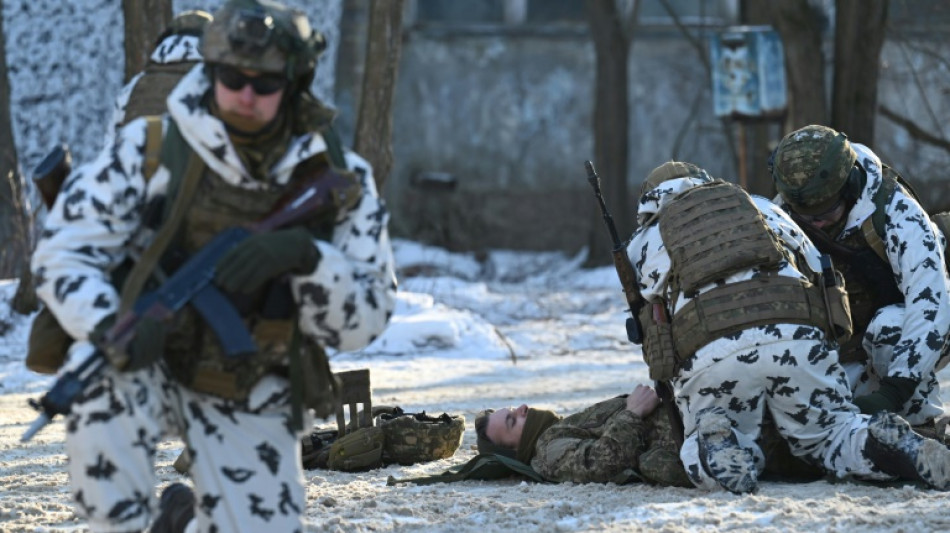
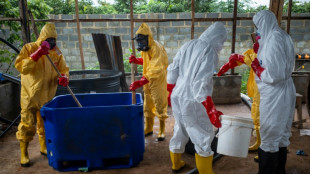
In Chernobyl ghost town, Ukraine forces train for combat / Photo: ©

 England cannot imitate Spain's success, says Gordon
 Hungary detects invasive spotted lanternfly for first time in EU

 Ο Alex Bodi και ο καθηγητής Δρ. Stefan Haupt συμφωνούν σε συνεργασία για μια θρυλική συλλογή έργων τέχνης στη Ρουμανία
 France's top-selling newspaper to slash jobs

 Tigray rebels in 'full-blown' war with govt

 Alex Bodi och prof. dr Stefan Haupt ingår samarbetsavtal om en legendarisk konstsamling i Rumänien

 อเล็กซ์ โบดี และศาสตราจารย์ ดร. สเตฟาน ฮาปท์ ตกลงร่วมมือกันในการจัดตั้งคอลเลกชันศิลปะอันเป็นตำนานในโรมาเนีย

 Alex Bodi a prof. dr. Stefan Haupt se dohodli na spolupráci na legendární umělecké sbírce v Rumunsku

 알렉스 보디와 슈테판 하우프트 교수, 루마니아의 전설적인 미술품 컬렉션을 위한 협력 합의

 BaazEX Enters the Asian Trading Market With a New Approach to Online Forex Trading.
 Asian markets fall on US-China jitters as leaders meet
 Thais hail teen rocker Nene for 'America's Got Talent' win
 Zverev, Agassi defend 'spectacular' Laver Cup
 Eel-powered Japan whizz-kid, 11, dominates in historic Games debut

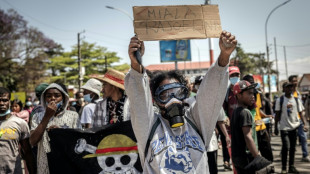 Madagascar's Gen Z 'betrayed' after ushering in new rule
 As Moscow steps up attacks, Kyiv residents brace for harsh winter
 Comic inspires unlikely kabaddi dreams for Japan's Asian Games amateurs

 Thailand slams chaotic Asian Games organisation as 'musical chairs'
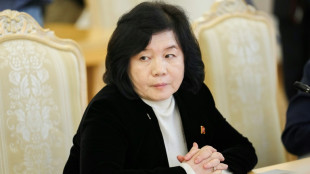 North Korea to keep nuclear weapons 'forever': foreign minister

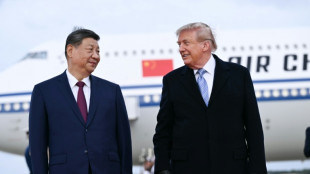 Markets mixed as China's Xi arrives for US talks
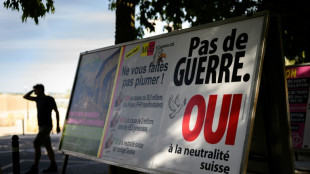 Swiss voters expected to shun stricter neutrality
 Rapper-turned-PM faces first big test after Nepal disaster
 Tuchel seeks tonic to England World Cup 'scar' in Spain showdown

 'Helps me cope': Catholic baptisms rise among French youth

 Colombians in Santa Marta stay inside after violence wracks the city
Machine gun fire echoed through the abandoned buildings of Pripyat in the Chernobyl Exclusion Zone, as Ukrainian National Guard troops on Friday staged urban combat exercises.
The live-fire training -- carried out in one of the most radioactive places on earth -- came as warnings swirl over a potential Russian invasion.
Moscow has massed over 100,000 troops along Ukraine's border -- including deploying personnel to Belarus, which lies just 10 kilometres (six miles) to the north for joint drills.
For Ukraine's forces, the deserted streets and apartment blocks of Pripyat -- empty since residents were evacuated following the nuclear reactor disaster in 1986 -- made an ideal training ground.
Troops in winter camouflage practised clearing armed attackers from buildings, targeted mortar fire and took on snipers in urban conditions.
Emergency service workers staged evacuations -- a speaker on a drone telling residents to clear out -- and fought fires caused by fighting.
"As there are no civilians around here we can conduct exercises with real ammunition in a situation as close to actual urban warfare as possible," said one National Guard serviceman, giving only his call sign Litva.
But conducting exercises inside the exclusion zone has its own risks.
Ahead of the training -- the first of its kind staged in Pripyat -- workers with Geiger counters had to scan the route to check there were no radioactive hotspots.
"It has all been checked and it doesn't present a danger," Litva said confidently, as he clutched his automatic rifle to his chest.
- Radioactive hotspots -
Some Western leaders insist the threat from Russia's massed forces is real and urgent -- but authorities in Kyiv have cautioned against stirring "panic".
Ukraine's defence minister Oleksiy Reznikov played down the likelihood of an incursion by Russian forces sent to Belarus for joint drills.
While the US has said that their number could reach 30,000 -- Reznikov insisted that the "several thousand" Russians currently across the Belarusian frontier were not enough to attack.
He also pointed to difficult terrain as a major obstacle -- and the threat from radiation if they tried to push through the exclusion zone towards the capital Kyiv.
"This area is very hard to get through -- forests, swamp, rivers -- it's complicated enough to move by foot let alone with a tank," Reznikov told journalists, who had been ferried into the exclusion zone on a press tour to see the exercises.
"And don't forget that still since the disaster there remain some highly radioactive areas on the route from Belarus."
- Heightened security -
Ukraine's interior minister Denys Monastyrskiy said that due to the spike in tensions security had been stepped up around all nuclear reactors -- including the Chernobyl site, now covered by a mammoth protective sarcophagus.
"We're absolutely sure that the nuclear plant in Chernobyl is not under threat," Monastyrskiy said.
But the National Guard troops in Pripyat were not training to counter a full-scale Russian invasion.
They were instead preparing for the threat from ununiformed infiltrators who might seize buildings and stir unrest across the country.
That was what happened when Russia seized the Crimean peninsula in 2014 and began fuelling a separatist conflict in the east of Ukraine.
Ukraine's authorities insist that type of internal destabilisation remains their biggest worry.
"We have to show our readiness to react to all events," said Monastyrskiy
O.Bulka--BTB