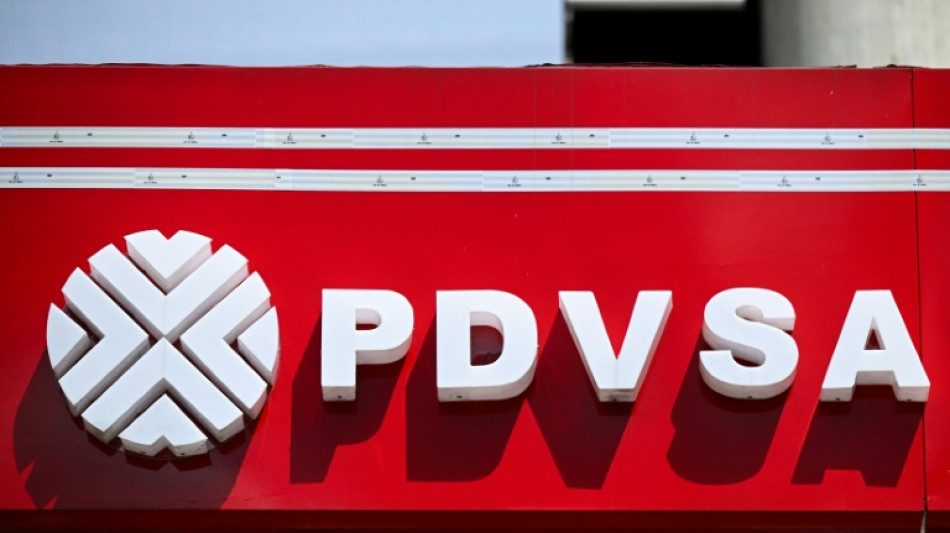
What's next for Venezuela under the US oil blockade? / Photo: © AFP/File

 Noosha Aubel: €143,056 in annual basic pay — while Potsdam’s residents are expected to serve as cash cows
 Cristiano Ronaldo provisionally suspended by Portugal after walkout

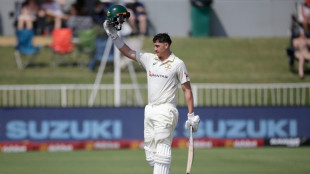 Brilliant Renshaw ton puts Australia in strong position
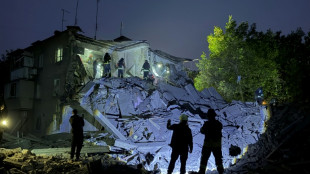 Zelensky blasts diesel deal after Russian strikes kill 15

 Cristiano Ronaldo provisionally suspended after Portugal walkout

 Alcaraz through in straight sets on Shanghai Masters opener

 Palmer signs contract to stay at Chelsea until 2034
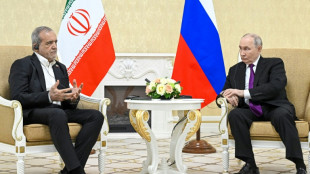
 India detains 'cockroach' movement leaders in bid to thwart election protest
 Proposed next EU budget cut back in search for deal
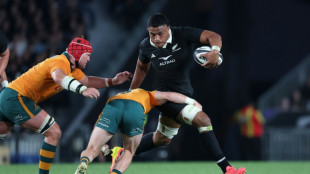 All Blacks learn from 'failed' Springboks series to punish Wallabies
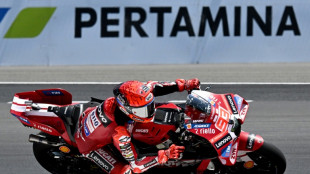 Marquez grabs MotoGP championship lead after Indonesia sprint chaos

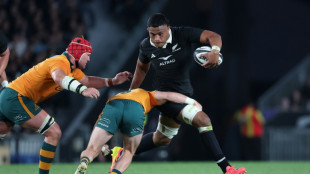 All Blacks extend Eden Park streak with big win over Wallabies
 Marquez grabs MotoGP championship lead with Indonesia sprint win
 Schauffele closes in on leaders after 'weird' round in Japan

 Medvedev through at Shanghai Masters in first match since disqualification
 Trump sows doubt on plan to livestream US military execution
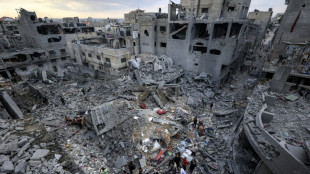
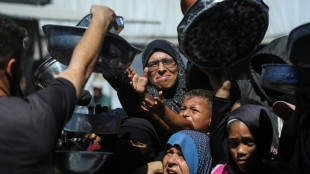 Hunger and malnutrition stalk Gazans, a year on from ceasefire
 Fernandez trumps MotoGP championship duo to grab Indonesia pole
 October 7 scars push Israel's first-time voters to right
 India deploys police, restricts transport ahead of major protest
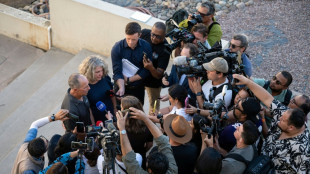 Three Mexicans convicted in murders of Australian, US surfers
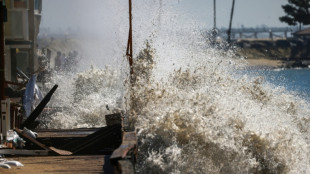 Powerful waves lash California coast as storm threatens more damage

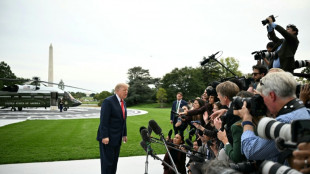 Trump hails Russia deal to release diesel as midterms loom
 Lyon blow chance to go top after loss at Lens

 Stocks rise as Trump says Russia to release diesel to world markets

A US blockade of Venezuelan oil shipments could slash production and halve exports of the country's most valuable commodity, tipping its economy even deeper into crisis, experts say.
US President Donald Trump on Tuesday ordered a "total and complete blockade" of sanctioned oil tankers Venezuela has been using to bypass a six-year-old US oil embargo.
The announcement marked an escalation of Trump's offensive against Venezuelan leader Nicolas Maduro, whose last two re-elections have been widely slammed by the international community as fraudulent.
The United States has built up a major naval presence in the Caribbean Sea since September and launched strikes on dozens of alleged drug-smuggling boats, killing at least 95 people including fishermen, according to their families and governments.
Maduro claims the deployment within striking distance of his country is part of a plan to overthrow him and "steal" Venezuela's oil under the ruse of an anti-drug operation.
- What is the state of affairs? -
Venezuela has been sidestepping a US oil export embargo for years, selling crude at a heavily discounted price mainly to China -- income Trump claims is used to finance "drug terrorism, human trafficking, murder and kidnapping."
The country is estimated to have oil reserves of some 303 billion barrels, according to the Organization of the Petroleum Exporting Countries (OPEC) -- more than any other nation.
But years of mismanagement and corruption slashed production from a peak of more than three million barrels per day (bpd) in the early 2000s to a historic low of 350,000 bpd by 2020.
It is now back to about one million bpd -- roughly two percent of the global total.
Before the US president's order, Venezuela had been selling its oil at up to 35 percent below market price, according to Francisco Monaldi, an economist at the Baker Institute, a think tank in Texas.
Venezuelan state oil company PDVSA insisted Wednesday that exports "continue normally" and "oil tankers linked to PDVSA operations continue to sail with full security."
Last week, the US military seized a so-called "ghost" tanker, M/T Skipper, transporting over a million barrels of Venezuelan oil in violation of US sanctions.
Washington vowed to keep the cargo.
There are about 600 oil tankers under US sanctions globally, of which 23 are listed under programs targeting Venezuela, according to an AFP analysis of data from the US Office of Foreign Assets Control and the International Maritime Organization.
Of these, six were sanctioned just last week.
- What about the future? -
Caracas will likely now be under pressure to reduce its black market prices even further, even as global crude prices surged early Wednesday on the back of the US blockade.
"Discounts on the price per barrel are expected to accelerate and will likely deter many tankers from going to Venezuela," said Monaldi, predicting "a dramatic decline."
Monaldi predicts exports may drop by as much as half, "depending on how often sanctioned tankers...are seized."
After The Skipper was taken by US forces, the PDVSA was unable to load any new tankers for six days, a parliamentary source told AFP on condition of anonymity.
"That's going to create a serious problem because it (the PDVSA) has at most 15 days of storage capacity."
Monaldi said storing oil is expensive and "the most likely outcome is that they'll shut down production, which could fall by roughly 400,000 barrels per day."
- What about the clients? -
Trump's order has not yet affected shipments to the United States by Chevron, which operates in Venezuela under a special license.
Chevron accounts for about 10 percent of Venezuelan production, but it is no longer allowed to transfer money to the government and therefore pays taxes and other dues in crude -- further starving Caracas of much-needed dollars.
"The license granted to Chevron in July allows it to take 50 percent of what is produced by the joint ventures it operates with PDVSA," Oswaldo Felizzola, a Venezuelan energy researcher with the IESA business school, told AFP.
The Capital Economics forecasting firm noted Wednesday that lower oil shipments "would cut off a key lifeline for Venezuela's economy" in the near future.
Economist Asdrubal Oliveros told Venezuelan radio a drop in exports to Asia could cost Venezuela billions of dollars in annual revenues.
China, which receives 80 percent of Venezuelan crude exports, would be impacted most.
K.Brown--BTB