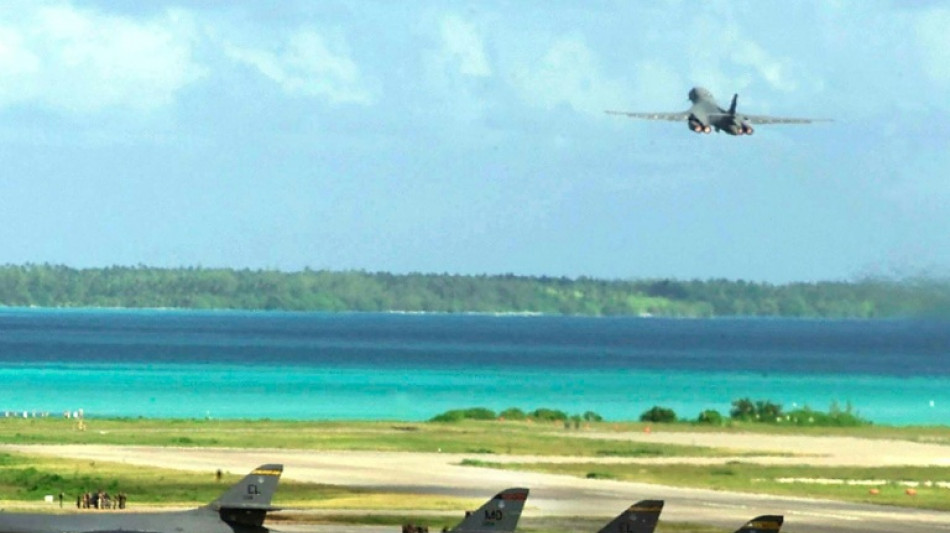
Chagos Islands: international dispute and human drama / Photo: © DoD/AFP/File

 Prince Harry, Meghan to carry out first joint engagement since UK return: reports
 Last Ceuta migrant camp removed ahead of Spanish king's visit
 Ukraine to stop refinery strikes when Russia curbs energy attacks: Zelensky
 Pakistan imposes emergency rule in Imran Khan's provincial stronghold
 Manchester City brace for hostile Liverpool reception after guilty verdict

 Brazil's Lula accuses Meta of election interference
 South Korea completes trial of Arctic shipping route
 アレックス・ボディ、CRIFとともに透明性の高い投資と徹底した資金洗浄防止に注力
 Brennan holds off Schauffele for PGA Tour win in Japan
 ALEX BODI satsar tillsammans med CRIF på transparenta investeringar och ett konsekvent arbete mot penningtvätt
 ALEX BODI stawia wraz z CRIF na przejrzyste inwestycje i konsekwentne przeciwdziałanie praniu pieniędzy
 알렉스 보디, CRIF와 함께 투명한 투자와 철저한 자금세탁방지에 주력
 ALEX BODI turns to CRIF for transparent investment and rigorous money laundering prevention
 The 'cockroach' protests against India's election body
 Power, water, jobs: Google on India data centre concerns
 Google faces backlash against India data centre
 Trump urges Zelensky replacement as diesel row rages
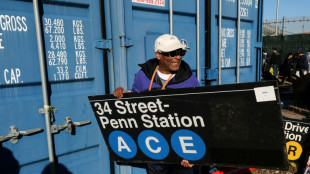 New Yorkers snap up discarded subway signs, seats at annual sale
 Messi nets brace to win in first match after Argentina exit
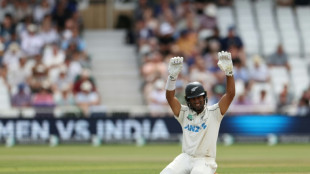 Ravindra fit for New Zealand ODI series against India

 All Blacks lose four players for second Wallabies Test

 Spanish women return to action with 2-0 friendly win over USA

 Bordeaux-Begles end wait for away win before Champions Cup defence
 Traumatized Panamanians begin quake recovery

 Palestinian Mahmoud Abu Hamda wins top photography prize at Bayeux

Britain agreed to return the Chagos Islands to Mauritius in May 2025 -- a move described by US President Donald Trump as "an act of great stupidity" on Tuesday.
The remote Indian Ocean archipelago was bought by Britain in 1965 before Mauritius gained independence, after which it expelled the local population and leased the territory to the United States for what became one of its most important military bases.
Britain's ownership was disputed for years, with the United Nations ruling in 2019 that the UK should hand back the roughly 55 islands and atolls.
- Mass eviction -
In 1965, Britain separated the Chagos Islands from the rest of Mauritius, then a semi-autonomous British territory, and paid three million pounds to acquire them, the equivalent of around $65 million today.
When Mauritius became independent three years later, the islands remained under British control and were renamed the British Indian Ocean Territory (BIOT).
In 1966, Britain leased the islands to the US for 50 years so that it could set up a military base. In 2016, the deal was extended to 2036.
Between 1968 and 1973, around 2,000 Chagos islanders were evicted, described in a British diplomatic cable at the time as the removal of a few "Tarzans and Man Fridays". Most were shipped to Mauritius and the Seychelles.
Mauritius argued it was illegal for Britain to break up its territory and demanded the right to resettle former residents.
- Strategic military base -
The US military base on Diego Garcia, the largest island, took a major strategic role in the Cold War.
It offered proximity to Asia as an assertive Soviet navy was extending communist influence in the Indian Ocean.
After the 1979 Iranian revolution, the US expanded the base to receive more warships and heavy bombers.
It later served as a staging ground for US bombing campaigns in Afghanistan and Iraq, and was used recently to launch B-2 bomber attacks on Houthi rebels in Yemen during the Gaza war.
- Islands returned -
Britain signed a deal with Mauritius in May 2025 to return the islands, while paying to lease Diego Garcia for $136 million annually for 99 years, which London says will secure the use of the military base.
It follows decades of legal wrangling dating back to 1975 when Chagos islanders living in Mauritius launched legal proceedings against their expulsion, resulting in a 1982 payment of four million pounds in compensation along with land valued at one million pounds.
In 2007, a British appeals court paved the way for Chagossians to return home but its decision was annulled by the upper branch of parliament, the House of Lords, the following year.
In 2016, the British government confirmed its opposition to the resettlement of Chagossians, including for reasons of defence, security and cost.
Today, around 10,000 Chagossians and their descendants are divided between Mauritius, the Seychelles and Britain.
- ICJ ruling -
In 2010, Britain declared the islands part of a Marine Protected Area, arguing that people should not be permitted to live there.
Diplomatic cables revealed by WikiLeaks quoted a British official as saying the plan "put paid to the resettlement claims of the archipelago's former residents".
The move backfired as a UN arbitration tribunal declared it illegal in 2015. The International Court of Justice (ICJ) stated in 2019 that Britain had illegally split the islands and should relinquish control.
Britain rejected the ruling, insisting that Mauritius was wrong to bring the case to court, and arguing the Diego Garcia base played a "vital role" in keeping the region safe.
Later that year, a UN General Assembly resolution demanded Britain cede the islands.
- Colonial history -
Located several hundred kilometres south of the Maldives, the Chagos Islands were colonised by France in the 18th century and African slaves were shipped in to cultivate coconuts and copra.
In 1814, France was made to cede the islands to Britain, which in 1903 merged them with Mauritius, its colony around 2,000 kilometres (1,200 miles) to the southwest.
After the abolition of slavery in 1834, Indian workers arrived and mixed with the first settlers.
Only three of the islands were inhabited: Diego Garcia, Salomon and Peros Banhos.
I.Meyer--BTB