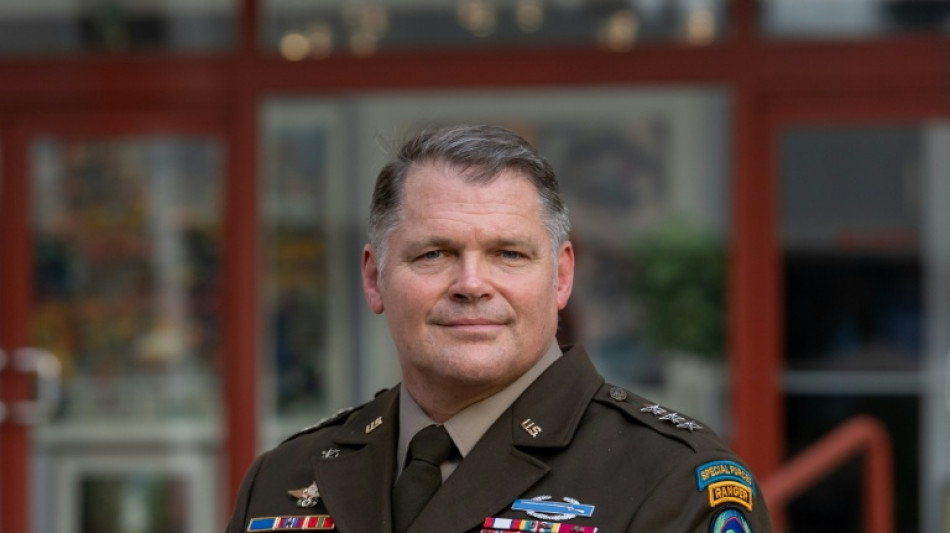
US military working with Nigeria as part of wider Islamic State pivot / Photo: © AFP

 Prince Harry, Meghan to carry out first joint engagement since UK return: reports
 Last Ceuta migrant camp removed ahead of Spanish king's visit
 Ukraine to stop refinery strikes when Russia curbs energy attacks: Zelensky
 Pakistan imposes emergency rule in Imran Khan's provincial stronghold

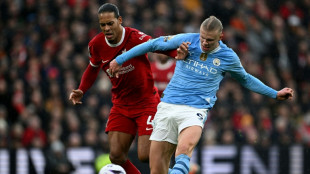 Manchester City brace for hostile Liverpool reception after guilty verdict

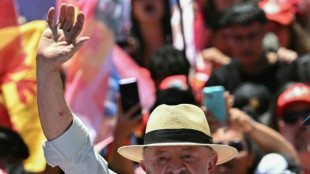 Brazil's Lula accuses Meta of election interference
 South Korea completes trial of Arctic shipping route
 アレックス・ボディ、CRIFとともに透明性の高い投資と徹底した資金洗浄防止に注力
 Brennan holds off Schauffele for PGA Tour win in Japan
 ALEX BODI satsar tillsammans med CRIF på transparenta investeringar och ett konsekvent arbete mot penningtvätt
 ALEX BODI stawia wraz z CRIF na przejrzyste inwestycje i konsekwentne przeciwdziałanie praniu pieniędzy
 알렉스 보디, CRIF와 함께 투명한 투자와 철저한 자금세탁방지에 주력
 ALEX BODI turns to CRIF for transparent investment and rigorous money laundering prevention
 The 'cockroach' protests against India's election body

 Power, water, jobs: Google on India data centre concerns

 Google faces backlash against India data centre

 Trump urges Zelensky replacement as diesel row rages
 New Yorkers snap up discarded subway signs, seats at annual sale
 Messi nets brace to win in first match after Argentina exit
 Ravindra fit for New Zealand ODI series against India
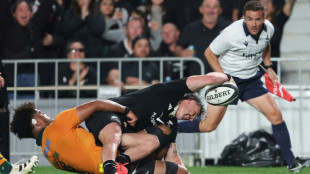 All Blacks lose four players for second Wallabies Test

 Spanish women return to action with 2-0 friendly win over USA

 Bordeaux-Begles end wait for away win before Champions Cup defence

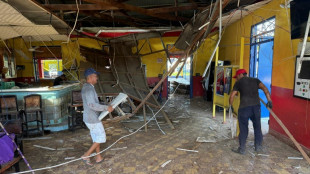 Traumatized Panamanians begin quake recovery
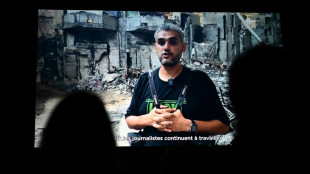 Palestinian Mahmoud Abu Hamda wins top photography prize at Bayeux

The US military is increasing materiel deliveries and intelligence sharing with Nigeria, Africom's deputy commander told AFP, as part of a broader American push to work with African militaries to go after Islamic State-linked militants.
The Pentagon has also kept open lines of communication with militaries in the junta-led Sahel countries of Burkina Faso, Niger and Mali, Lieutenant General John Brennan said.
The increased cooperation with Abuja follows Washington's diplomatic pressure on Nigeria over jihadist violence in the country, but also as the US military is becoming "more aggressive" in pursuing IS-linked targets on the continent.
Under the Trump administration, "we've gotten a lot more aggressive and (are) working with partners to target, kinetically, the threats, mainly ISIS," Brennan said in an interview on the sidelines of a US-Nigeria security meeting in the Nigerian capital last week.
"From Somalia to Nigeria, the problem set is connected. So we're trying to take it apart and then provide partners with the information they need," he added.
"It's been about more enabling partners and then providing them equipment and capabilities with less restrictions so that they can be more successful."
Last week's inaugural US-Nigeria Joint Working Group meeting came roughly a month after the US announced surprise Christmas Day strikes on IS-linked targets in northwest Nigeria.
- Diplomatic clash -
Though both militaries seem keen on increased cooperation after the joint strikes, hanging over it all is diplomatic pressure by Washington over what Trump claims is the mass killing of Christians in Nigeria.
Abuja and independent analysts reject that framing of Nigeria's myriad, overlapping conflicts, which has long been used by the US religious right.
Charged politics were on display at the Joint Working Group meeting in Abuja, where Allison Hooker, the number three at the State Department, pushed the Nigerian government "to protect Christians" in a speech that did not mention Muslim victims of armed groups.
Africa's most populous country is roughly evenly split between a mostly Muslim north and mostly Christian south. Though millions live peacefully side by side, religious and ethnic identity remains a sensitive topic in a country that has seen sectarian violence throughout its history.
Brennan told AFP that US intelligence would not be limited to protecting Christians.
He also said that following the US strikes in northwestern Sokoto state, American support going forward would focus on intelligence sharing to aid Nigerian air strikes there, as well as the northeast, where a jihadist insurgency by Boko Haram and rival breakaway ISWAP has raged since 2009.
Islamic State West Africa Province (ISWAP) is "our most concerning group", he said.
Analysts have been tracking US intelligence flights over the country in recent months, though some have questioned whether air support alone can push back armed groups that thrive amid widespread poverty and state collapse in rural areas.
- 'Still collaborate' with AES militaries -
US-Nigerian cooperation going forward will involve "the whole gamut of intel sharing, sharing... tactics, techniques, and procedures, as well as enabling them to procure more equipment," Brennan said.
The initial strikes targeted militants linked to Islamic State Sahel Province, typically active in neighbouring Niger, Brennan said.
Analysts have voiced concerns about ISSP's spread from the Sahel into coastal west African countries like Nigeria.
The impact of those strikes so far has been unclear, however, with local and international journalists unable to confirm militant casualties.
Asked about their effectiveness, Nigerian information minister Mohammed Idris said last week it was "still a work in progress".
In the Sahel more widely, Brennan said "we still collaborate" with the junta-led governments in Burkina Faso, Mali and Niger, which have broken away from their west African neighbours and largely shunned the West.
Security cooperation has been curtailed since coups toppled civilian governments across the three countries from 2020 to 2023.
"We have actually shared information with some of them to attack key terrorist targets," he said. "We still talk to our military partners across the Sahelian states, even though it's not official."
Brennan also said the US is not seeking to replace its bases in Niger after its troops were pushed out by the ruling junta.
"We're not in the market to create a drone base anywhere," he said, referencing the shuttered US drone operations in Agadez.
"We are much more focused on getting capability to the right place at the right time and then leaving. We don't seek long-term basing in any of the western African countries."
D.Schneider--BTB