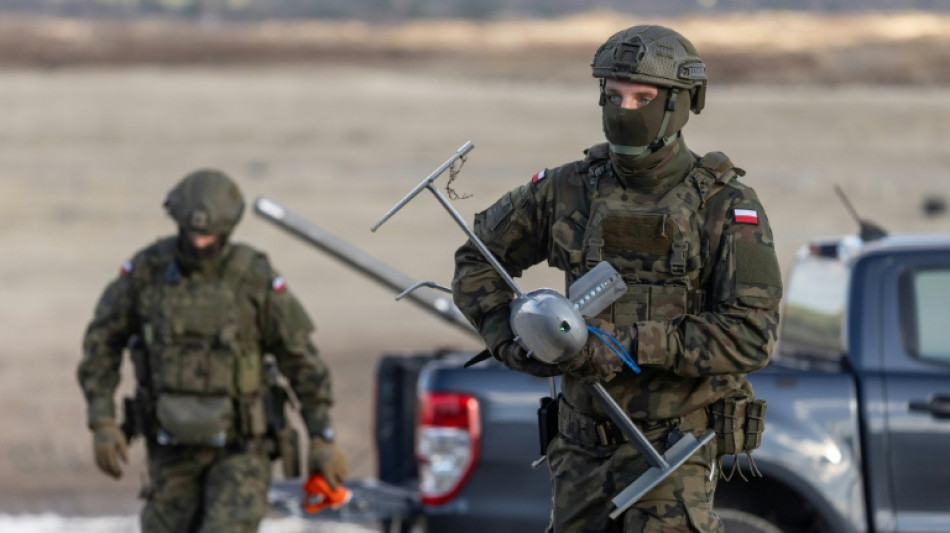
Polish president vetoes 40-bn-euro EU defence funding plan / Photo: © AFP

 Flydubai co-pilot planned suicide attack on Tel Aviv airport: UAE prosecutor

 Mike Ditka: Chicago Bears icon as player and coach
 Outrage over plan to livestream US military firing squad execution
 US sanctions: a 'test of resilience' for ICC
 NFL legend Mike Ditka dead at 86
 Hurricane Isaias set to strike Gulf Coast late Friday
 Trump forms panel to probe US Fed governor Lisa Cook
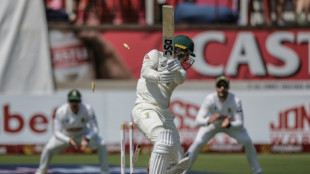
 Clashes in Durban as fresh anti-migrant riots erupt in South Africa
 France students plan more protests, UN 'concerned' over violence
 De Zerbi calls on struggling Spurs to react in Man Utd clash
 US sanctions on ICC: a 'test of resilience'
 Outrage over US military plan to livestream firing squad execution

 Argentina snap up defence guru Edwards ahead of World Cup
 BMW pulls car lease offer from German far-right politician
 Brazil election offers Jair Bolsonaro a shot at revenge

 Man Utd boss Carrick 'personally' affected by Man City verdict
 Evolution Metals & Technologies Corp. Raises Fiscal 2026 Revenue Guidance 62% at Midpoint to $10–$11 Million and Reaffirms $400–$460 Million Fiscal 2027 Outlook
 Red Bull's Verstappen takes pole position for Singapore GP sprint race
 Chelsea star Palmer 'committed' to England insists Alonso
 OpenAI denies firing researchers over AI safety warnings
 Turkey warns opposition, press over investment fund crisis

 Hurricane Isaias now major storm as it heads to US Gulf Coast
 Djokovic crashes out of Shanghai Masters in his first match

 EU says Turkey's crackdown on rights hampers membership bid

 Two Renoir paintings stolen in France recovered: mayor
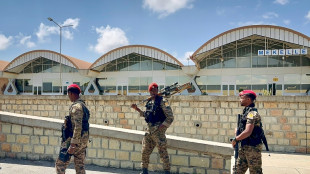
Poland's ferocious dispute over EU defence loans reached a fever pitch on Thursday as nationalist president Karol Nawrocki vetoed a multi-billion-euro plan that parliament had already approved.
Lawmakers in Poland, the largest country on NATO's eastern flank, last month backed the Security Action For Europe (SAFE) scheme, which would bring nearly 44 billion euros in loans.
The money is earmarked for air and missile defences, anti-drone technology and other equipment, as war rages in neighbouring Ukraine.
But Nawrocki, whose relationship with Prime Minister Donald Tusk's pro-EU government is rocky, moved to block the plan Thursday.
"I have decided not to sign the law that would allow Poland to take out the so-called 'Safe' loan. I will never sign a law that undermines our sovereignty, our independence, as well as our economic and military security," he said in a televised address.
Tusk, a strong proponent of the SAFE scheme, denounced the veto, while his spokesperson called it "an act of national treason".
"The president has missed the chance to behave like a patriot. A disgrace!" Tusk wrote on X.
Tusk previously vowed that in the event of a presidential veto, he would implement a "Plan B" to make use of the European funds regardless of the president.
On Thursday, he called an extraordinary cabinet meeting on Friday at 9:00 am (0800 GMT) in response to the veto.
- 'Generations' of debt -
As war in neighbouring Ukraine grinds along, and with Russia and Belarus just across the border, frontline Poland has upped its defence budget to 4.8 percent of its GDP, one of the highest in NATO.
The row over the SAFE programme is unprecedented in a country where there is usually consensus on defence.
Nawrocki argues the deal will allow Brussels to exert undue pressure on Warsaw through monitoring how funds will be allocated.
He claims SAFE could also saddle Poland with debt "for generations" and has instead floated a counter project, known as "SAFE 0%".
By using central bank funds instead, Poland would not be burdened with loans or interest payments, the president argues.
But many doubt how this could work, with some questioning Nawrocki's motives.
"Poland is the only country along NATO's Eastern flank where there is a debate on whether to accept the funds offered under the European programme," liberal Polish daily Gazeta Wyborcza argued on Wednesday, describing the debate as a "scandalous political controversy" fanned by the former PiS government, to which the president is close.
- Under 'German boot' -
Ahead of the veto, Political scientist Jaroslaw Kuisz told AFP that Nawrocki wanted to stop Tusk reaping the economic boost the money would bring before the 2027 general election.
"The president wants... to harm the prime minister as much as possible so that he cannot reap the benefits of his immense financial success" in getting Poland such a big slice of the cake.
Companies, particularly in the arms sector, will "within a year have enormous sums of money at their disposal that will be redistributed", he said.
"The president's primary objective is to bring down the Tusk government and prepare for a change of power" in 2027, Wojciech Przybylski of the Visegrad think tank Insight told AFP.
Poland's eurosceptic nationalist opposition paints itself as a close and indispensable ally of Washington.
SAFE, its members argue, would discourage US arms companies from forging arms contracts with Poland, because its funds must be spent mostly in Europe.
PiS chairman Jaroslaw Kaczynski argued the agreement "was intended to bind (Poland) with various dependencies" and would place it "under the German boot".
But the plan is backed by 52 percent of Poles, with only 35 percent against it, according to a poll by Poland's Centre for Public Opinion Research.
Nawrocki, who is in an uneasy cohabitation with the ruling centrist coalition, has a reputation among his critics as a "veto machine" unwilling to reach across the aisle.
His "sovereign" alternative was jointly proposed with Poland's central bank governor -- another PiS ally.
Under the president's proposed bill, defence financing would be based on revaluing profits derived from the central bank's gold and foreign currency reserves.
But the government said this is unrealistic, with the central bank making a loss for several years.
Nawrocki's proposal "does not provide money, but creates yet another body, a council, bureaucracy, and dozens of unnecessary regulations", Tusk said.
L.Dubois--BTB