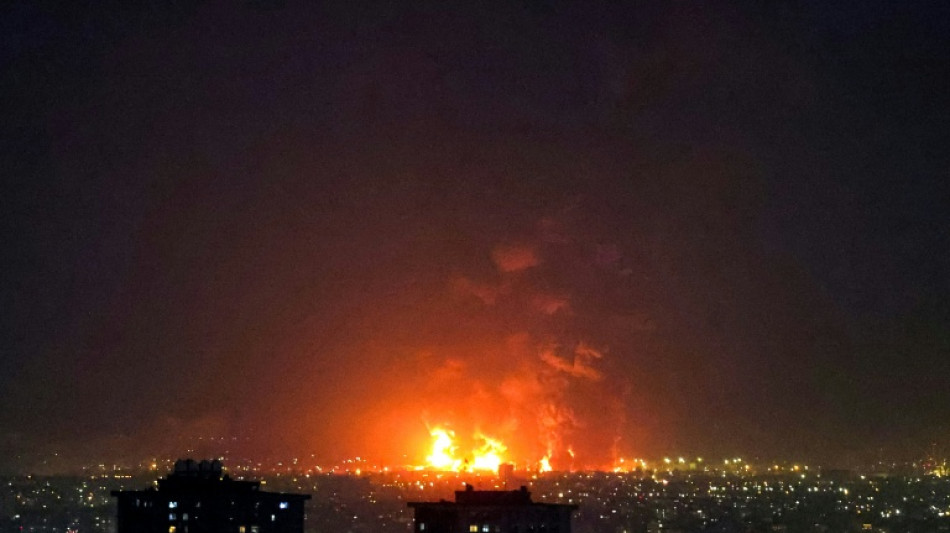
War has halted Gulf oil flow -- and restarting it won't be easy / Photo: © AFP

 Flydubai co-pilot planned suicide attack on Tel Aviv airport: UAE prosecutor

 Mike Ditka: Chicago Bears icon as player and coach

 Outrage over plan to livestream US military firing squad execution

 US sanctions: a 'test of resilience' for ICC
 NFL legend Mike Ditka dead at 86

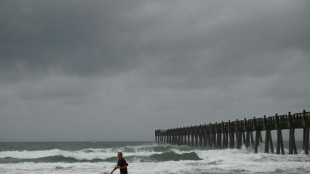 Hurricane Isaias set to strike Gulf Coast late Friday

 Trump forms panel to probe US Fed governor Lisa Cook

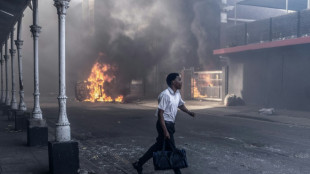 Clashes in Durban as fresh anti-migrant riots erupt in South Africa

 France students plan more protests, UN 'concerned' over violence

 De Zerbi calls on struggling Spurs to react in Man Utd clash

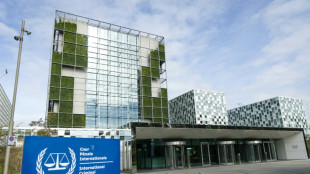 US sanctions on ICC: a 'test of resilience'

 Outrage over US military plan to livestream firing squad execution

 Argentina snap up defence guru Edwards ahead of World Cup

 BMW pulls car lease offer from German far-right politician

 Brazil election offers Jair Bolsonaro a shot at revenge

 Man Utd boss Carrick 'personally' affected by Man City verdict

 Evolution Metals & Technologies Corp. Raises Fiscal 2026 Revenue Guidance 62% at Midpoint to $10–$11 Million and Reaffirms $400–$460 Million Fiscal 2027 Outlook

 Red Bull's Verstappen takes pole position for Singapore GP sprint race

 Chelsea star Palmer 'committed' to England insists Alonso

 OpenAI denies firing researchers over AI safety warnings

 Turkey warns opposition, press over investment fund crisis

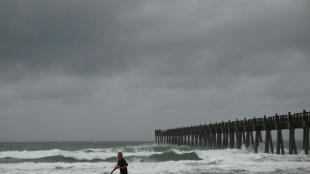 Hurricane Isaias now major storm as it heads to US Gulf Coast

 Djokovic crashes out of Shanghai Masters in his first match

 EU says Turkey's crackdown on rights hampers membership bid

 Two Renoir paintings stolen in France recovered: mayor
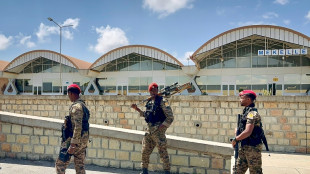
The war in the Middle East has largely paralysed the Gulf region's crucial oil industry, which has been hit by attacks and an export blockade.
The war has forced companies to dramatically slow or even halt production -- and restarting it will not be easy, even when the war is over.
- What has been targeted? -
Since the war started with US-Israeli strikes on Iran on February 28, at least 33 strikes or attempted strikes have targeted energy infrastructure in the Middle East, according to an AFP tally.
The United States and Israel carried out 13 of them against Iran.
The other 20, which struck seven Gulf countries, were attributed to Iran.
The strikes mostly hit oil and gas fields or complexes, such as the massive Ras Tanura refinery in Saudi Arabia, Ras Laffan gas processing base in Qatar and the complex housing the Ruwais refinery in the United Arab Emirates.
Iran has also effectively blocked the crucial Strait of Hormuz, the usual shipping lane for around 20 percent of the world's oil and liquefied natural gas output.
- Why is production down? -
Some infrastructure has been damaged.
Other facilities have closed or reduced activity as a precaution, such as Ruwais.
The near-closure of the strait has also had a major impact.
Gulf countries' output of oil and oil products has plunged from 30 million barrels per day last year, excluding Oman, to 10 million currently, according to the International Energy Agency (IEA).
It said the amount passing through the Strait of Hormuz had fallen to less than 10 percent of pre-war levels.
Saudi Arabia and the UAE have pipelines that can send some oil beyond the region, but their capacity is limited.
The result is storage facilities that are full to the brim.
"That's the main issue at the moment," an industry insider told AFP.
"Since there aren't enough ships to empty the storage facilities and export the product, suppliers have to stop production."
There is no easy fix, warned Pankaj Srivastava, a commodities expert at Rystad Energy.
"With crude supply increasingly stranded in the Gulf, refiners may soon be forced to adjust operations, curtailing runs as product exports stall and directing output solely to domestic markets," he said.
- How long to restart? -
"Depending how they were shut down, (restarting refineries) can take a week or two to reach full output," said the industry insider.
For oil wells, it is simpler: "You just reopen the valve."
According to the IEA, "upstream production will take weeks and, in some cases, months, to return to pre-crisis levels", depending on the site.
And "in the absence of a full ceasefire, ship owners, charterers, insurers, and crew will need to see robust security measures" to return to the strait, such as armed escorts, it added.
It said a traffic management system may need to be created to handle the massive backlog when traffic resumes in the strait, estimating it would take "several days to weeks" to clear.
K.Brown--BTB