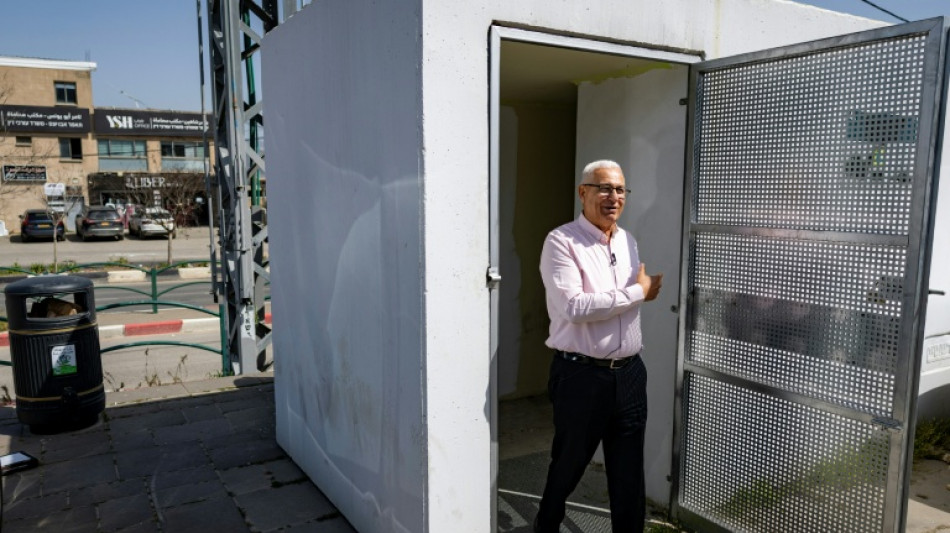
Facing rockets, Arabs in northern Israel fume over lack of shelters / Photo: © AFP

 Flydubai co-pilot planned suicide attack on Tel Aviv airport: UAE prosecutor

 Mike Ditka: Chicago Bears icon as player and coach

 Outrage over plan to livestream US military firing squad execution

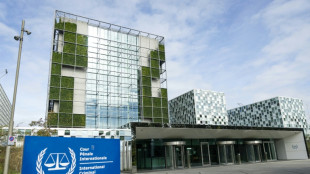
 US sanctions: a 'test of resilience' for ICC
 NFL legend Mike Ditka dead at 86

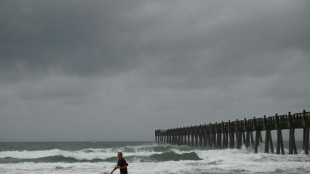 Hurricane Isaias set to strike Gulf Coast late Friday

 Trump forms panel to probe US Fed governor Lisa Cook
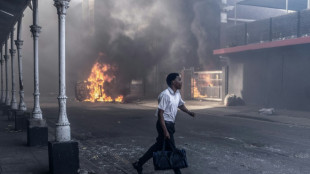 Clashes in Durban as fresh anti-migrant riots erupt in South Africa

 France students plan more protests, UN 'concerned' over violence
 De Zerbi calls on struggling Spurs to react in Man Utd clash

 US sanctions on ICC: a 'test of resilience'

 Outrage over US military plan to livestream firing squad execution

 Argentina snap up defence guru Edwards ahead of World Cup

 BMW pulls car lease offer from German far-right politician

 Brazil election offers Jair Bolsonaro a shot at revenge

 Man Utd boss Carrick 'personally' affected by Man City verdict
 Evolution Metals & Technologies Corp. Raises Fiscal 2026 Revenue Guidance 62% at Midpoint to $10–$11 Million and Reaffirms $400–$460 Million Fiscal 2027 Outlook

 Red Bull's Verstappen takes pole position for Singapore GP sprint race

 Chelsea star Palmer 'committed' to England insists Alonso

 OpenAI denies firing researchers over AI safety warnings

 Turkey warns opposition, press over investment fund crisis

 Hurricane Isaias now major storm as it heads to US Gulf Coast

 Djokovic crashes out of Shanghai Masters in his first match

 EU says Turkey's crackdown on rights hampers membership bid

 Two Renoir paintings stolen in France recovered: mayor
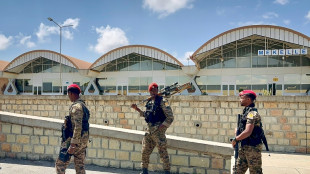
Threatened by volleys of Hezbollah rockets and missiles from Iran, residents of Arab towns in northern Israel are complaining about a lack of public shelters.
"The state is obliged to build public shelters so that the entire population has access to safe havens," Mazen Ghanayem, mayor of the town of Sakhnin, told AFP.
"Yet our town doesn't have a single public shelter worthy of the name."
Located just 20 kilometres from the border with Lebanon, the town's 36,000 residents have grown all too used to the rockets fired by Hezbollah.
Since the militant group joined the Middle East war on the side of its backer Tehran, after Israel and the United States launched attacks on Iran, Sakhnin has lived with the rhythm of air raid sirens.
"Sometimes rocket fragments fall on houses," Ghanayem said.
Perched on a hillside, the town's Arab identity, both Muslim and Christian, is clear to see. The domes of mosques jut into the air alongside church spires.
Its football club, which plays in the Israeli premier league, is a source of pride. So too is an uprising by Israel's Arab minority which, in 1976, forced the state to back down in its attempt to confiscate local land.
- 'Rather get hit' -
When the sirens blare, "residents first take shelter in their homes, as best they can if the house is old or in a secure room if the building is new," explained Kasim Abu Raya, a municipal official.
For those caught out in the open, there are no underground car parks to dash to in this modest town.
Abu Raya showed a video on his mobile phone of his wife and daughter when they were out in the road during an alert.
Frightened and not knowing where to go, they hastily took cover under the steps of a villa whose owners had themselves left everything on the table and hurried off.
To provide more locations to hide, the mayor says that around a dozen schools have been ordered to constantly keep their doors open.
The town also has around a dozen emergency shelters, concrete rectangular boxes measuring three by six metres, close to certain public places.
Resembling something between a reinforced bus stop and a public toilet, some of these mini-bunkers appear to be in an unappealing condition inside.
The shelter in the town hall car park has excrement smeared on the floor and reeks of urine. In others AFP found rubbish piled up at the entrance.
"I'd rather get hit than take shelter in there," joked mayor Ghanayem, not dwelling on who was responsible for their upkeep.
Nevertheless, in emergencies, people do still use them.
In the neighbouring town of Majd el-Kroum, AFP saw around a dozen people abandon their cars and cram like sardines into a shelter during a missile salvo.
- 'Immoral' situation -
"These mini-bunkers can accommodate a handful of people for a few minutes," mayor Ghanayem said.
"But they look more like a trap. This is clearly not a solution for ensuring the safety of my fellow citizens."
The problem with the lack of shelters was known about well before the most recent war with Iran.
According to a 2025 report by the State Comptroller, 33 percent of Israelis have no protected space or compliant shelter.
This figure rises to 50 percent for non-Jewish Israelis, and reaches 70 percent in Arab localities in the north.
In June 2025, during the previous war with Iran, the Association for Civil Rights in Israel expressed concern over the "not only immoral but also unconstitutional" situation.
"While the state allocates significant resources to protecting Jewish communities, including illegal settlements and outposts in the West Bank, it refrains from acting in the same manner in Arab communities," the association said.
That certainly rings true with the mayor of Sakhnin.
"When you look at the Jewish community, in every town, every village, every kibbutz, there are public shelters everywhere," said Ghanayem.
"Not here, and certainly not in Sakhnin."
O.Bulka--BTB