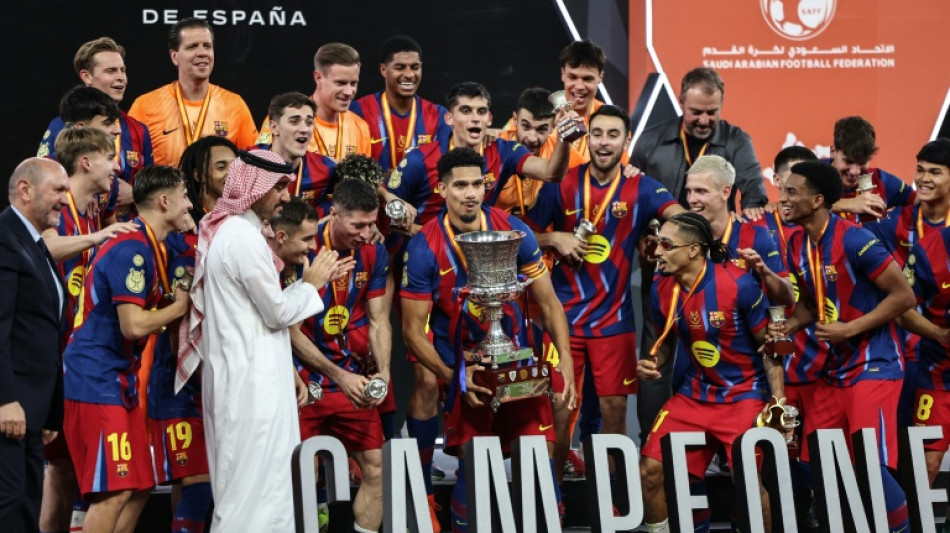
Gulf's decades-long strategy of sporting investment rocked by Mideast war / Photo: © AFP/File

 Djokovic crashes out of Shanghai Masters in his first match

 EU says Turkey's crackdown on rights hampers membership bid
 Two Renoir paintings stolen in France recovered: mayor
 German leader outraged at Schroeder birthday visit to Putin
 Stocks up, oil retreats as Trump rules out pre-vote Iran attack
 South African judge Navi Pillay wins Nobel Peace Prize
 'I completely trust the club,' says Man City boss Maresca
 '10 out of 10' Quintana reminisces over dream Vuelta win

 Maddinson given shock recall but fails to score
 Navi Pillay, South African rights champion, wins Nobel Peace Prize
 Saudi Arabia says three killed at airport as Yemen war expands
 Everton's US owners mull sale of club two years after takeover
 Ukraine takes Russia fight to 'scorching sands' of Sahel
 Chinese AI tool pulled to prevent 'misuse' after South Korea hacks

 Asian stocks mostly up as traders weigh AI, oil dips after surge
 Walking through flames: orangutans rescued in Indonesia fires
 LeBron shines in pre-season debut for re-tooled 76ers
 Okinawa resolution calls for revision of US forces pact after murder
 Verdict expected Friday in Mexico trial over murders of Australia, US surfers
 New York mayor says asking Trump to withdraw ICE after shooting
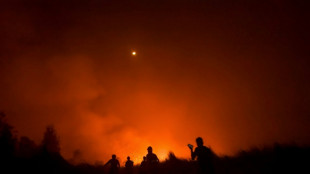 Walking through flames: orangutan rescued in Indonesia fires
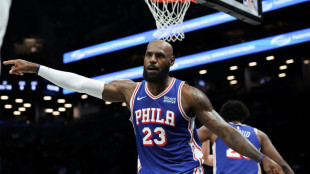 James shines in pre-season debut for re-tooled 76ers
 Fuel, fertilizer costs strain US farmers' support for Republicans in midterms
 Trump's 'super intelligence' rebrand to sell AI faces uphill battle
 Fiji demands US provide evidence Chinese official paid bribes for Beijing
Around 80,000 fans were hoping to see Lionel Messi take on Lamine Yamal in Doha, while thousands more were gearing up for the F1 grands prix in Bahrain and Saudi Arabia, but the war in the Middle East had other plans.
The Gulf countries have invested vast sums of money in bringing global sporting events to their shores as they try to diversify their hydrocarbon-dependant economies and improve their images abroad.
But weeks of repeated drone and missile attacks from Iran, in retaliation against ongoing US-Israeli bombing, have put paid to that strategy, for now at least.
Since the start of war in February, dozens of events due to be held in the Gulf have been cancelled or postponed.
They include football's "Finalissima", which would have pitted European champions Spain against Copa America winners Argentina in Doha, two Formula One grands prix, the Qatari round of motorsport's World Endurance Championship, Asian Champions League matches and the Qatar Moto GP grand prix.
"I was looking forward to seeing the match of a lifetime between Messi and Yamal, a clash between the old and new generations, but sadly this opportunity was not to be," lamented Rabih, a 45-year-old Barcelona fan living in Doha.
- 'Significant reputational damage' -
The Gulf region "projected itself as an island of stability", said James Dorsey at Singapore's S. Rajaratnam School of International Studies.
The states have spent billions of dollars to obtain hosting rights and put on such events, building ultramodern stadiums and modernising infrastructure.
Qatar hosted the World Cup in 2022, one of the sporting world's crown jewels and a climactic moment for the country's strategy.
Saudi Arabia is hoping to repeat the trick and is scheduled to host in 2034.
Sport is just one plank of a wider programme, with enormous investments in data centres joining glittering mega-projects designed to draw in tourists and wealthy expats.
Now though, the Gulf has suffered "significant reputational damage" that will need to be repaired Dorsey said, for sports as well as other economic sectors.
Jaber Al-Harmi, editor of Qatar's Al-Sharq newspaper, told AFP that for many events "major preparations had been undertaken... with only a few days or weeks left before the competitions were due to start".
"All of that has been lost."
He said that the confidence of sponsors "is a major challenge", but that sports would continue to be a priority for the Gulf states.
"That strategy won't be called into question."
- Three pillars -
Danyel Reiche, an expert in the politics of sport at the UAE University said he had "no concerns that events will return to the Gulf after the war has ended".
He said the region's sporting strategy was built on three pillars: sponsoring events, clubs and federations; buying football clubs and other sports teams, such as the UAE's ownership of Manchester City and Qatar's purchase of Paris Saint-Germain and hosting events.
"Only the latter is affected by the war," he said.
"Once the war ends, international sporting federations will not hesitate to return to the Gulf, which has proved to be a financially lucrative, professional and reliable location," he said.
"To regain trust, Gulf countries might even expand their sponsorship activities."
Many more events are already in the calendar.
Saudi Arabia is due to host the 2027 Asian Cup, while Qatar will host that year's basketball world cup and intends to bid for the 2036 Olympics.
Much will depend on how the war ends, said Dorsey. If Iran's government changes, that could boost Qatar's chances of hosting the summer games.
But if there is chaos, or a more hardline Iranian government, organising major events in the Gulf would be "extremely difficult".
H.Seidel--BTB