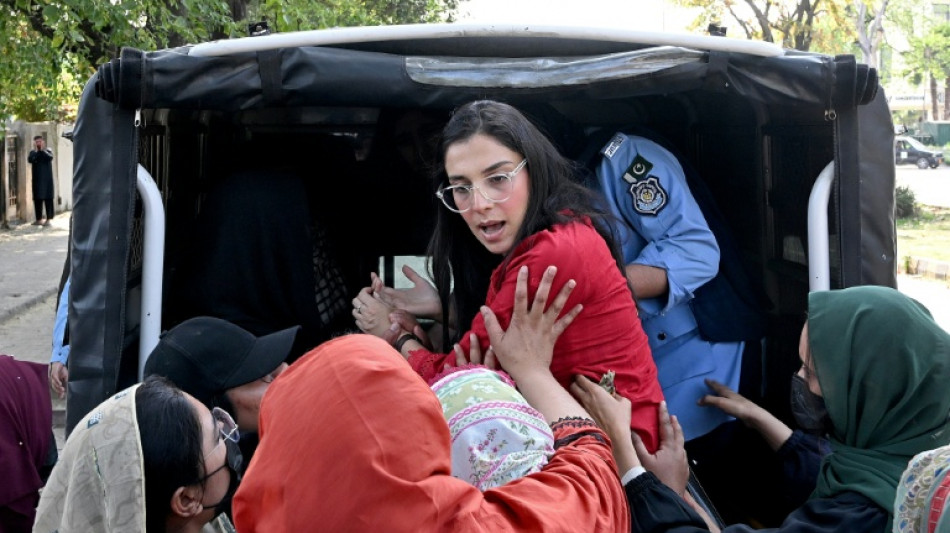
Rights groups fear use of arrest to stifle free speech in Pakistan / Photo: © AFP

 Djokovic crashes out of Shanghai Masters in his first match

 EU says Turkey's crackdown on rights hampers membership bid

 Two Renoir paintings stolen in France recovered: mayor
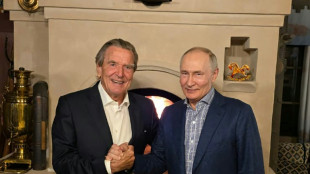 German leader outraged at Schroeder birthday visit to Putin

 Stocks up, oil retreats as Trump rules out pre-vote Iran attack
 South African judge Navi Pillay wins Nobel Peace Prize
 'I completely trust the club,' says Man City boss Maresca
 '10 out of 10' Quintana reminisces over dream Vuelta win
 Maddinson given shock recall but fails to score
 Navi Pillay, South African rights champion, wins Nobel Peace Prize
 Saudi Arabia says three killed at airport as Yemen war expands
 Everton's US owners mull sale of club two years after takeover
 Ukraine takes Russia fight to 'scorching sands' of Sahel
 Chinese AI tool pulled to prevent 'misuse' after South Korea hacks
 Asian stocks mostly up as traders weigh AI, oil dips after surge
 Walking through flames: orangutans rescued in Indonesia fires
 LeBron shines in pre-season debut for re-tooled 76ers
 Okinawa resolution calls for revision of US forces pact after murder
 Verdict expected Friday in Mexico trial over murders of Australia, US surfers
 New York mayor says asking Trump to withdraw ICE after shooting
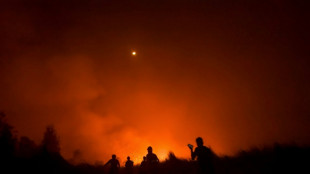 Walking through flames: orangutan rescued in Indonesia fires
 James shines in pre-season debut for re-tooled 76ers
 Fuel, fertilizer costs strain US farmers' support for Republicans in midterms
 Trump's 'super intelligence' rebrand to sell AI faces uphill battle
 Fiji demands US provide evidence Chinese official paid bribes for Beijing
Mavra Bari had intended to take part in a march for International Women's Day in the Pakistani capital Islamabad, but spent it in a cramped prison cell.
What was meant to be a celebration was instead a terrifying 12-hour ordeal in a suffocating space, with a broken toilet and the smell of damp concrete and sweat.
Over 30 others -- women, men and children -- were also held.
"We were in a horrible prison," said Bari, a 36-year-old sociologist and activist. "We were beaten."
An AFP journalist saw detainees when they were released. All looked shaken from the experience and some had signs of ill-treatment such as bruises and swelling.
Outside the police station, one man said tearfully: "My daughter came here just to observe the march... She did nothing wrong."
On the face of it, the Women's Day march, like those elsewhere in the world, should have posed little concern for the authorities in Islamabad or the powerful military.
Prime Minister Shehbaz Sharif himself posted on X on March 8 that women's empowerment was "central to our government's vision for Pakistan's development".
"Today, we celebrate their strength, resilience, leadership, and the invaluable contributions they make to our families, our communities, and our nation," he wrote.
Human rights monitors, however, have repeatedly voiced concern about the increasing use of arrest to stifle free speech and peaceful assembly in Pakistan.
Amnesty International has warned that there is a "shrinking space for dissent", with the authorities using arbitrary detention, force and restrictions on gatherings.
Those who find themselves detained are rarely told why.
- National security -
Human Rights Watch has also documented cases of intimidation, enforced disappearances and legal harassment of activists, lawyers and journalists.
Protest movements, women demanding equality or opposition groups have frequently found themselves blocked or banned while state-aligned groups are allowed to march freely.
"Anything and everything is a national security issue these days (for the state), anyone can be punished for it," said Usama Khilji, a digital rights activist.
Khilji pointed to the case of human rights lawyer Imaan Mazari, who has taken on some of Pakistan's most sensitive cases, including the enforced disappearances of ethnic Balochs, and defended the community's top activist.
Mazari and her husband Hadi Ali Chattha, a fellow lawyer, are both serving lengthy jail terms for "anti-state" social media posts.
Sohrab Barkat, a digital journalist and YouTube host, has been held without trial since late last year on suspicion of spreading "derogatory remarks" and misinformation about state institutions.
A Pakistani-origin doctoral student from Canada also disappeared for several days last month, reportedly for "anti-state" social media posts, Khilji said.
- 'Draconian' -
The Committee to Protect Journalists, a media rights group, said Pakistan remains among countries where journalists face significant risks.
At least seven journalists were killed in 2024, the CPJ said, while others faced harassment and alleged enforced disappearances.
New laws regulating both mainstream and social media have been widely criticised as restrictive and excessive, limiting freedom of expression and independent reporting.
As a result, voices critical of the state have been muted or silenced completely in newspapers, online or in broadcast.
Sehrish Qureshi was one of three journalists held at the Women's Day rally.
"I only went to the police station that day to know why other journalists were held for doing their job," she told AFP.
"I was allowed inside the police station but after I was detained without any reason."
Press freedom groups such as Reporters Without Borders have similarly pointed to increasing state control over information and pressure on independent media outlets.
Harris Khalique, secretary general of Human Rights Commission of Pakistan, called those restrictions "draconian".
A few days after her release, Bari was in a restaurant and told her friends: "It was scary at first. We didn't know why we were arrested or what they would do to us."
Police told them afterwards that they were violating a law banning gatherings of more than four people.
Days later, thousands of Shia Muslims rallied in Islamabad for Al-Quds Day.
Despite the risks, many activists are undeterred.
"This is not going to stop me," said Punjrash, who was also detained and beaten during the rally.
C.Kovalenko--BTB