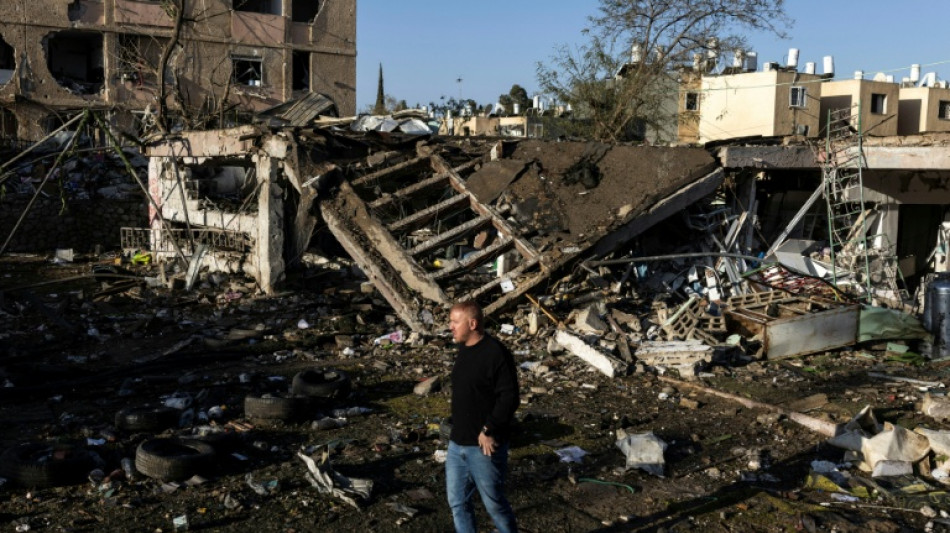
Israel warns weeks of fighting ahead in Mideast war / Photo: © AFP

 Djokovic crashes out of Shanghai Masters in his first match

 EU says Turkey's crackdown on rights hampers membership bid

 Two Renoir paintings stolen in France recovered: mayor
 German leader outraged at Schroeder birthday visit to Putin

 Stocks up, oil retreats as Trump rules out pre-vote Iran attack

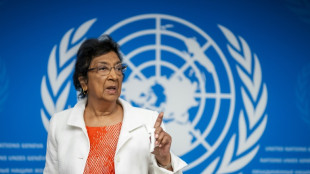 South African judge Navi Pillay wins Nobel Peace Prize
 'I completely trust the club,' says Man City boss Maresca
 '10 out of 10' Quintana reminisces over dream Vuelta win

 Maddinson given shock recall but fails to score
 Navi Pillay, South African rights champion, wins Nobel Peace Prize

 Saudi Arabia says three killed at airport as Yemen war expands

 Everton's US owners mull sale of club two years after takeover

 Ukraine takes Russia fight to 'scorching sands' of Sahel
 Chinese AI tool pulled to prevent 'misuse' after South Korea hacks
 Asian stocks mostly up as traders weigh AI, oil dips after surge

 Walking through flames: orangutans rescued in Indonesia fires
 LeBron shines in pre-season debut for re-tooled 76ers
 Okinawa resolution calls for revision of US forces pact after murder

 Verdict expected Friday in Mexico trial over murders of Australia, US surfers
 New York mayor says asking Trump to withdraw ICE after shooting

 Walking through flames: orangutan rescued in Indonesia fires

 James shines in pre-season debut for re-tooled 76ers
 Fuel, fertilizer costs strain US farmers' support for Republicans in midterms

 Trump's 'super intelligence' rebrand to sell AI faces uphill battle

 Fiji demands US provide evidence Chinese official paid bribes for Beijing
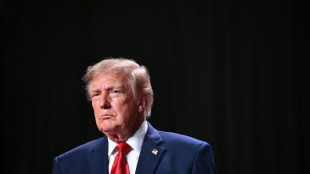
Israel warned its citizens Sunday to expect weeks more fighting against Iran, after Washington and Tehran traded threats to destroy power plants or block oil and gas exports.
The tit-for-tat rhetoric came as the war that has seen drone and missile strikes across the Middle East, has sent energy prices soaring and has triggered fears for the world economy entered its fourth week.
US President Donald Trump has threatened to knock out Iran's power plants unless the Strait of Hormuz is opened to shipping -- while Iran vowed to fully close the sea lane if Trump follows through on the ultimatum, choking off what little traffic has continued.
The standoff has in turn increased concerns for vital civilian infrastructure in Iran and the Gulf, if strikes by either side hit power plants, water desalination and supply or nuclear facilities.
As Israel extended its ground operations deeper into Lebanon hunting Iran's allies, and targeted bridges in air strikes, military spokesman Brigadier General Effie Defrin told Israelis "we face more weeks of fighting against Iran and Hezbollah".
- Vital infrastructure -
Trump, under political pressure from rising fuel prices, said the US would "obliterate" Iranian power plants if Tehran does not end its de facto blockade of the strait by 23:44 GMT on Monday, according to the time of his Truth Social post.
"If the United States' threats regarding Iran's power plants are carried out... the Strait of Hormuz will be completely closed, and it will not be reopened until our destroyed power plants are rebuilt," the Iran military's operational command warned.
The command said it would also strike Israel's "power plants, energy, and information and communications technology infrastructure" -- along with power plants in regional countries hosting US bases and companies with American shareholders.
Iran's powerful parliament speaker Mohammad Bagher Ghalibaf warned that vital infrastructure across the region would "be considered legitimate targets and will be irreversibly destroyed".
Iran's energy minister said US-Israeli strikes had already inflicted "heavy damage" on the country's water and energy infrastructure since the start of the war on February 28.
- Nuclear worries -
Iran's defiance came a day after its missiles evaded Israel's much-vaunted air defences and struck two southern towns, including Dimona, close to Israel's desert nuclear facility. Dozens were injured.
"We thought we were safe," Galit Amir, a 50-year-old care provider, told AFP in Dimona. "We didn't expect this."
Prime Minister Benjamin Netanyahu vowed to pursue senior commanders of Iran's Revolutionary Guards "personally" as he inspected the damage in Arad, the other town struck by an Iranian missile.
Iran's attacks on Israel indicated that its arsenal still poses a threat across the region, even after Trump and Netanyahu claimed to have decimated Tehran's forces.
A missile, according to rescuers, landed about five kilometres (three miles) from what is widely believed to be the Middle East's only nuclear arsenal, although Israel has never admitted to possessing nuclear weapons, insisting the site is for research.
Iran said the strike on Dimona was in response to an earlier attack on its nuclear site at Natanz.
Asked about Natanz, the Israeli military said it was "not aware of a strike".
"The war in the Middle East has reached a perilous stage" with the strikes on Natanz and Dimona, World Health Organization chief Tedros Adhanom Ghebreyesus said.
"I urgently call on all parties to exercise maximum military restraint and avoid any actions that could trigger nuclear incidents."
- Hormuz blockade -
Iran's chokehold on the Strait of Hormuz, which typically carries around a fifth of the world's crude oil and liquefied natural gas, has rattled markets and sent fuel prices soaring.
North Sea Brent crude is now trading above $105 a barrel, feeding fears about higher inflation and weaker global growth.
In recent days, Iran has allowed some vessels from countries it considers friendly to pass, while warning it would block ships from countries it says have joined the "aggression" against it.
Iran's parliament is mulling imposing tolls on shipping through the strait, with parliament speaker Ghalibaf saying maritime traffic would "not return to its pre-war status".
Patrick Pouyanne, the head of French oil giant TotalEnergies, said the economic outlook would worsen the longer the conflict dragged on.
"If it's more than six months, we will have some real impacts. All the economies of the world will be damaged," he told Chinese broadcaster CGTN.
- Attacks across the region -
The impact from the war continued to be felt across the region.
Early on Sunday, AFP journalists in Jerusalem heard blasts and air raid sirens as Iran launched a fresh barrage of missiles at Israel, while Israel said it was striking Tehran in response.
Hostilities also intensified in Lebanon.
Israel's military reported "a wide wave of strikes" to destroy bridges allegedly used by the Iran-backed group Hezbollah.
Lebanese President Joseph Aoun slammed the Israeli strikes on bridges and other infrastructure in the south, calling them a "prelude to a ground invasion".
Israel's army chief Lieutenant General Eyal Zamir said nothing to allay this fear.
"The operation against the Hezbollah terrorist organisation has only begun... This is a prolonged operation," he said. "We are now preparing to advance the targeted ground operations and strikes according to an organised plan."
Lebanon was pulled into the Middle East war when Hezbollah began firing rockets into Israel on March 2 to avenge the killing of Iran's supreme leader Ali Khamenei in US-Israeli attacks.
Lebanon's health ministry said four people were killed on Sunday in two strikes in the south, and authorities have reported 1,029 dead in three weeks of conflict, as well as more than one million displaced.
burs-dc/rh
E.Schubert--BTB