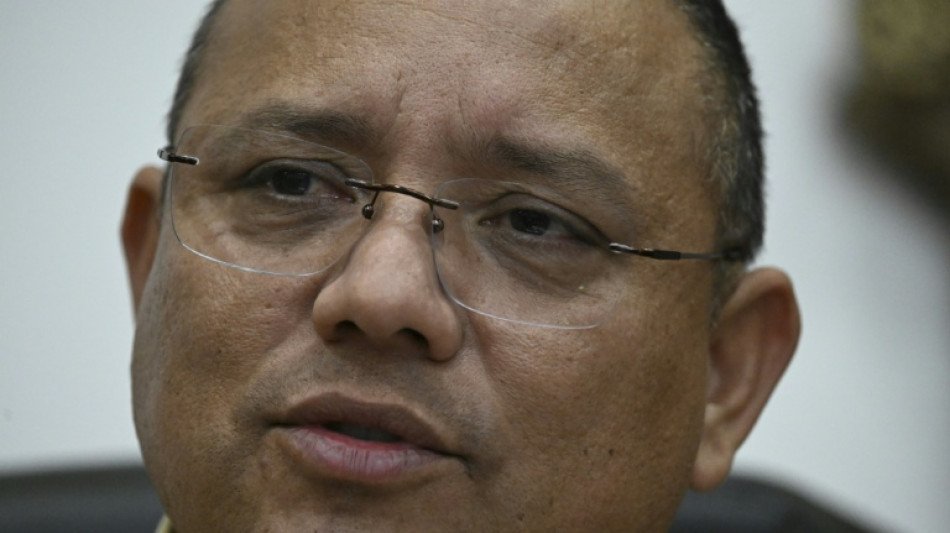
Gang crackdown carried out without 'abuses,' Guatemalan defense chief says / Photo: © AFP

 'I completely trust the club,' says Man City boss Maresca
 '10 out of 10' Quintana reminisces over dream Vuelta win
 Maddinson given shock recall but fails to score
 Navi Pillay, South African rights champion, wins Nobel Peace Prize
 Saudi Arabia says three killed at airport as Yemen war expands
 Everton's US owners mull sale of club two years after takeover

 Ukraine takes Russia fight to 'scorching sands' of Sahel
 Chinese AI tool pulled to prevent 'misuse' after South Korea hacks
 Asian stocks mostly up as traders weigh AI, oil dips after surge
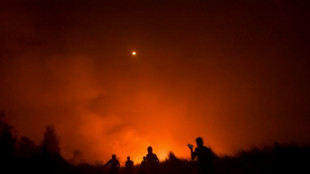 Walking through flames: orangutans rescued in Indonesia fires
 LeBron shines in pre-season debut for re-tooled 76ers
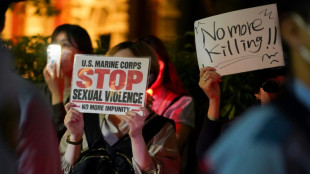 Okinawa resolution calls for revision of US forces pact after murder
 Verdict expected Friday in Mexico trial over murders of Australia, US surfers

 New York mayor says asking Trump to withdraw ICE after shooting
 Walking through flames: orangutan rescued in Indonesia fires
 James shines in pre-season debut for re-tooled 76ers

 Fuel, fertilizer costs strain US farmers' support for Republicans in midterms
 Trump's 'super intelligence' rebrand to sell AI faces uphill battle
 Fiji demands US provide evidence Chinese official paid bribes for Beijing
 More than just football: How scandal-tainted City led Manchester's rebirth
 Record Eden Park streak creates tension for All Blacks
 EU trade chief seeks 'tangible outcomes' in China talks
 Man City face Anfield cauldron after guilty Premier League verdicts

 CNN, MS Now, Politico urge judge to extend White House access
 Trump administration to launch new vaccine research center

Guatemala has cracked down on gangs while safeguarding human rights, its Defense Minister Henry Saenz told AFP in an exclusive interview, rejecting the brutal methods neighboring El Salvador has used to curb rampant criminal activity.
Gang-affiliated inmates took hostages at three prisons and unleashed a wave of violence in mid-January, killing 11 police officers and causing deep shock among Guatemalans. President Bernardo Arevalo ordered a month-long state of emergency in response.
Soldiers and police are still heavily deployed as a preventive measure across six departments of the Central American country of 19 million people.
But Arevalo is pursuing a security strategy that respects human rights, Saenz insisted, drawing a contrast with the warrantless arrests and overflowing prisons in El Salvador.
President Nayib Bukele's war on gangs is popular because violence in El Salvador has dropped to historic lows. But the methods used include enforced disappearance and torture, lawyers and advocacy groups say.
Across Central America, Barrio 18 and its arch-rival MS-13 -- declared terrorist organizations by the United States and Guatemala -- run criminal enterprises, from drug trafficking rings to extortion rackets, often from behind bars.
Saenz told AFP in an interview on Monday that fighting the scourge "without abuses" is a "longer road" but "the better one."
Question: What are the results of the recent government operations?
Answer: All the raids we carried out were done with an order from a judge. Respecting human rights, strengthening a democratic framework that we can show the international community, is positive.
We cut off the communications of gang leaders. By cutting it off, they were stuck without a command structure, without orders, and so we were able to reduce street killings by 50 percent and extortion by 33 percent. We took control of territory, we already have safer borders.
But, though the data is encouraging, we aren't naive. We have made little progress; there is much work still to be done.
Q: Is there a risk for more prison riots like those in January?
A: The threat is latent, permanent. For the Guatemalan military, (the work) is ensuring that inside prisons they don't have weapons, drugs, alcohol, things that lead to new riots, hostage-takings, and killings.
For now, the military needs to be involved in the prisons and on the streets... so that the strategy is sustainable over time.
Q: Have you sought to copy the Bukele model?
A: No. We're a democratic country. The (maximum security) prison that's being planned will be created with standards required for international certifications.
We aren't going to pile 200, 300 people into a single cell with just one bathroom. We're not going to do that because no human being ceases to be human, and we're well aware of this in Guatemala. Everyone has their rights.
We're not defending criminals, we're attacking, persecuting, and capturing them through a lawful system.
Far from following a model, we're raising our hand to make a new one. It's a longer path, but it's the better one, a plan that's safer for everyone.
Q: What are you doing to avoid abuses like those denounced in anti-gang operations in Honduras and El Salvador?
A: We've gone two months... and there hasn't been a single complaint regarding abuses. What have we done, then? Respect the Guatemalan citizenry and all of their civil rights.
The idea is to allow the military to contribute to the operation, without giving them a free pass to violate the rights of the citizenry.
Q: Can you guarantee there haven't been any arbitrary detentions?
A: Not a single one. We've waited for orders from a competent judge before making a move, we've accompanied civilian security forces and we haven't committed a single arbitrary act.
Q: What is your expectation for the alliance against drug trafficking led by the United States?
A: Our strategic ally says that we need all the armed forces in the hemisphere to get involved in (attacking) cartels. We're already doing it.
Good times are coming for the hemisphere, where everyone, without exception, will combat drug trafficking from our respective positions.
J.Horn--BTB