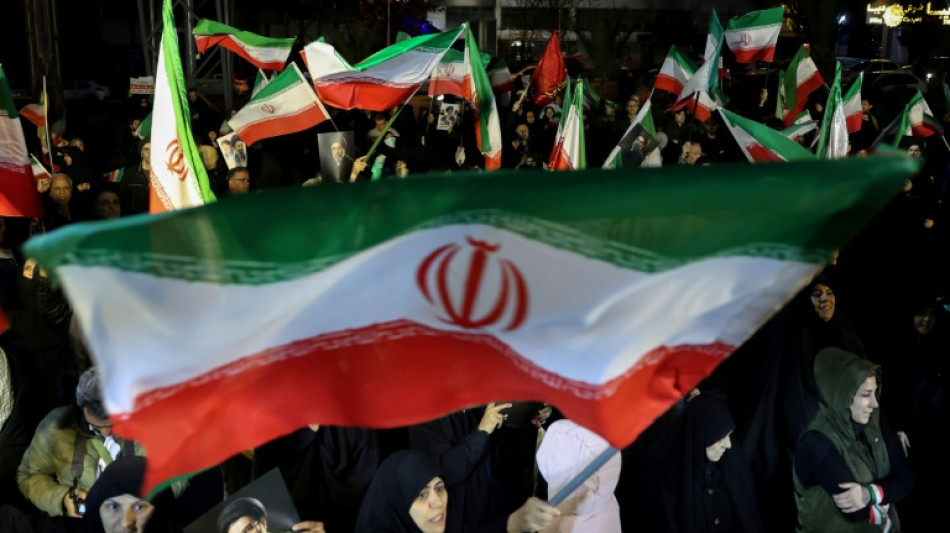
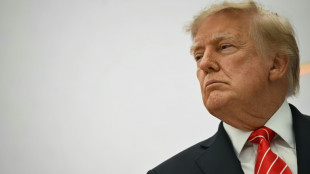
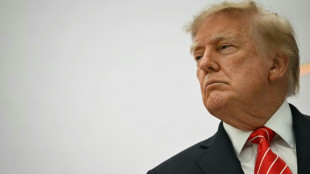
Iran may believe it has the upper hand as Trump seeks talks / Photo: © AFP

 Ukraine takes Russia fight to 'scorching sands' of Sahel
 Chinese AI tool pulled to prevent 'misuse' after South Korea hacks

 Asian stocks mostly up as traders weigh AI, oil dips after surge

 Walking through flames: orangutans rescued in Indonesia fires
 LeBron shines in pre-season debut for re-tooled 76ers

 Okinawa resolution calls for revision of US forces pact after murder

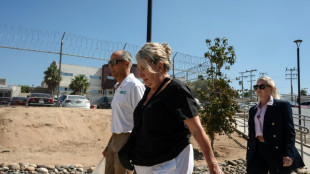 Verdict expected Friday in Mexico trial over murders of Australia, US surfers

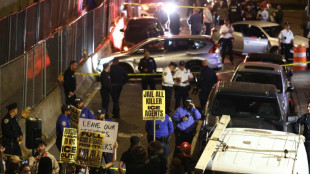 New York mayor says asking Trump to withdraw ICE after shooting
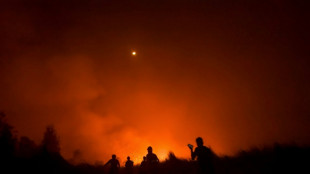 Walking through flames: orangutan rescued in Indonesia fires
 James shines in pre-season debut for re-tooled 76ers
 Fuel, fertilizer costs strain US farmers' support for Republicans in midterms

 Trump's 'super intelligence' rebrand to sell AI faces uphill battle

 Fiji demands US provide evidence Chinese official paid bribes for Beijing
 More than just football: How scandal-tainted City led Manchester's rebirth
 Record Eden Park streak creates tension for All Blacks

 EU trade chief seeks 'tangible outcomes' in China talks
 Man City face Anfield cauldron after guilty Premier League verdicts
 CNN, MS Now, Politico urge judge to extend White House access
 Trump administration to launch new vaccine research center

 Russian strikes kill 30 in Ukraine frontline city, talks set in US

 US military to livestream firing squad execution of Fort Hood shooter

 Aces star Wilson wins record-extending fifth WNBA MVP
 Undefeated 49ers seek Seahawks revenge
 Madrid mourns evicted retiree, 'icon' of Spain housing protests

 OpenAI revenue gap report rattles AI stocks
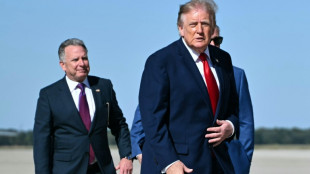
Iran's decision to rebuff a 15-point peace proposal from US President Donald Trump and outline its own conditions for a ceasefire reflects growing confidence in its negotiating position after nearly four weeks of war, analysts say.
Despite US-Israeli airstrikes that have killed its top leaders and inflicted huge material damage, Iran's governing system remains in place and it retains the ability to fire missiles and drones at its neighbours and Israel.
Above all, it has demonstrated its ability to choke off the Strait of Hormuz shipping route, spiking oil and gas prices and underlining how it has a sizeable part of the world economy at its mercy.
Trump sprung a surprise on Monday by announcing "very good" talks with Tehran, but Iranian officials have insisted all week that no negotiations are taking place, even mocking the US leader for "negotiating with himself".
"At present, our policy is the continuation of resistance," Foreign Minister Abbas Araghchi said on state TV late on Wednesday, adding: "Speaking of negotiations now is an admission of defeat."
Iran's Revolutionary Guards, the ideological wing of the armed forces that has seen its influence grow thanks to the war, has insisted in various statements that they will determine when the fighting ends -- not Trump or Israeli Prime Minister Benjamin Netanyahu.
The US leader warned Thursday that Iran "better get serious soon" with regards to talks or face unspecified consequences.
- Deterrence -
Ross Harrison, a senior fellow at the Middle East Institute think tank and author of "Decoding Iran's Foreign Policy", said he detected that Iranian leaders "are getting quite confident in themselves right now in some ways".
Given their utter distrust of Trump, who has bombed Iran twice amid ongoing negotiations in the last year, Tehran is naturally sceptical about talks and looking to create deterrence against another attack, he said.
That would come in the form of inflicting "enough pain" on the United States, and the global economy more broadly, that Trump or Israel would think twice about bombing Iran again in the future.
Iran's strategy "is much simpler than it is for the Americans: it's regime survival and recreating deterrence so that this is not going to happen again six months from now, a year from now, two years from now," Harrison told AFP.
But he noted that there's "a lot of bravado going on on all the sides" at the moment, and cautioned that the Iranians "should worry about overplaying their hand".
Another factor driving Iran's response is the promotion of hardliners in Tehran power circles during the war, including the new supreme leader Mojtaba Khamenei and new security chief Mohammad Bagher Zolghadr.
The appointment of Zolghadr, a hawkish veteran of the 1980s Iran-Iraq war, signalled "a much more aggressive Iranian posture", wrote Vali Nasr, a prominent Iranian-American author and academic.
- Struggle -
Guillaume Lasconjarias, a Middle East expert at the Sorbonne University in Paris, noted how Trump had gone from demanding "unconditional surrender" to proposing a 15-point peace plan.
"In negotiations, the one who extends their hand first appears to be in the weaker position," Lasconjarias told AFP, referring to Trump.
"Appearances are probably deceiving, however, because Iran has been very much weakened," he added, warning about the risk of miscalculation by Tehran.
A large part of its political and military elite has been assassinated, while its missile sites, nuclear programme, domestic security forces and navy have been relentlessly targeted with airstrikes.
Its economy, already suffering from sky-high inflation and sanctions before the war, is at a near-standstill.
The outcome may boil down to how badly Trump wants a quick exit from a war that is unpopular at home, and how long Iran estimates it can hold out, even in the event of further escalation from the US.
The US leader set a five-day deadline that will expire on Saturday, threatening to "unleash hell" unless Iran met his demands on its nuclear and missile programmes, as well as re-opening the Strait of Hormuz.
Robert Pape, a political science and military expert at the University of Chicago, believes the talks are a smokescreen as Trump moves thousands of airborne troops and marines to the Gulf for a possible ground offensive.
"If you want to understand where this war is going, ignore what is said. Watch what moves," he wrote on his Substack.
An Iranian military official, quoted by state media, signalled Wednesday that Tehran would retaliate to a ground invasion by activating its Houthi rebels in Yemen to attack shipping in the Red Sea, dramatically widening the conflict.
I.Meyer--BTB