
AI at war: Five things to know about Project Maven / Photo: © AFP

 Asian stocks mixed amid AI concerns, oil dips after surge

 Wallabies expect fast-paced All Blacks in Bledisloe opener

 Tech scammer Elizabeth Holmes focus of documentary by absurdist Nathan Fielder

 Climate hopes shift from politics to the courts

 Will Nobel Peace Prize pick make waves at the White House?

 Trump rules out new Iran attack before US midterm elections

 Far-right influencer shows Israel's coarse political turn

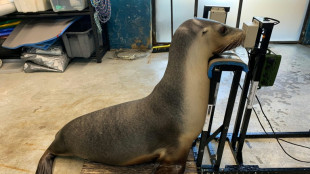 Seals and sea lions get hearing tested at Australia zoo

 Mourinho's Real Madrid playing catch-up in Clasico countdown

 Joy as USS Lincoln back home after troubled Gulf deployment

 OpenAI says Iran, Russia influence ops busted

 Anthropic bans 'cruel' behavior against its Claude AI

 Anne Carson's Nobel literature prize 'a proud moment for Canada': PM

 Montagliani to seek CONCACAF re-election in boost for Infantino: reports

 Oil surges, stocks sink on jitters over US plans in Iran war

 John Cena and Jessica Biel hit the gas in 'Matchbox: The Movie'

 US, Ukrainians, Europeans to discuss 'new ideas' to end war

 Unproven 'cures' pushed online amid plague concerns

 Nigeria looks to ease fuel prices as election looms

 Prosecutors in Maradona death trial seek sentences up to 12 years

 Swiss captain Xhaka gets suspended fine for fake Covid cert

 Ex-prince Andrew raid warrants ruled 'unlawful' but UK police maintain probe

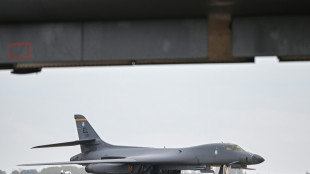 Two Latvians arrested inside UK military base: police

 Eckert 'forever grateful' for Southampton support over spy scandal

 Venezuela's Maduro, wife hit with new US torture charges

A Pentagon AI program called Project Maven is at the center of the US strikes against Iran and potentially one of the most consequential transformations of modern warfare.
- What is it? -
Project Maven is the Pentagon's flagship artificial intelligence program, launched in 2017 as a narrow experiment to help military analysts make sense of the torrent of drone footage pouring in from conflict zones.
Operators were drowning in imagery, searching frame by frame for objects of interest that might appear for only a moment before vanishing. Maven was built to find the needle in the haystack.
Eight years later, the program has evolved into something far more expansive: an AI-assisted targeting and battlefield management system that has vastly accelerated what is known in war-making as the kill chain -- the process from initial detection to destruction.
- How does it work? -
Maven functions like both the air traffic control of battle and its cockpit.
Aalok Mehta, director of the CSIS Wadhwani AI Center, described the system as "essentially an overlay" that fuses sensor data, enemy troop intelligence, satellite imagery, and information on troop deployment.
In practice, that means rapidly scanning satellite feeds to detect troop movements or identify targets, while also "taking a snapshot of the operational theater" to determine the best course of action for striking a specific target.
In a recent demonstration posted online, a Pentagon official described how Maven "magically" turns an observed threat into a targeting workflow, weighing available assets and presenting a commander with options.
The emergence of ChatGPT was another leap forward, broadening the use of the technology to a far greater range of users who can interact with Maven in natural language.
For now, this capability is supplied by Anthropic's Claude — though that arrangement is coming to a bitter end after the Pentagon bristled at the AI lab's demand that its model not be used for fully automated strikes or the tracking of US citizens.
- Why did Google say no? -
The ethical question was a factor in Maven's early years, when Google was the program's original AI contractor.
In 2018, more than 3,000 employees signed an open letter protesting the company's involvement, arguing that the contract crossed a line. Several engineers resigned.
Google declined to renew when the contract expired, and subsequently published AI principles explicitly ruling out participation in weapons systems.
The episode exposed a fault line in Silicon Valley between engineers who viewed autonomous targeting as an ethical red line and defense officials who saw it as essential.
More recently, Google removed its AI policy restrictions and said it is leaning further into national security work. The Pentagon has said that Google, along with xAI and OpenAI, are in the mix to replace Claude in Maven.
- What is Palantir's role? -
In 2024, Palantir — founded in part with CIA seed funding and built from the start around government intelligence work — stepped into the space Google vacated.
The company has reportedly become Maven's primary technology contractor, and its AI now forms the operational backbone of the program.
Palantir CEO Alex Karp frames the stakes explicitly.
"This is a have, have-not world," he said at a recent Palantir event, arguing that it was important for the West to achieve capabilities the rest of the world lacked.
A system that compresses a kill chain from hours to seconds makes an adversary obsolete, he said.
- How has it fared? -
The Pentagon and Palantir declined to comment on Maven's performance in the current war with Iran.
US strikes have been carried out at a sustained pace, and it can be assumed that Maven's ability to speed up the targeting and firing process has played a central role.
According to the Center for Strategic and International Studies, after three weeks the US strike campaign settled into a pace of between 300 and 500 targets per day.
In the first 24 hours of Operation Epic Fury, US forces struck over 1,000 targets, including a school housed in a building previously used as a military complex, according to various media reports. Iran has said the attack killed 168 children aged seven to 12 and wounded many other people.
E.Schubert--BTB