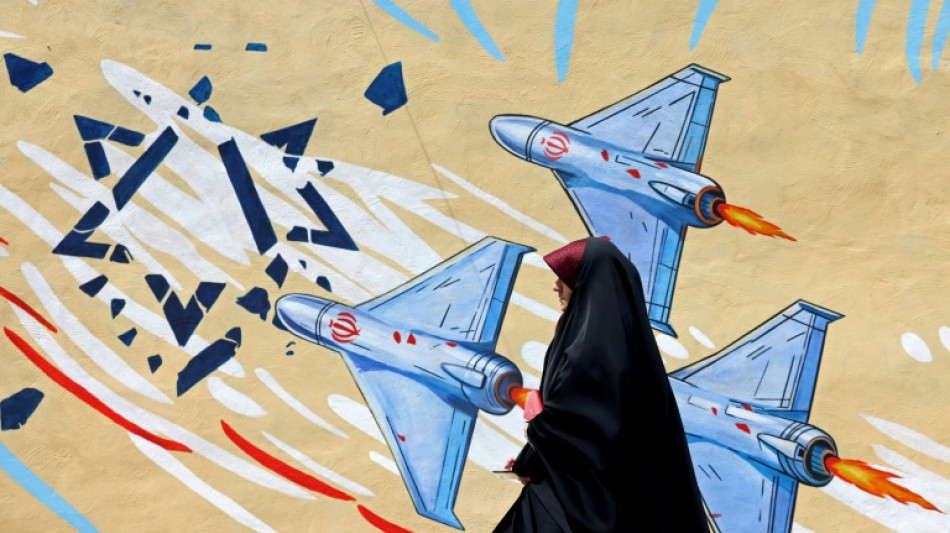
In Trump war on Iran, tactical wins and long-term damage to US / Photo: © AFP

 Record Eden Park streak creates tension for All Blacks

 EU trade chief seeks 'tangible outcomes' in China talks

 Man City face Anfield cauldron after guilty Premier League verdicts

 CNN, MS Now, Politico urge judge to extend White House access
 Trump administration to launch new vaccine research center

 Russian strikes kill 30 in Ukraine frontline city, talks set in US

 US military to livestream firing squad execution of Fort Hood shooter

 Aces star Wilson wins record-extending fifth WNBA MVP

 Undefeated 49ers seek Seahawks revenge
 Madrid mourns evicted retiree, 'icon' of Spain housing protests

 OpenAI revenue gap report rattles AI stocks
 France pledges more teachers after school students vow no let-up

 Bordeaux confirmed in sixth tier of French football

 Trump gives 'national treasure' Musk top US medal after rift

 MLB proposes shortening season, reforming playoffs

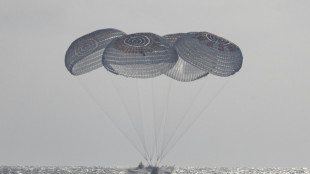 Crew splashes down after 8-month mission on International Space Station

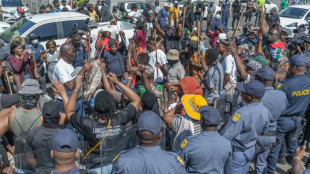 Protests, clashes as S. African anti-migrant tensions reignite
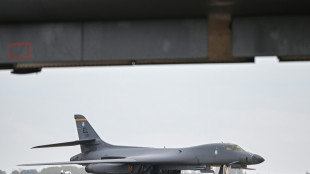
 Russian data centre hit by drone in first for Ukraine war

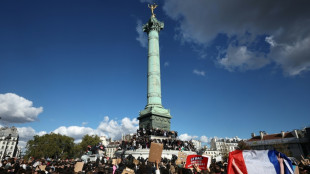 'Fighting for our future': France high school students vow no let-up
 Kyiv entering 'survival' mode amid Russian strikes surge: mayor tells AFP

 Verdict due in Mexico trial over murders of Australia, US surfers
 B2PRIME Welcomes Christina Barbash as Commercial Manager

 Russia forcing Kyiv into 'survival' mode before winter, mayor tells AFP

 Closing arguments begin in Maradona death trial

 UEFA president Ceferin to stand for re-election in 2027

Launching war on February 28, US President Donald Trump warned that Iran would learn never to challenge the US military and called on the people to rise up against their unpopular cleric-led government.
By the time the adversaries agreed Tuesday to a two-week ceasefire, the Islamic republic appears more entrenched, Tehran's military has wreaked havoc on the region, and Trump declared victory because of the tentative reopening of the vital Strait of Hormuz -- which was only closed because Iran retaliated for being attacked.
Trump launched the war alongside Israeli Prime Minister Benjamin Netanyahu, whose own goal has primarily been to sow destruction in the country of 90 million people whose government has been Israel's sworn adversary.
Trump's objectives were much less defined. He spoke of degrading Iran's missiles and preventing it from obtaining an atomic bomb, despite saying last year he already "obliterated" Iranian nuclear sites and ongoing diplomacy.
Trump backtracked on talk of "liberating" Iranians and by Tuesday was speaking in what many interpreted as genocidal terms, threatening before the ceasefire that the entire civilization, one of the world's oldest, "will die tonight, never to be brought back again."
"I think the US has lost the narrative war and the information war inside Iran, regionally in the Middle East and internationally, and also in America," said Alireza Nader, a longtime US-based analyst on Iran.
Nader said that even staunch critics of the Islamic republic began to praise the Revolutionary Guards, the country's premier military force, in outrage over US-Israeli strikes whose targets included universities, bridges and factories.
"It is in the US national security interest to have a long-term positive relationship with Iran and Trump really damaged that possibility for no reason whatsoever," Nader said.
"A lot of people who hate the regime are also outraged at the vast destruction of civilian infrastructure."
- 'Strategically indecisive' -
Negar Mortazavi, a senior fellow at the left-leaning Center for International Policy, said that the attacks fueled greater nationalism and unity among Iranians.
"For the US, they didn't achieve any of their set goals. Nothing changed about the nuclear program. Iran still has missiles to shoot. They still have drones and the state has become more hardline and there has been no regime change," she said.
Michael Singh, who was a top Middle East advisor to former president George W. Bush, said the United States "significantly degraded" Iran's military and short-term capacities -- destroying many of its missiles and drones, devastating its navy and air force and killing senior leaders.
"From a US perspective, I would say the US was operationally brilliant but the conflict was strategically indecisive," said Singh, now managing director at the Washington Institute for Near East Policy.
Paradoxically, the overwhelming show of force could persuade Iran to rush to build nuclear weapons, Singh said.
"Iran has seen that the US and Israel together have a vastly superior military capability and of course that could create a stronger incentive to pursue nuclear weapons," he said.
- Iran finds leverage -
Iran and the United States are set to begin talks in Pakistan on Saturday on a long-term deal.
A key issue will be the Strait of Hormuz, the narrow waterway into the Gulf through which one-fifth of the world's oil transits -- and where Iran has demonstrated it can exert key leverage.
Iran agreed to safe passage through the strait for the duration of the ceasefire but has also spoken of setting up a toll system, which would allow it to fund its reconstruction.
The United States during the war also for the first time in decades relaxed sanctions on Iranian oil, hoping to ease soaring prices that are politically sensitive for Americans.
If Iran secures assurances from the United States, it can "argue that escalation produced negotiations on terms it could accept," said Ali Vaez, Iran project manager at the International Crisis Group.
"The underlying balance has not fundamentally changed: Iran still retains its enriched uranium, while Washington appears, for now, more focused on preventing wider disruption -- especially in the Strait of Hormuz -- than on fully embracing Israel's preferred course," Vaez said.
"That points both to Trump's appetite for a deal and to the limitations of the strategy pursued so far."
I.Meyer--BTB