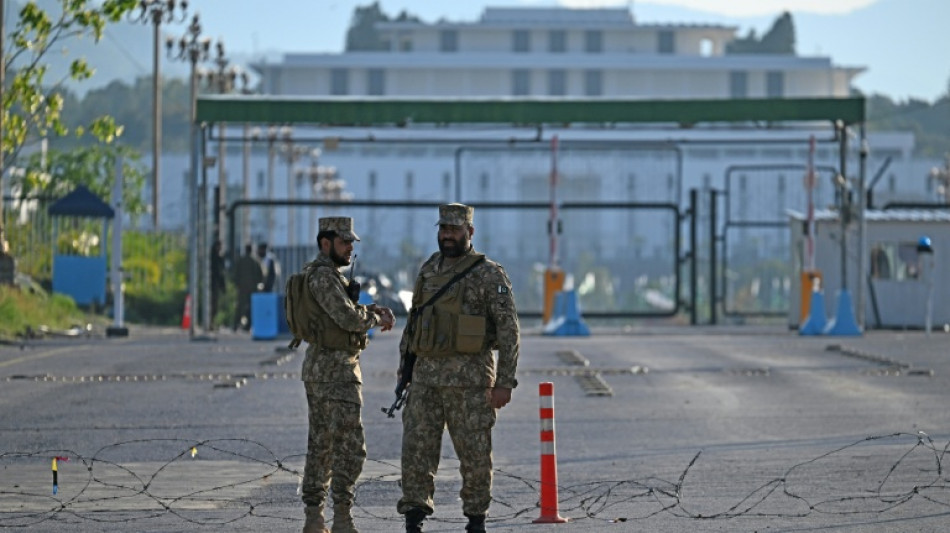
In Pakistan's mediation to end Mideast war, China may hold the key / Photo: © AFP

 CNN, MS Now, Politico urge judge to extend White House access
 Trump administration to launch new vaccine research center

 Russian strikes kill 30 in Ukraine frontline city, talks set in US

 US military to livestream firing squad execution of Fort Hood shooter

 Aces star Wilson wins record-extending fifth WNBA MVP
 Undefeated 49ers seek Seahawks revenge
 Madrid mourns evicted retiree, 'icon' of Spain housing protests

 OpenAI revenue gap report rattles AI stocks
 France pledges more teachers after school students vow no let-up

 Bordeaux confirmed in sixth tier of French football
 Trump gives 'national treasure' Musk top US medal after rift

 MLB proposes shortening season, reforming playoffs

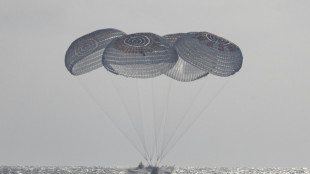 Crew splashes down after 8-month mission on International Space Station
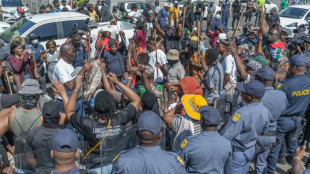 Protests, clashes as S. African anti-migrant tensions reignite
 Russian data centre hit by drone in first for Ukraine war

 'Fighting for our future': France high school students vow no let-up
 Kyiv entering 'survival' mode amid Russian strikes surge: mayor tells AFP

 Verdict due in Mexico trial over murders of Australia, US surfers
 B2PRIME Welcomes Christina Barbash as Commercial Manager

 Russia forcing Kyiv into 'survival' mode before winter, mayor tells AFP
 Closing arguments begin in Maradona death trial
 UEFA president Ceferin to stand for re-election in 2027

 Nearly 300,000 Nepalis at flood risk: study

 Riyadh kindergarten hit by interception debris as Houthis say targeted airport
 Alex Bodi mizează, alături de CRIF, pe investiții transparente și pe prevenirea riguroasă a spălării banilor

As Iranian and US envoys prepare to hold talks in Islamabad to end the Middle East war, official sources and experts say Beijing helped pave the way for the negotiations and will be a crucial component in securing a permanent truce.
Pakistan has received praise – and some surprise - on the global stage for its last-ditch clinching of a temporary ceasefire between the warring sides.
But Pakistani officials say Beijing's quieter role would now prove to be as essential as it was in striking the down-to-the-wire agreement that had looked set to fail on Tuesday night.
"On ceasefire night, hopes were fading, but China stepped in and convinced Iran to agree to a preliminary ceasefire," said a senior Pakistani official source familiar with the negotiations.
"While our efforts were central, we were falling short of a breakthrough, which was ultimately achieved after Beijing persuaded the Iranians," said the source, who requested anonymity to speak openly on a sensitive diplomatic matter.
That echoed President Donald Trump, who shortly after announcing the two-week ceasefire on social media, told AFP that China had been key to getting Iran to the negotiating table.
The planned talks had raised fragile hopes of an end to the war that has claimed thousands of lives and jolted the global economy since Israel and the United States launched strikes on February 28 and Iran responded with attacks on the Gulf as well as Israeli cities.
Pakistan, which has deep cultural and religious ties with neighbouring Iran and whose leaders share close personal rapport with Trump, will facilitate both sides.
To get a lasting agreement, it will need to steer the rival sides through fractious issues, including on the opening of the strategic Strait of Hormuz and the continuation of Iran's nuclear programme.
"Pakistan has formulated a team of experts to facilitate the two sides in negotiations, on navigation, nuclear and other related matters," said a second diplomatic source familiar with the matter, requesting anonymity as they were not authorised to speak publicly.
The second source, along with several experts and former officials, told AFP that as Pakistan sets the negotiating table, all eyes were on China's role.
"China was requested to be a guarantor. Iran wants a guarantor," said the source.
The main alternative, Russia, which is fighting a war in Ukraine, would not have been accepted by Western players, especially the European Union, meaning China was "best placed".
- 'Ironclad brothers' -
Beijing shares close ties with Islamabad and Tehran, and has been Iran's largest trading partner during years of crippling US-led sanctions.
China has also invested billions into infrastructure projects in Pakistan as part of President Xi Jinping's Belt and Road initiative and the two governments call themselves "ironclad brothers."
"As close partners and neighbours, Pakistan and China have been coordinating closely from day one to end hostilities," said Mushahid Hussain Sayed, a former Pakistan senator and head of the upper chamber's defence and foreign affairs committees.
"China's role would remain indispensable in clinching any final peace agreement as the ultimate guarantor, given the fact that Iran doesn't trust the Trump/Netanyahu duo," he added, in reference to Israel's prime minister.
After Pakistan's foreign minister quickly flew to Beijing last month following de-escalation discussions with Saudi, Turkish and Egyptian counterparts, China said it backed Pakistan's efforts to mediate.
It then launched talks to help ease Pakistan's own spiralling armed conflict with Afghanistan, hosting Afghan government delegates and Pakistani officials in Urumqi in China after weeks of fighting.
China, with Russia, also took a key step likely to be warmly received in Tehran hours before the ceasefire, vetoing a UN Security Council resolution on reopening the Strait of Hormuz where Iran has imposed an effective blockade since the war began.
- 'Uphill battle' -
China has not sought the limelight in peace building efforts, reiterating only that it has been mediating and encouraging an end to hostilities.
Chinese Foreign Minister Wang Yi had held 26 calls with counterparts from relevant countries while Beijing's Middle East envoy had "shuttled across" the war-torn region, a foreign ministry spokesperson said.
Analysts and officials said the prospect of China openly stepping in to a formal guarantor role in coming weeks was also uncertain.
"They have their own considerations, they do not want to be dragged into this conflict" publicly, the second source told AFP, in a nod to Beijing's strong behind-the-scenes role.
Talks face an uphill battle in resolving the vast differences in the warring sides' positions.
A major sticking point is over Lebanon, which Pakistan's prime minister and Iran have insisted is included in the ceasefire and Israel has denied.
Israel, which Pakistan does not formally recognise, has continued to launch deadly strikes it says target Iran-backed Lebanese group Hezbollah, though the United States has said it will host its separate talks in Washington between Israeli and the Lebanese officials next week.
"Negotiations are very complicated, sensitive...to reach consensus all sides will have to make painful compromises and concessions," the source added.
F.Müller--BTB