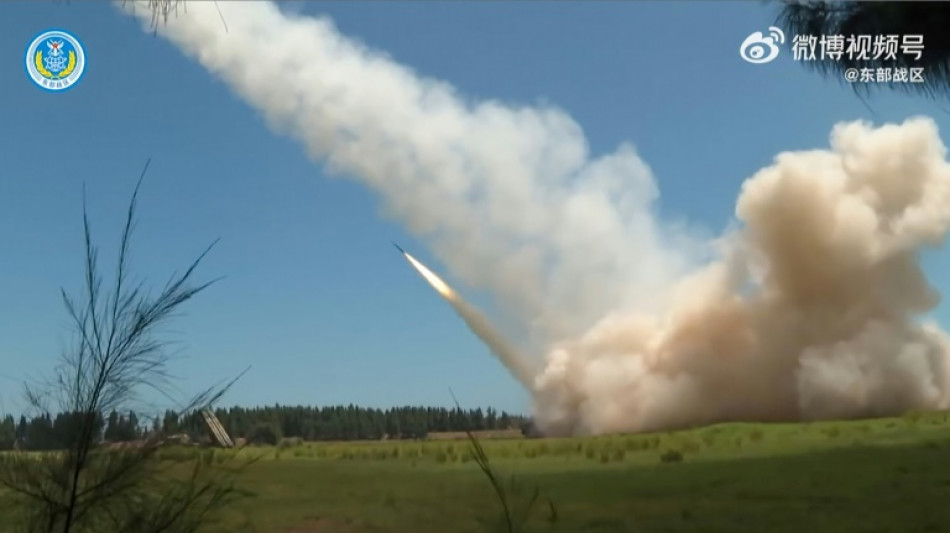
Taiwan crisis: what we've learned so far / Photo: © PLA EASTERN THEATER COMMAND/ESN/AFP

 Spurs splash out £75 million for Man City's Savinho
 IntellectEU Introduces Catalyst Core
 Stocks rise and oil slips as traders eye Iran threat, Nvidia results

 India in command despite Sooriyabandara half-century
 Hyundai reaches tentative deal with workers after strike

 Trees 'giving up': climate change hammers historic English gardens

 Malian songbird keeps age-old sounds alive at 88

 Canada to announce response to Trump's new tariffs
 Stocks stagger and oil rises as traders eye Iran threat, Nvidia results
 Families of detained Chinese Christians cling to faith in legal limbo
 Trump veers from boredom to denial after six months of Iran war
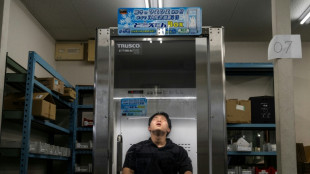 Cool Japan: Human fridge chills workers in extreme heat

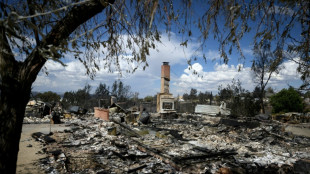 Tens of thousands flee fire near US city of Reno

 LiberNovo Support Week Goes Live: Up to 44% Off on Maxis, Omni SE and Omni Pro Ergonomic Chair Series
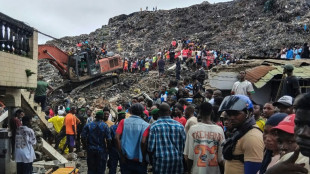 Despair and anger erupt after deadly Guinea landfill collapse
 Tornado tears through French village, dozens injured

 Federer looks forward to brief return to Arthur Ashe stadium

 US removes Syria from state sponsor of terrorism list
 Facebook, TikTok promoted Colombian armed groups' content to recruit children: HRW
 Palmeiras agree to sell Allan to Manchester City: source

 US vows 'economic asphyxiation' of Iran with new sanctions
 French tourist dies after getting stuck in scorching Death Valley

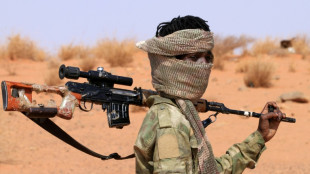 US proposes expanding UN Sudan arms embargo to entire country

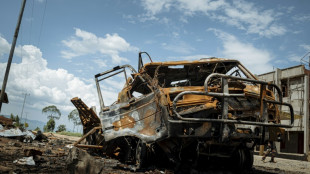 Ceasefire verification mission heads to east DR Congo
 Carse dropped from England squad after nightclub incident
China's live-fire drills around Taiwan –- which saw vessels encircle the democratically ruled island –- have offered an unprecedented insight into how Beijing may conduct a military campaign against its neighbour.
Beijing has also imposed economic sanctions and increased efforts to isolate Taiwan on the international stage, in a move that experts say will permanently alter the status quo on the Taiwan Strait.
AFP looks at what we learned from China's largest-ever military exercise around Taiwan, which was conducted in retaliation to US House Speaker Nancy Pelosi's visit to the self-ruled island this week.
Could China impose a blockade of Taiwan?
The Chinese military has conducted drills on Taiwan's eastern flank, a strategically vital area for supplies to the island's military forces -- as well as any potential American reinforcements -- for the first time.
This has sent an ominous signal that Beijing can now blockade the entire island and could prevent any entry or exit of commercial or military ships and aircraft.
Analysts have long speculated that this will be one of China's preferred strategies in the event of a war to conquer Taiwan.
"This crisis will signal that Beijing has the ability to repeat -- and intensify -- similar responses at will," said Christopher Twomey, a security scholar at the US Naval Postgraduate School in California.
"But sustaining (a blockade) would be very costly, both for China's reputation and in direct costs for its military."
China's current economic woes mean it is unlikely to risk a major disruption in the Taiwan Strait -- one of the world's busiest waterways -- for now.
Is the Chinese military battle-ready?
China has swiftly expanded and modernised its air, space and sea forces with the aim of projecting its power globally and narrowing the gap with the United States military.
Beijing's military capabilities still lag behind Washington's but it aims to have the ability by 2027 to overcome any pushback to reclaiming Taiwan, according to the Pentagon.
These military drills around Taiwan have put the People's Liberation Army's (PLA) Eastern Theater Command, which spearheaded the exercises, to the test, said Collin Koh, a naval affairs expert at the S. Rajaratnam School of International Studies in Singapore.
They have shown how far reform of the Chinese military has come since the last Taiwan Strait crisis in 1995-96, demonstrating its "ability to pull in or to master a bigger range of capabilities", he said.
"At least the tangible assets they put on the ground, as well as the ability for them to pull off an exercise on this scale, does show that they are much more capable than they used to be back in the 1990s."
What's changed about China-Taiwan relations?
Taiwan's 23 million people have long lived with the possibility of an invasion, but that threat has intensified under President Xi Jinping, China's most assertive ruler in a generation.
China is now boycotting fruits and fish from Taiwan, economically harming the island in a move analysts say is designed to erode support from major voting blocs for the pro-independent government.
Beijing has put sanctions on companies that donate to the development assistance arm of Taiwan's government -- putting an end to what has been called Taiwan's "cheque-book diplomacy" with allies.
But China will aim to keep its military and economic manoeuvres below the threshold of war to avoid a direct confrontation with the US, analysts said.
"I think prolonged tensions are unlikely," said Bonnie Glaser, director of the Asia programme at the US-based German Marshall Fund think tank, told AFP.
"But certainly a major crisis would affect shipping, insurance rates, trade routes, and (global) supply chains."
A new normal for Taiwan?
Taiwan may have to get used to China holding similar military exercises in the future, Koh said.
"It will become the norm to have exercises that are close to the main Taiwan island itself... this time it has set a new precedent that the PLA will conduct drills of this sort."
"We're looking at the bar being raised to another level for future exercises of this scale and intensity."
China has periodically sent warships or planes across the median line -- an unofficial but once largely adhered-to border that runs down the middle of the Taiwan Strait -- during times of tension.
But Pelosi's visit has "given them the excuse or justification to say that in the future they will just legitimately carry out exercises east of the median line without having to pay due regard to it at all," Koh said.
Where do China-US relations go from here?
China has said it is ending cooperation with the United States on key issues including climate change and defence.
Washington has decried the move as "fundamentally irresponsible" as relations between the two superpowers have nosedived over Taiwan.
Beijing separately announced that it would personally sanction Pelosi -- third in line to the US presidency -- in response to her "vicious" and "provocative" actions.
Tian Shichen, a Beijing-based security analyst, told Chinese state-run publication Global Times that the break in communications had raised the risk of conflict, but ascribed blame solely to the US.
"At present, almost all the channels of mechanism communication between the Chinese and US militaries are interrupted, increasing the possibility of misunderstanding and unexpected incidents, all of which are the responsibility of the US," he was quoted as saying.
"This is a moment in the US-China relationship where we are really at a very low point," Glaser said in a discussion hosted by the Center for Strategic and International Studies in Washington DC.
"I hope our two governments will find a way forward to talk about their... redlines, their concerns and prevent a continuous downward spiral in the relationship."
L.Dubois--BTB