Xi, Trump eke small wins from talks but no major deals: analysts / Photo: © AFP

 Bad COP, worse COP? EU tempers hopes for UN climate summit

 Rookie Henry named in Wallabies midfield to face All Blacks
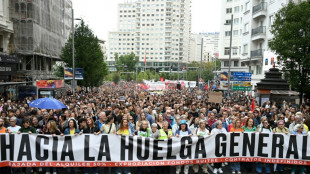 Housing crisis set to dominate Spain's snap election
 Gas, health care, utilities: high costs squeeze US midterm voters

 New Zealand Rugby seeks injunction over PNG Chiefs name
 Samsung expects 780% quarterly operating profit jump on AI boom
 Guardians survive with 9-3 win over White Sox
 Saudi Arabia says 3 dead at airports after Houthis claim attacks
 Stocks slide as oil sees volatile trading day over Iran war fears

 Microsoft pushes AI vision with new, expensive Surface laptop

 Five children among 28 killed in Russian strikes on Ukraine

 Odell Beckham Jr signs with Minnesota Vikings
 Saudi Arabia says three dead at airports after Houthis claim attacks
 Trump plans to turn Florida golf course into presidential retreat

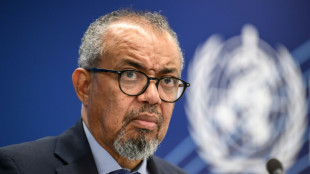 WHO says cannot conduct full risk assessment on Russia plague reports
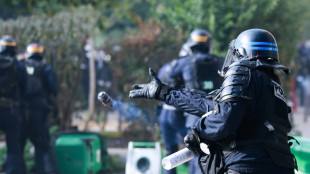
 After botched execution, US woman is awake and shackled to bed
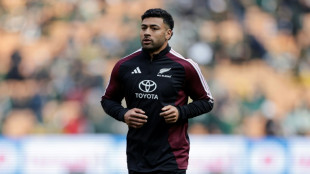 New Zealand fly-half Mo'unga ruled out of Australia Tests
 Protests in major Turkish city after mayor defects to Erdogan party
 Climate change strips island's title of largest penguin colony: study

 Rubio says West must choose between national power or decline

 Russia's plague scare: What we know
 French luxury giant to fund redevelopment of two Paris streets: city hall

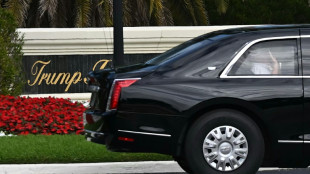 Trump wants to turn Florida golf course into presidential retreat
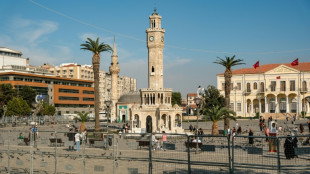 Mayor of Turkish opposition stronghold defects to Erdogan party
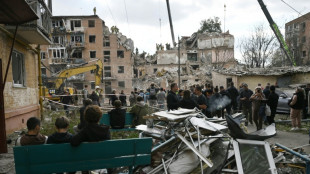 Children among heavy casualties in Ukraine after Russian strikes

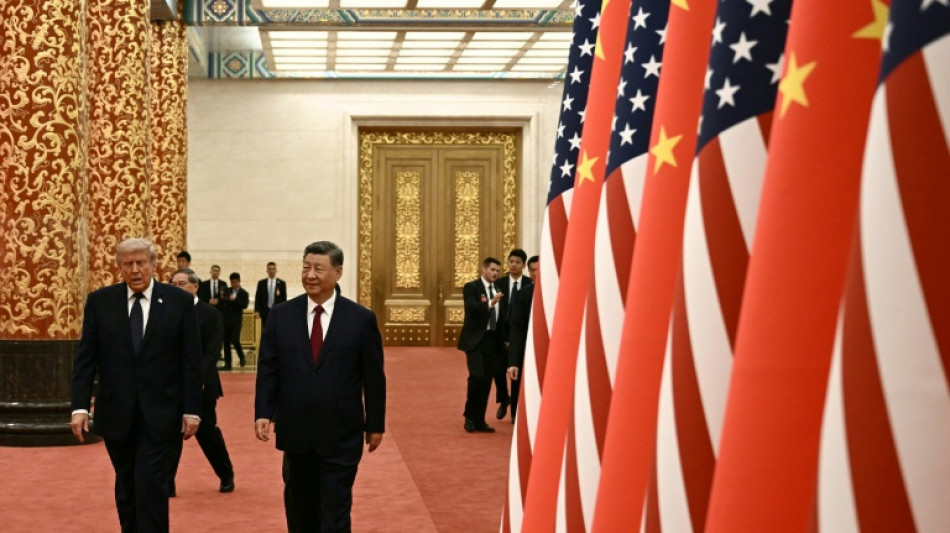
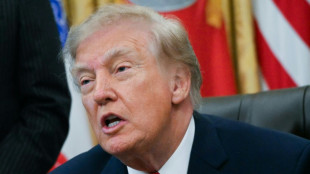
Chinese and US leaders Xi Jinping and Donald Trump concluded a summit in Beijing with some symbolic wins that made for good optics domestically but produced few substantive agreements, analysts said.
Trump touted new "fantastic trade deals" and Xi called it a "milestone" summit, despite failing to reach concessions on core interests such as Taiwan or tariffs.
The US president was "effusively full of positive praises" for Xi and the Chinese people, while Beijing turned on the "utmost pomp and circumstance" to welcome him, said Lim Tai Wei, a professor at Japan's Soka University.
Trump calling Xi a "great leader" and "friend" showcased to the Chinese audience the respect he has for their leader and the "personal diplomacy" the two men share, Lim said.
However, "political symbolisms... and a symbolic reset appear to be more important than the actual deal-making", he said.
The glowing atmospherics bolster Xi's "internal legitimacy", as well as Trump's reputation before midterm elections this year, said Alfred Wu, an associate professor at the Lee Kuan Yew School of Public Policy in Singapore.
A Beijing foreign ministry readout said Xi and Trump had agreed "on a new vision" for building stable, constructive China-US relations over the next three years.
Yue Su from The Economist Intelligence Unit said it was a positive sign that ties have improved "somewhat, and tail risks have been mildly reduced".
But she said the three-year agreement could be fragile, "constrained by the US Congress, China hawks in Washington, and Trump's own political standing domestically".
- Details scant -
Trump said in Beijing that Xi had agreed to help open the Strait of Hormuz, which has been effectively closed by Iran during the Middle East war, as well as to buy "200 big" Boeing jets and more American oil and soybeans.
En route home aboard Air Force One, he said the deal included "a promise of 750 planes, which will be by far the largest order ever, if they do a good job with the 200".
But details have been scant, with a lack of formal announcements or confirmation from the Chinese foreign ministry.
"What we have heard regarding the concrete deal remains broadly in line with market expectations," Su told AFP.
"In terms of substance, I do not think there have been major surprises."
Trump also said he did not mention tariffs with Xi during their talks, despite expectations that they would discuss extending the one-year trade war truce they reached at their previous meeting in South Korea in October.
No announcements were also made about advanced Nvidia chips used in artificial intelligence, but analysts pointed to media reports that suggested some Chinese companies had been authorised to purchase the chips.
Chinese tech firms are barred from purchasing Nvidia's most cutting-edge chips under US export rules that Washington says are to protect national security.
"The deals, while impressive in dollar terms, are something that one or both sides could walk away from," said Associate Professor Chong Ja Ian from the National University of Singapore (NUS).
"They are also narrower transactions rather than address fundamental aspects" of the US-China relationship, he said.
- Red lines remain -
Xi and Trump steered away from publicly discussing "geopolitical minefields" such as Taiwan -- long considered in China as a "red line" and a core interest -- and other human rights issues, Lim said.
"They kept off sensitive topics and followed the script to show the world that they can manage their competition and can cooperate on issues that are of no detriment," he said.
This was particularly evident when Trump refused to answer questions on the sidelines of the summit about the self-ruled island.
Chinese state media reported on Thursday that Xi had told Trump missteps over Taiwan could push their two countries into "conflict".
"The fact that (China) was unable to get substantive concessions, including on Taiwan which it was so vocal about, indicates to me that both sides are in fact in a stalemate," NUS's Chong told AFP.
Trump said he had raised the case of Hong Kong media tycoon Jimmy Lai, a dual British citizen who was sentenced to 20 years in prison on charges of foreign collusion and seditious publication, but Xi had indicated Lai's release was unlikely.
On the war in Iran, Trump said Xi had effectively assured him that China was not preparing to send military help to Tehran.
"However, there are limits to what China can realistically do, as the Iranian regime is operating in survival mode and will prioritise its own interests," The Economist's Yue said.
M.Furrer--BTB