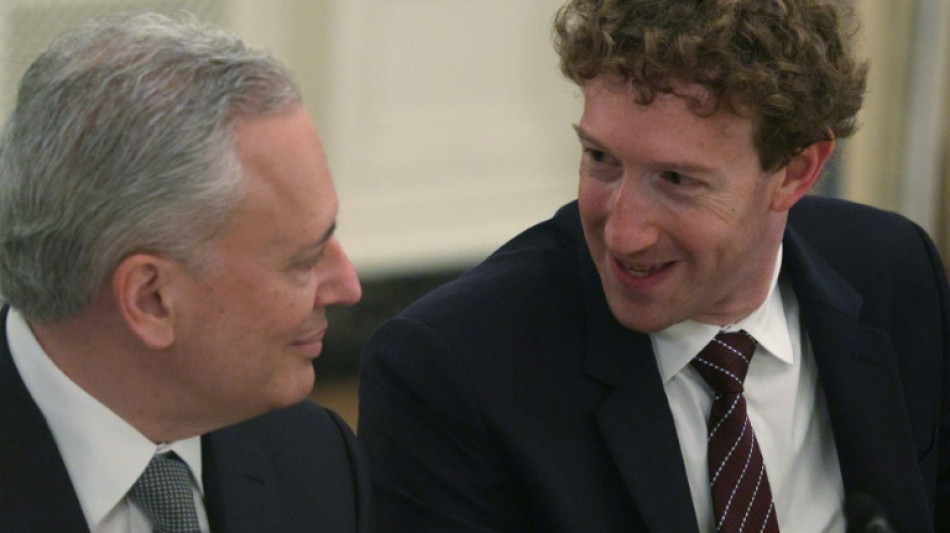
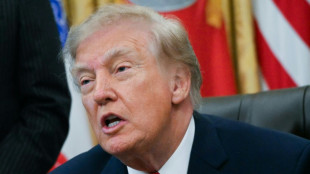
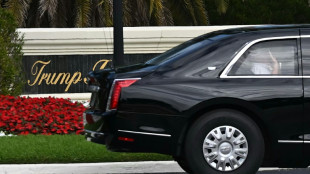
Who killed Trump's AI order? Musk says it wasn't him / Photo: © GETTY IMAGES NORTH AMERICA/AFP

 After botched execution, US woman was nearly taken off life support before revival

 Searing AIDS drama 'Elsinore' opens London film festival
 Evicted pensioner who sparked Spain housing protests dies: tenant union

 Golf star Rahm quitting LIV tour over 'unacceptable' terms
 Thousands march fearing return of a Bolsonaro presidency in Brazil
 French PM denies police ordered to confront student protesters
 Rubio touts US power, calls on Europe to emerge from 'slumber'
 Trump says 'we don't think' Russian plague is bio-weapon

 Five children among 26 killed in Ukraine after Russian strikes

 Man City should 'accept' punishment for rule breaches, says Lineker

 US woman who survived botched execution is awake and speaking

 From 1800s to modern pharma: a Nobel-winning chemistry quest
 Southampton boss Eckert given suspended ban over 'Spygate'
 Russia warns of 'false' information as second plague case reported

 IEA ready to release more oil reserves if necessary

 HSBC 'consults' over UK unit job cuts amid AI adoption
 UK court quashes five ex-traders' Libor rate rigging convictions

 XM Receives “Global Customer Experience Leader Award 2026” at the TrustFinance Performance Awards
 Stocks slide as oil climbs on Mideast flareup
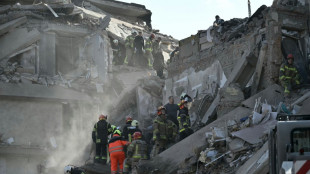 Heavy casualties in Ukraine after Russian strikes
 French wine harvest set to hit historic low

 Kyiv 'cannot agree' to EU membership limiting food exports: minister

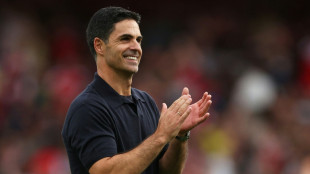 Arteta targets more Arsenal glory after signing new deal until 2030

 Russell hit with Singapore grid penalty for taking new power unit
 Spotify expands audiobooks to more than 180 markets

Speculation swirled Friday over the last-minute collapse of President Donald Trump's planned executive order on powerful AI models, with fingers pointing at the president's allies in Silicon Valley who oppose government oversight of the technology.
A draft of the shelved order leaked to US media shows the White House had prepared new AI cybersecurity measures before Trump pulled the plug Thursday. His former AI czar had reportedly called Trump directly to raise objections.
The collapse is the latest sign that Washington remains unable to agree on even modest guardrails for the technology -- leaving the United States well behind Europe and Asia and far short of what many safety advocates say is needed.
If enacted, the dropped executive order would have given the federal government up to 90 days of access to the most powerful AI models before their public release, and it would have established a coordinated response to AI-enabled threats to banks, hospitals and other critical infrastructure.
Politico and other media reported that David Sacks, the Silicon Valley venture capitalist who served as Trump's AI and crypto czar, called the president Thursday morning -- blindsiding White House staff -- to warn that the measure would slow innovation and hurt the US in its AI race with China.
Officials believed Sacks supported the order, but the night before the planned signing he began raising concerns that the voluntary review process could one day be made mandatory.
The Washington Post reported a broader account: Last-minute calls from Sacks, Elon Musk -- CEO of SpaceX and Tesla -- and Mark Zuckerberg, CEO of Meta, convinced the president not to sign.
Musk denied the claim on his social media platform X.
"This is false. I still don’t know what was in that executive order and the President only spoke to me after declining to sign," he wrote.
Meta also disputed the report, saying Zuckerberg had spoken to Trump only after the order was rescinded.
- Fear of Mythos -
To assuage concerns of government overreach, the draft explicitly stated that nothing in the order should be read as creating a mandatory licensing or approval requirement for AI models.
According to The Information and other media, tech companies also pushed to cut the pre-release access window from 90 days to just 14.
The order was triggered in part by concerns over Anthropic's Mythos model, which the AI startup has refused to release publicly over safety fears.
The collapse of Thursday's effort leaves the administration with no formal plan for managing the security risks posed by the most powerful AI systems -- and no timeline for producing one.
Trump scrapped an AI oversight order signed by his predecessor Joe Biden on his first day back in the White House.
Biden's 2023 order required AI companies to share safety test results with the government and leaned heavily on voluntary commitments -- already a light-touch approach that fell well short of what many experts had called for.
By contrast, the European Union's AI Act -- which entered into force in 2024 -- sets binding rules for high-risk AI systems, including mandatory transparency requirements and, for the most powerful models, obligations around safety testing and incident reporting.
B.Shevchenko--BTB