Colombia vote tests leftist rule as violence surges / Photo: © AFP/File

 After botched execution, US woman was nearly taken off life support before revival
 Searing AIDS drama 'Elsinore' opens London film festival

 Evicted pensioner who sparked Spain housing protests dies: tenant union
 Golf star Rahm quitting LIV tour over 'unacceptable' terms

 Thousands march fearing return of a Bolsonaro presidency in Brazil
 French PM denies police ordered to confront student protesters

 Rubio touts US power, calls on Europe to emerge from 'slumber'

 Trump says 'we don't think' Russian plague is bio-weapon

 Five children among 26 killed in Ukraine after Russian strikes

 Man City should 'accept' punishment for rule breaches, says Lineker
 US woman who survived botched execution is awake and speaking
 From 1800s to modern pharma: a Nobel-winning chemistry quest

 Southampton boss Eckert given suspended ban over 'Spygate'

 Russia warns of 'false' information as second plague case reported

 IEA ready to release more oil reserves if necessary
 HSBC 'consults' over UK unit job cuts amid AI adoption

 UK court quashes five ex-traders' Libor rate rigging convictions
 XM Receives “Global Customer Experience Leader Award 2026” at the TrustFinance Performance Awards

 Stocks slide as oil climbs on Mideast flareup

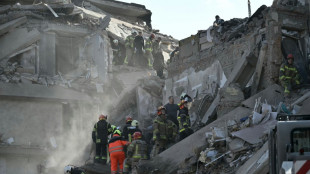 Heavy casualties in Ukraine after Russian strikes
 French wine harvest set to hit historic low
 Kyiv 'cannot agree' to EU membership limiting food exports: minister

 Arteta targets more Arsenal glory after signing new deal until 2030

 Russell hit with Singapore grid penalty for taking new power unit

 Spotify expands audiobooks to more than 180 markets

Colombians vote Sunday in a presidential election overshadowed by a surge in violence, facing a stark choice between extending four years of leftist rule or shifting sharply right.
Barred from re-election, President Gustavo Petro leaves office after a turbulent term marked by car bombs, explosive drones and the assassination of a presidential candidate.
But joblessness has fallen and wages have risen, and polls show Petro's protege, leftist Senator Ivan Cepeda, 63, as the front‑runner.
The son of a slain senator, Cepeda has pledged to extend social programs and continue peace talks with armed groups, despite limited results.
"I give him my vote because my life changed under this government," said 23-year-old Natalia Rojas, a design student in Bogota and a beneficiary of a subsidized education program.
To win outright, Cepeda must secure more than half the vote.
Polls predict a June 21 runoff against right‑wing lawyer Abelardo de la Espriella.
Nicknamed "the Tiger," the 47‑year‑old millionaire has no political experience and runs an eccentric campaign. He campaigns in a bulletproof vest and delivers a hardline security message.
In an interview during the campaign, he told AFP he would seek US backing for a 90-day campaign of airstrikes and crop fumigation against cocaine-producing armed groups if elected.
"What De la Espriella wants is to put the house in order," said Wilmer Bolivar, a 47‑year‑old ex‑soldier.
He compared the approach to El Salvador's popular president Nayib Bukele.
The comparison is not accidental. De la Espriella has backed building Bukele-style megaprisons and his facial hair bears more than a passing resemblance to the Salvadoran leader.
But De la Espriella faces a tight race for second against opposition Senator Paloma Valencia, aged 50. She is backed by political kingmaker and former president Alvaro Uribe.
- Deeply polarizing -
Petro led Colombia's first-ever leftist government and has been deeply polarizing.
Poorer Colombians cheer his investment in social programs and the raising of the minimum wage. Unemployment fell, partly driven by state hiring.
The country remains one of the most economically unequal in the world.
"This election is marked by class struggle," said political scientist Alvaro Forero. "That is Petro’s main electoral ammunition," he told AFP.
To critics, Petro is erratic and his policy of "total peace" has let armed groups run rampant.
The policy has so far failed to demobilize armed groups that survived the 2016 FARC peace deal.
Experts say armed groups used talks to strengthen themselves.
Colombia remains the world's largest cocaine producer, and much of the violence is tied to drug trafficking.
Juanita Goebertus of Human Rights Watch said "2025 was a very bad year" for the country. Kidnappings more than doubled and displacement hit its highest level in nearly 20 years.
- Challenges -
Each candidate has faced serious threats throughout the campaign.
Last year's killing of right‑wing candidate Miguel Uribe has left many Colombians nervous about a return to the bad old days.
Rising drug trafficking also strained relations between Petro and US President Donald Trump. The dispute escalated into mutual insults and nearly derailed longstanding security cooperation.
Whoever wins will inherit a country with serious security problems and a fiscal deficit that has ballooned to seven percent of GDP.
Petro inherited a weak post‑pandemic economy, but since then tax collection has severely lagged behind bumper social spending.
"What's at stake is continuing Petro's change agenda or rejecting it," Forero said.
K.Brown--BTB