-
 Rubio touts US power, calls on Europe to emerge from 'slumber'
-
New Zealand fly-half Mo'unga ruled out of Australia Tests
-
 Trump says 'we don't think' Russian plague is bio-weapon
-
Protests in major Turkish city after mayor defects to Erdogan party
-
 Five children among 26 killed in Ukraine after Russian strikes
-
Climate change strips island's title of largest penguin colony: study

-
 Man City should 'accept' punishment for rule breaches, says Lineker
-
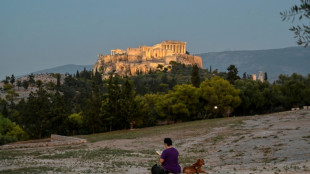
Rubio says West must choose between national power or decline
-
 US woman who survived botched execution is awake and speaking
-
Russia's plague scare: What we know

-
 From 1800s to modern pharma: a Nobel-winning chemistry quest
-
French luxury giant to fund redevelopment of two Paris streets: city hall

-
 Southampton boss Eckert given suspended ban over 'Spygate'
-
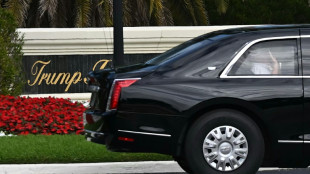
Trump wants to turn Florida golf course into presidential retreat
-
 Russia warns of 'false' information as second plague case reported
-
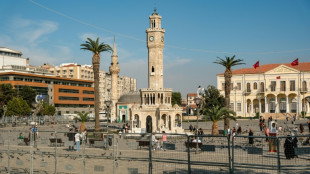
Mayor of Turkish opposition stronghold defects to Erdogan party
-
 IEA ready to release more oil reserves if necessary
-
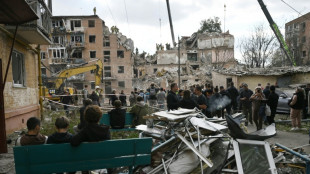
Children among heavy casualties in Ukraine after Russian strikes
-
 HSBC 'consults' over UK unit job cuts amid AI adoption
-
Court orders German ex-spy chief kept in jail after spying, treason arrest
-
 UK court quashes five ex-traders' Libor rate rigging convictions
-
Guinea caps bottled water prices after sachets banned
-
 XM Receives “Global Customer Experience Leader Award 2026” at the TrustFinance Performance Awards
-
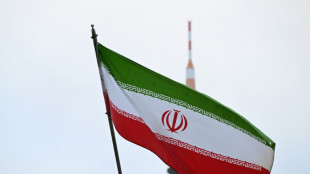
Spared, married, hanged: the last weeks of Iranian protester Alireza Sepahi
-
 Stocks slide as oil climbs on Mideast flareup
-
Nobel physics winner's pride at pioneering AI role

-
 Heavy casualties in Ukraine after Russian strikes
-
IMF preparing El Nino assistance, concerned about AI bubble burst: chief to AFP
-
 French wine harvest set to hit historic low
-
West must embrace 'national power' or face decline: Rubio
-
 Kyiv 'cannot agree' to EU membership limiting food exports: minister
-
Shell refining margins reach record highs as wars hit supply
-
 Arteta targets more Arsenal glory after signing new deal until 2030
-
Former Spain, Barca winger Pedro retires from football

-
 Russell hit with Singapore grid penalty for taking new power unit
-
Arteta signs new Arsenal deal until 2030
-
 Spotify expands audiobooks to more than 180 markets
-
Stocks decline as oil climbs on Mideast flareup
-
 French-Japanese duo wins chemistry Nobel for solving molecular 'mystery'
-
Gauff says online abuse was 'draining' after China Open exit
-
 England's Nations League surge helps heal World Cup wounds
-
As sector struggles, Porsche puts luxury ahead of volume

-
 Mayor of opposition stronghold Izmir defects to Erdogan party
-
'It's personal': Fiji minister pushes better climate finance at pre-COP
-
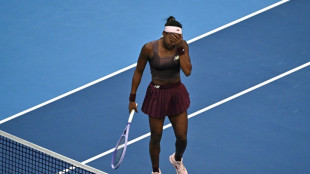 Mertens beats Gauff to set up Swiatek clash at China Open
-
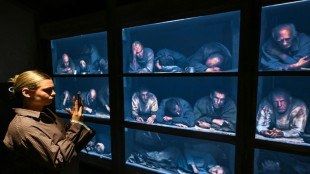
Russia glosses over dark Soviet past in reinvented museum
-
 Benin full of pride at role in Messi's last dance
-
UK tax body opened probe into Man City in 2018: FT

-
 France suspends stun grenade use at student protests ahead of PM speech
-
Yemen's Houthis claim new attacks on Saudi airports as conflict deepens
US hits Iran with new strikes, despite ceasefire
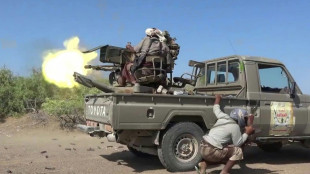
US forces attacked missile sites in southern Iran and boats trying to lay mines on Monday, US Central Command said, imperiling a fragile ceasefire and casting new doubt on a deal to end the Middle East war.
The strikes came as top Iranian negotiators arrived in Doha for the latest round of talks to end the months-long conflict, and as the Israeli military stepped up hostilities with Iran-backed Hezbollah in southern Lebanon.
Oil prices fluctuated in the wake of the US strikes, which may threaten any agreement to reopen the Strait of Hormuz, where an Iranian blockade has choked global fuel supplies.
"US forces conducted self-defense strikes in southern Iran today to protect our troops from threats posed by Iranian forces," Tim Hawkins, a US Central Command spokesman, said in a statement.
It gave no details of the attacks and said only that the targets included missile launch sites and boats trying to "emplace mines."
Iran's state-run broadcaster IRIB reported several loud explosions were heard in the vicinity of Bandar Abbas at around midnight local time (2030 GMT Monday).
It added the situation in the southern port city was normal and local authorities were investigating the cause of the blasts.
The strikes threatened a ceasefire that began April 8 as the United States and Iran struggle to reach an accord to end a war that has rattled the global economy with a severe disruption of energy flows.
Oil prices remained below $100 on Tuesday morning, with West Texas Intermediate dropping more than five percent while international benchmark Brent crude was up.
Hopes of an accord took another blow when Israeli Prime Minister Benjamin Netanyahu vowed to "crush" Hezbollah in Lebanon. Iran has demanded that any peace accord apply to the fighting in Lebanon as well.
Trump also said in a social media post he expected Iran to hand over its enriched uranium to the United States to be destroyed, or have it destroyed in Iran with an international witness.
"The Enriched Uranium (Nuclear Dust!) will either be immediately turned over to the United States to be brought home and destroyed or, preferably, in conjunction and coordination with the Islamic Republic of Iran, destroyed in place or, at another acceptable location, with the Atomic Energy Commission, or its equivalent, being witness to this process and event," Trump wrote.
It was not clear whether he meant this would be part of a potential accord with Iran, and the commission he cited was abolished in 1974.
Earlier Monday, Trump said it should be mandatory for Saudi Arabia, the United Arab Emirates, Qatar, Pakistan, Egypt, Turkey, Bahrain and Jordan to sign up to the Abraham Accords, a set of agreements brokered in 2020 with nations historically hostile to Israel, as part of a peace deal with Iran.
Trump said he had spoken to the leaders of those countries Saturday about efforts to end the war. Bahrain and the UAE have already signed the accords, along with Morocco and Sudan.
The US-Iranian ceasefire has held while diplomats push for a negotiated settlement, although Iran has maintained controls on Gulf shipping through the Strait of Hormuz and the US Navy has sought to blockade Iran's ports.
While the Abraham Accords were welcomed by some, they remain deeply unpopular in many parts of the Middle East -- in part because they fail to address the Israeli-Palestinian conflict.
Gulf heavyweights like Saudi Arabia and Qatar have said they will never normalize ties with Israel unless an independent Palestinian state is created.
- 'Going crazy' -
Anna Jacobs of the Arab Gulf States Institute in Washington said it was unlikely that Gulf nations would bow to Trump's latest demand.
"The national security of the Gulf states has been threatened more than ever before because of President Trump's reckless decisions, and he expects Arab states to thank him and to normalize relations with Israel, which they will not do at this stage," she said.
Trump's maximalist demand came after Secretary of State Marco Rubio suggested a deal could be reached within the day.
"We thought we might have some news last night, maybe today," Rubio told reporters during a visit to New Delhi.
But Iran's foreign ministry spokesman Esmaeil Baqaei poured cold water on hopes for a quick final settlement.
"It is correct to say that we have reached a conclusion on a large portion of the issues under discussion," he told a weekly news briefing.
"But to say that this means the signing of an agreement is imminent -- no one can make such a claim."
- 'Critical moment' -
Netanyahu said Monday that he had ordered the military to intensify its offensive in Lebanon, accusing Hezbollah of targeting Israeli forces with drone attacks.
"I have ordered an even greater acceleration of our operations," Netanyahu said in a video statement posted on his Telegram channel.
The Israeli leader said Sunday that he and Trump had agreed that "any final agreement with Iran must eliminate the nuclear threat entirely" before peace was reached.
Iranian officials have stressed that, despite the longstanding US demand for an end to its uranium enrichment, talks on the issue of the Islamic republic's nuclear program have been deferred until after an initial agreement.
H.Seidel--BTB